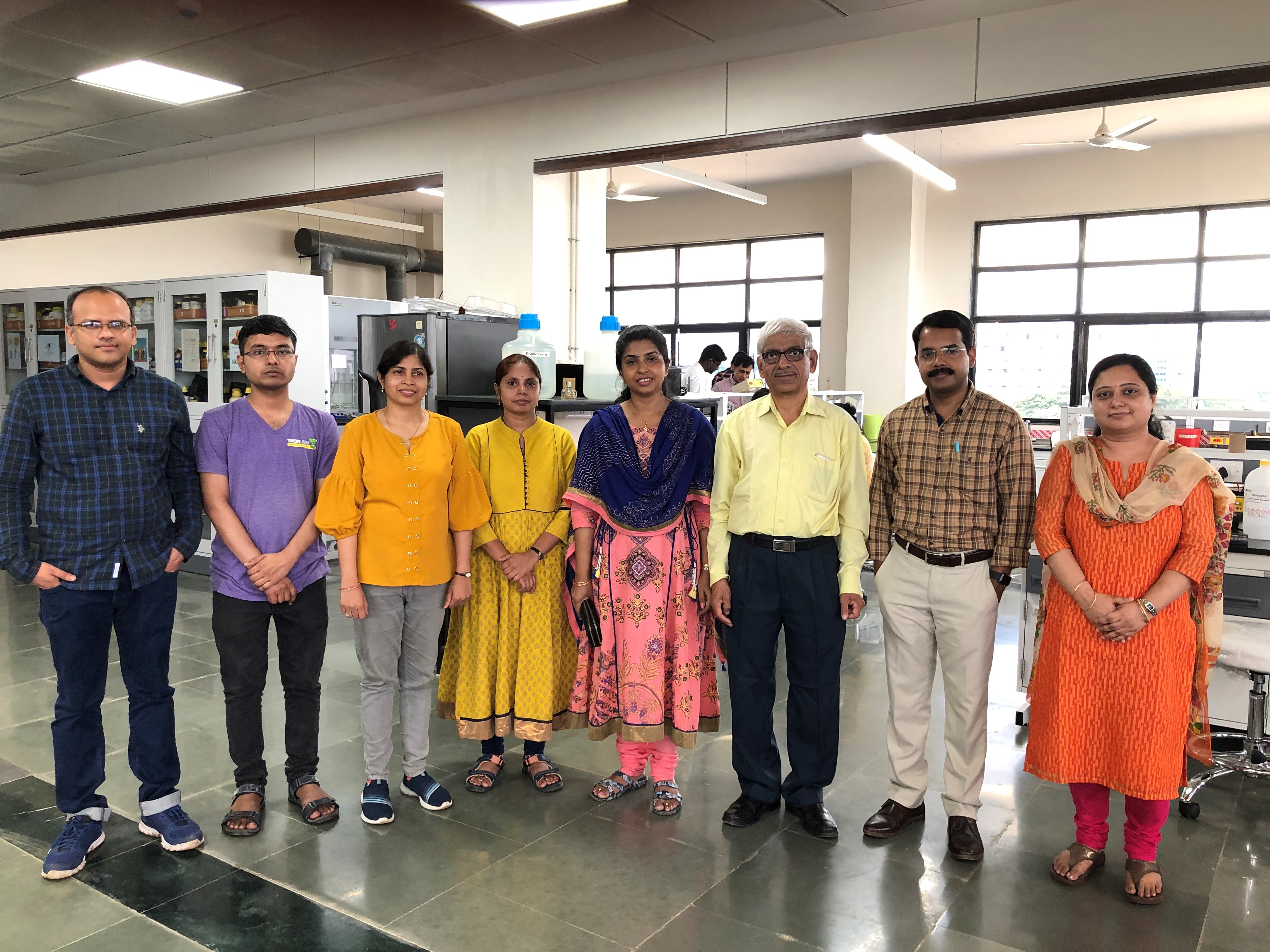

New Sensor Developed for Measuring Sea Surface Temperatures

  • Research Stash
  • News
  • 1.5K

Sea surface temperature (SST) is an important parameter for oceanographic and atmospheric studies and for monitoring of biological habitations in the marine environment. Indian scientists have developed a new sensor for measurement of ocean temperatures.
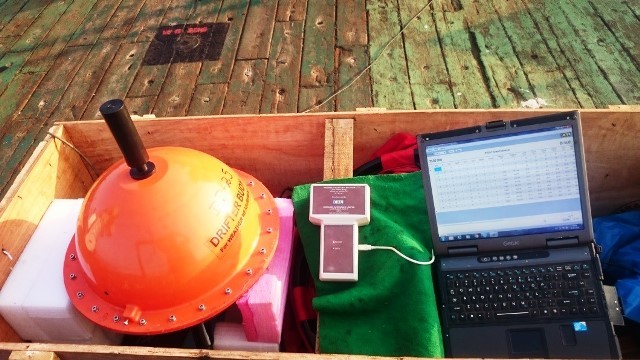
Drifting buoy testing

The negative temperature coefficient (NTC) thermistor-based sensor, developed by scientists at the Chennai-based National Institute of Ocean Technology (NIOT) and School of Engineering at Vels University, Chennai, can be deployed on drifting buoys on the sea. The sensor array consists of seven temperature sensors placed at different depths, from 0.16 m to 15 m, and one depth sensor.

India has deployed buoys named Pradyu which communicate with Indian satellite INSAT for real-time data telemetry. Twenty such buoys equipped with the new sensor have been deployed in the Arabian Sea from the research vessel, Sagar Manjusha. They were used to collect sea surface temperature data for about one month.
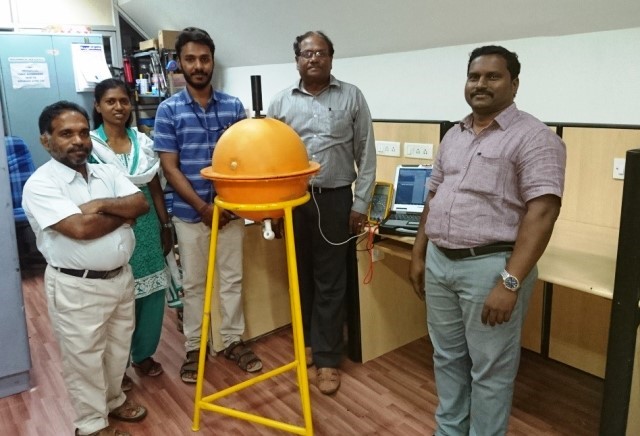
Members of research team with Drifting buoy

The results were compared with data from international systems – Advanced Very High-Resolution Radiometer (AVHRR) and Argo float. The data indicated a distinct warming of the ocean active layer by 1.27 degree C during the exercise. The Argo temperature profile, in turn, returned a result of warming by 0.598 degrees and AVHRR by 1.66 degrees.

“The difference in the measurements is due to the difference in sensing depth, as AVHRR corresponds to the top 10 micrometer, whereas our sensor measurement is at 0.16-metre depth. The discrepancy with Argo measurement is due to spatial and temporal differences”, explained Dr. Tata Sudhakar, senior scientist of NIOT and team leader, while speaking to India Science Wire.

There are many types of drifting buoys with different temperature sensors. Presently, more than 20,000 buoys are deployed in the oceans across the globe. UNESCO’s Intergovernmental Oceanographic Commission’s Global Ocean Observation System programme has an international project to deploy and maintain 1,250 drifting buoys over international water boundaries.

Most drifting buoys have their temperature sensors just below the water line. With the deployment of the new sensor, India’s Pradyu buoy will be able to record and transmit both sea surface and sea subsurface layer temperatures, said Dr. R. Srinivasan, another member of the team at NIOT.

Besides drifting buoys, sea surface temperature is measured with satellite remote sensing radiometers, ships, and moored buoys. Remote sensing measurement is limited by the presence of cloud and rain, while in-situ measurement by drifting buoys provides precise and accurate ocean temperature.

Drifting buoys are small spherical floats, measuring about 16-inch in diameter, with underwater drogues. They flow with the water and record and transmit real-time sea surface temperatures through satellite. Drifting floats called Lagrangian are very common drifting buoys and widely deployed.

Besides Dr. Sudhakar and Srinivasan, the research team included V. Rajendran of Vels University and Shijo Zacharia of NIOT. The study results have been published in the journal Current Science. (India Science Wire)

Dr. Ravi Mishra

If you liked this article, then please subscribe to our YouTube Channel for the latest Science and Tech news. You can also find us on Twitter and Facebook.

Rate

India has deployed buoys named Pradyu which communicate with Indian satellite INSAT for real-time data telemetry. Twenty such buoys equipped with the new sensor have been deployed in the Arabian Sea from the research vessel, Sagar Manjusha. They were used to collect sea surface temperature data for about one month.

Members of research team with Drifting buoy

The results were compared with data from international systems – Advanced Very High-Resolution Radiometer (AVHRR) and Argo float. The data indicated a distinct warming of the ocean active layer by 1.27 degree C during the exercise. The Argo temperature profile, in turn, returned a result of warming by 0.598 degrees and AVHRR by 1.66 degrees.

“The difference in the measurements is due to the difference in sensing depth, as AVHRR corresponds to the top 10 micrometer, whereas our sensor measurement is at 0.16-metre depth. The discrepancy with Argo measurement is due to spatial and temporal differences”, explained Dr. Tata Sudhakar, senior scientist of NIOT and team leader, while speaking to India Science Wire.

There are many types of drifting buoys with different temperature sensors. Presently, more than 20,000 buoys are deployed in the oceans across the globe. UNESCO’s Intergovernmental Oceanographic Commission’s Global Ocean Observation System programme has an international project to deploy and maintain 1,250 drifting buoys over international water boundaries.

Most drifting buoys have their temperature sensors just below the water line. With the deployment of the new sensor, India’s Pradyu buoy will be able to record and transmit both sea surface and sea subsurface layer temperatures, said Dr. R. Srinivasan, another member of the team at NIOT.

Besides drifting buoys, sea surface temperature is measured with satellite remote sensing radiometers, ships, and moored buoys. Remote sensing measurement is limited by the presence of cloud and rain, while in-situ measurement by drifting buoys provides precise and accurate ocean temperature.

Drifting buoys are small spherical floats, measuring about 16-inch in diameter, with underwater drogues. They flow with the water and record and transmit real-time sea surface temperatures through satellite. Drifting floats called Lagrangian are very common drifting buoys and widely deployed.

Besides Dr. Sudhakar and Srinivasan, the research team included V. Rajendran of Vels University and Shijo Zacharia of NIOT. The study results have been published in the journal Current Science. (India Science Wire)

Dr. Ravi Mishra

If you liked this article, then please subscribe to our YouTube Channel for the latest Science and Tech news. You can also find us on Twitter and Facebook.
" }

Paper-based tuberculosis test could boost diagnoses in developing countries

Diagnosing tuberculosis (TB) early can allow patients to receive the medicine they need and also help prevent the disease from spreading. But in resource-limited areas, equipment requirements and long wait times for results are obstacles to diagnosis and treatment. To tackle this problem, scientists report in ACS Sensors the development of a fast, paper-based tuberculosis test that can be read with a smartphone.

  • News
  • 1.7K
Read more

Giant LEAP to View Materials – One Atom at A Time

India is a leading player in nanotechnology research globally. To facilitate research in this sector, a national facility for Atom Probe Tomography has been established at the Indian Institute of Technology Madras, in partnership with several other institutes

  • News
  • 2.4K
Read more
Better Education Can Help Reduce Risk of Hypertension & Diabetes

Better Education Can Help Reduce Risk of Hypertension & Diabetes

Hypertension and diabetes are emerging as major health challenge not just in cities but in rural areas as well, and particularly among women. A new study says improved education, standardization of testing as well as follow up of hypertension and diabetes after childbirth are needed in Indian rural areas

  • News
  • 1.3K
Read more

Internet is huge! Help us find great content

Newsletter

Never miss a thing! Sign up for our newsletter to stay updated.

About

Research Stash is a curated collection of tools and News for S.T.E.M researchers

Have any questions or want to partner with us? Reach us at hello@researchstash.com

Navigation

Submit