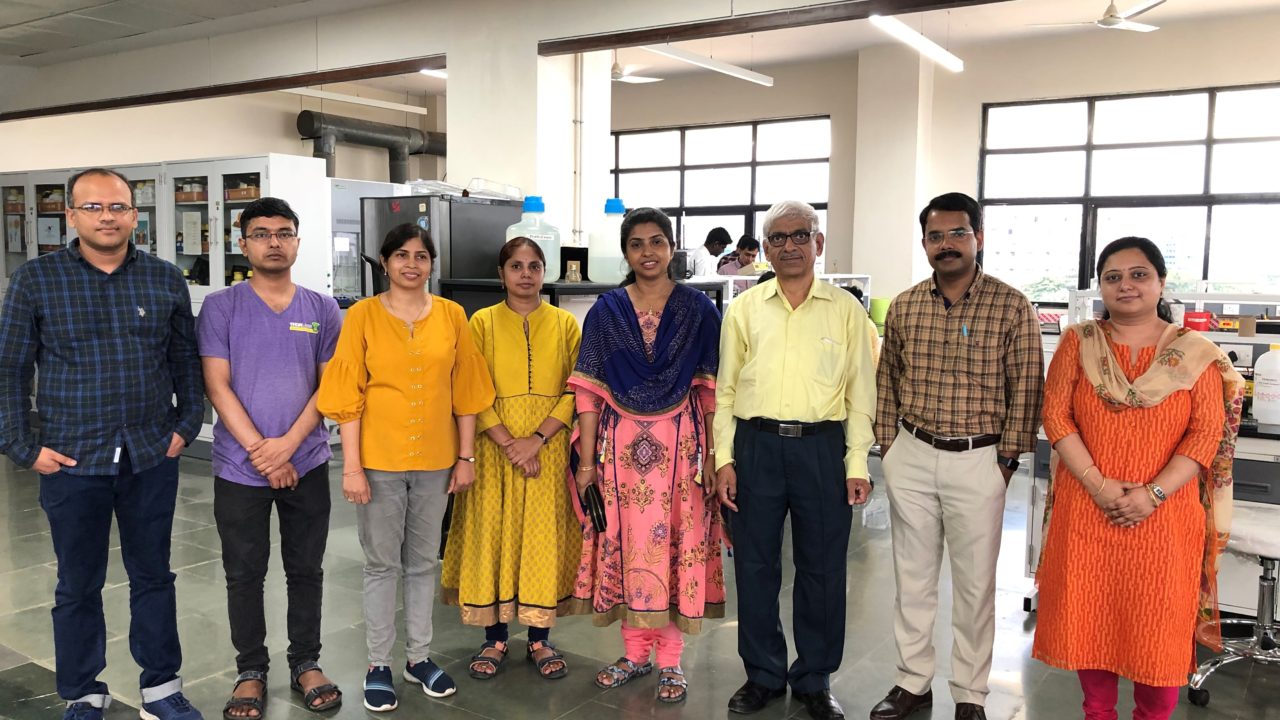
The research team at UM-DAE Centre for Excellence in Basic Sciences

Triphala Rich in Polyphenolic Content

  • Research Stash
  • News
  • 2.5K

Several Ayurvedic formulations, which have been in use for ages, are being subjected to modern methods of drug development in order to make out the exact mechanism of their action. A group of scientists has done a detailed chemical study of herbal preparation known as Triphala and found it to be rich in polyphenolic content.
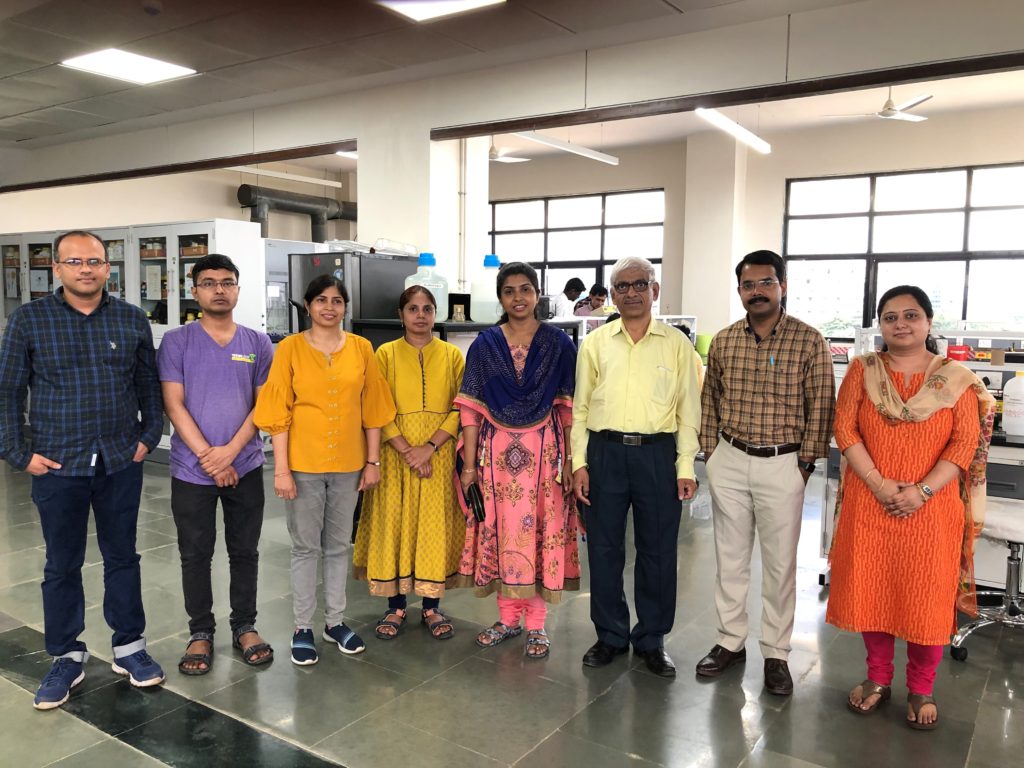
The research team at UM-DAE Centre for Excellence in Basic Sciences

Scientists at the UM-DAE Centre for Excellence in Basic Sciences, University of Mumbai and the Tata Institute of Fundamental Research (TIFR) subjected Triphala to detailed chemical characterization and found an abundance of polyphenols. They also tested its action on molecules involved in the development of neurodegenerative disorders such as Parkinson’s disease to study its mechanism of action, according to findings published in journal RSC Advances.

Triphala is known to possess a range of medicinal properties such as free radical scavenging, antioxidant, anti-inflammatory, antimutagenic, anti-stress, hypoglycemic and radioprotective. Some of these properties are attributed to its polyphenolic constituents.

“Alpha-syn is an amino acid that is expressed in neuronal cells. Its accumulation in the form of fibrillar aggregates is a characteristic of neurodegenerative diseases like Parkinson’s. Earlier studies had shown that alpha-syn fibrillation can be addressed by small organic molecules, particularly polyphenols. So we wanted to test if herbal preparations containing such molecules could be useful,” explained Ramakrishna V Hosur, who led the research team, while speaking to India Science Wire. He said it was a preliminary study and more work needs to be done.

However, other experts have sounded a note of caution. “Triphala has been shown to stop fibril formation of alpha-syn in test tube study using NMR. But I do not see the clinical relevance of this work. A-syn is in the brain and it is not clear how Triphala will reach the brain that too at the intracellular level.

There are many entities like beta -syn and gamma-syn to protect alpha-syn from fibril formation as previous studies have shown. The ratio of beta or gamma -syn is also important. The dose of Triphala needs to be tested in varied concentrations range even in test tube studies,” pointed out Dr. Pravat Mandal, a scientist at the Manesar-based National Brain Research Centre (NBRC).

The study team included Mandar Bopardikar, Sri Rama Koti Ainavarapu, Lalit C Borde (TIFR, Mumbai); Anusri Bhattacharya, Veera Mohana Rao Kakita, Kavita Rachineni, Sinjan Choudhary and Ramkrishna V Hosur (University of Mumbai).

Dinesh C Sharma

If you liked this article, then please subscribe to our YouTube Channel for the latest Science & Tech news. You can also find us on Twitter & Facebook.

Rate

“Alpha-syn is an amino acid that is expressed in neuronal cells. Its accumulation in the form of fibrillar aggregates is a characteristic of neurodegenerative diseases like Parkinson’s. Earlier studies had shown that alpha-syn fibrillation can be addressed by small organic molecules, particularly polyphenols. So we wanted to test if herbal preparations containing such molecules could be useful,” explained Ramakrishna V Hosur, who led the research team, while speaking to India Science Wire. He said it was a preliminary study and more work needs to be done.

However, other experts have sounded a note of caution. “Triphala has been shown to stop fibril formation of alpha-syn in test tube study using NMR. But I do not see the clinical relevance of this work. A-syn is in the brain and it is not clear how Triphala will reach the brain that too at the intracellular level.

There are many entities like beta -syn and gamma-syn to protect alpha-syn from fibril formation as previous studies have shown. The ratio of beta or gamma -syn is also important. The dose of Triphala needs to be tested in varied concentrations range even in test tube studies,” pointed out Dr. Pravat Mandal, a scientist at the Manesar-based National Brain Research Centre (NBRC).

The study team included Mandar Bopardikar, Sri Rama Koti Ainavarapu, Lalit C Borde (TIFR, Mumbai); Anusri Bhattacharya, Veera Mohana Rao Kakita, Kavita Rachineni, Sinjan Choudhary and Ramkrishna V Hosur (University of Mumbai).

Dinesh C Sharma

If you liked this article, then please subscribe to our YouTube Channel for the latest Science & Tech news. You can also find us on Twitter & Facebook.
" }
Study of Ancient Eclipses Can Unveil Past Climate Trends

Study of Ancient Eclipses Can Unveil Past Climate Trends

For a long time now, historians have been using epigraphy to infer the political and economic aspect of the past. In recent times, astronomers have come to realize that it can be a potent tool to also understand the history of astronomy as well as for inferring minute changes in the motion of Earth.

  • News
  • 2.1K
Read more

Infant MRIs show autism linked to increased cerebrospinal fluid

MRIs show a brain anomaly in nearly 70 percent of babies at high risk of developing the condition who go on to be diagnosed, laying the groundwork for a predictive aid for pediatricians and the search for a potential treatment

  • News
  • 2.3K
Read more
Study Reveals Startling Findings on Arctic Sea Ice Decimation

Study Reveals Startling Findings on Arctic Sea Ice Decimation

A study on underwater sounds using a passive acoustic monitoring system during the winters has been able to probe sea ice melting in the Arctic and its contributing factors.

  • News
  • 1.4K
Read more

Internet is huge! Help us find great content

Newsletter

Never miss a thing! Sign up for our newsletter to stay updated.

About

Research Stash is a curated collection of tools and News for S.T.E.M researchers

Have any questions or want to partner with us? Reach us at hello@researchstash.com

Navigation

Submit