Injectable Gel May Deliver Islet Cells for Type 1 Diabetes

Injectable Gel May Deliver Islet Cells for Type 1 Diabetes

  • Research Stash
  • News
  • 2.3K

Researchers at the Indian Institute of Technology, Guwahati have developed an injectable gel using silk proteins to deliver insulin-producing cells needed to address type1 diabetes.

The gel has been tested in rats. Normally islets in the pancreas are surrounded by the extracellular matrix which provides structural and biochemical support to cells. The components of this matrix bind to transmembrane proteins on the islet surface to facilitate cell to cell connection, proliferation and insulin secretion.

Previous studies had suggested hydrogels have potential to deliver islets as they contain high water content and mimic hydrophilic content of extracellular matrix. However, the use of harsh chemicals in making gels makes them unsuitable to deliver cells or bioactive molecules.

To address this problem, researchers used a mixture of two silk proteins (mulberry Bombyx mori and non-mulberry Antheraea assama) which leads to self-gelation. Insulin-producing islet cells were harvested from rats and encapsulated in a hydrogel. The hydrogel was loaded with immunosuppressive drugs to prevent immune rejection. It was then injected under the skin of rats.

“The islet delivery matrix could be easily injected in a minimally invasive manner while maintaining islet cell viability and glucose-responsive insulin production at the transplantation site. The hydrogel could be highly affordable as raw materials for making the hydrogel are abundantly available,” said Dr. Biman B. Mandal, who led the research.

The development, he said, is promising as it may help type 1 diabetes patients to get rid of frequent insulin injections in future.

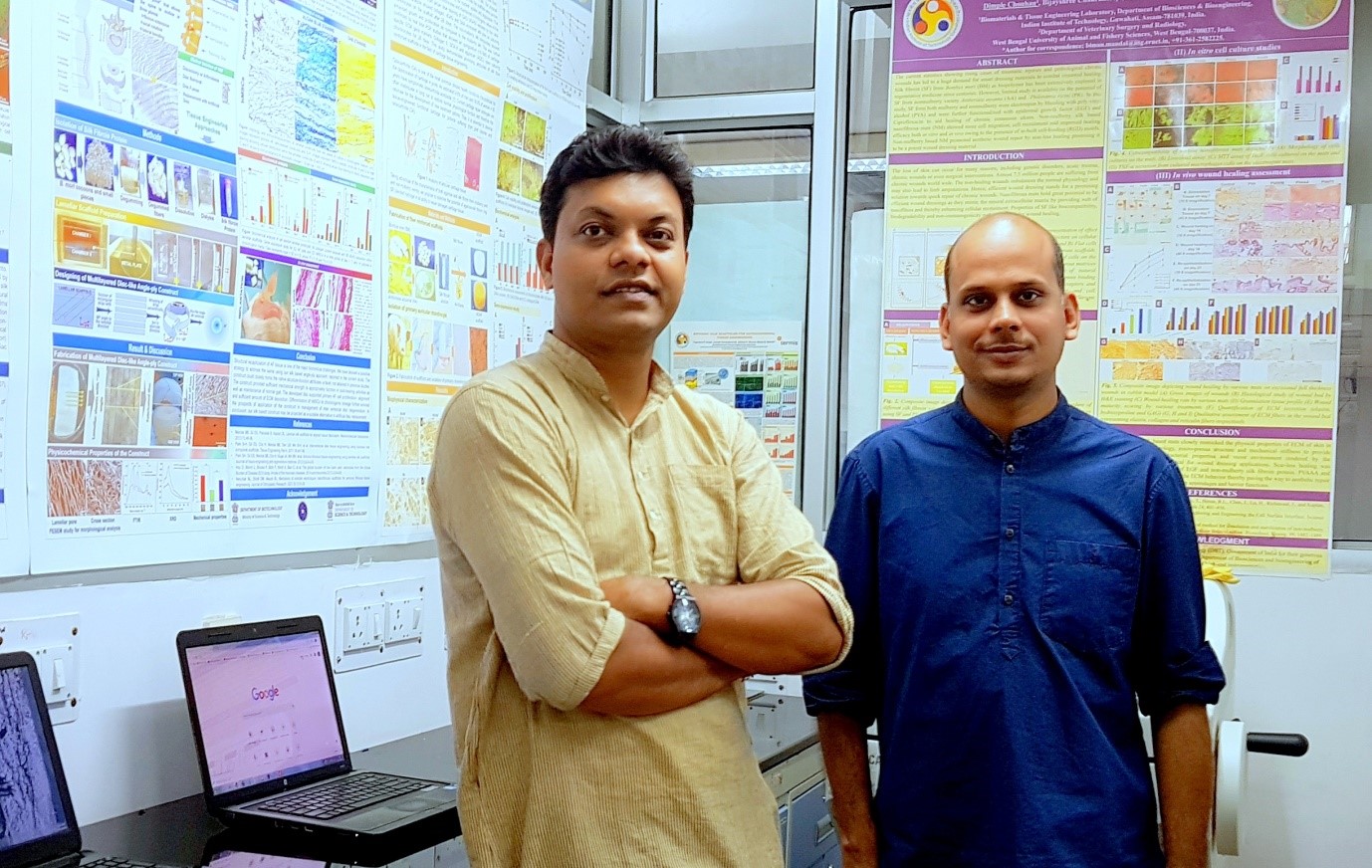
The research team included Mani Shekhar Kumar, Prerak Gupta, Sohenii Bhattacharjee and Biman B. Mandal (IIT- Guwahati); AND Samit K. Nandi (West Bengal University of Animal and Fishery Sciences, Kolkata). The study results have been published in journal Biomaterials.  (India Science Wire)

By Ratneshwar Thakur

Journal Article

Immunomodulatory injectable silk hydrogels maintaining functional islets and promoting anti-inflammatory M2 macrophage polarization

If you liked this article, then please subscribe to our YouTube Channel for the latest Science & Tech news. You can also find us on Twitter & Facebook.
To address this problem, researchers used a mixture of two silk proteins (mulberry Bombyx mori and non-mulberry Antheraea assama) which leads to self-gelation. Insulin-producing islet cells were harvested from rats and encapsulated in a hydrogel. The hydrogel was loaded with immunosuppressive drugs to prevent immune rejection. It was then injected under the skin of rats.

“The islet delivery matrix could be easily injected in a minimally invasive manner while maintaining islet cell viability and glucose-responsive insulin production at the transplantation site. The hydrogel could be highly affordable as raw materials for making the hydrogel are abundantly available,” said Dr. Biman B. Mandal, who led the research.

The development, he said, is promising as it may help type 1 diabetes patients to get rid of frequent insulin injections in future.

The research team included Mani Shekhar Kumar, Prerak Gupta, Sohenii Bhattacharjee and Biman B. Mandal (IIT- Guwahati); AND Samit K. Nandi (West Bengal University of Animal and Fishery Sciences, Kolkata). The study results have been published in journal Biomaterials.  (India Science Wire)

By Ratneshwar Thakur

Journal Article

Immunomodulatory injectable silk hydrogels maintaining functional islets and promoting anti-inflammatory M2 macrophage polarization

If you liked this article, then please subscribe to our YouTube Channel for the latest Science & Tech news. You can also find us on Twitter & Facebook.
" }
Scientists Identify Potential Early Biomarker for Alzheimer’s

Scientists Identify Potential Early Biomarker for Alzheimer’s

In a significant advance in the understanding of Alzheimer’s disease, scientists at the Indian Institute of Science (IISc), Bengaluru, have figured out the way memory deficit develops in early stages.

  • News
  • 1.9K
Read more
Indian Monsoon Recovering After Decades of Decline

Indian Monsoon Recovering After Decades of Decline

As the parched Indian subcontinent eagerly awaits the monsoon, all indications are that it will be a normal monsoon, especially since no El Niño is in the offing for 2018.

  • News
  • 1.9K
Read more
Eggshell-Derived Nano Particles Can Be Used For Drug Delivery

Eggshell-Derived Nano Particles Can Be Used For Drug Delivery

Eggshells are among the most commonly discarded kitchen waste. Now scientists are putting eggshells to some novel use – drug delivery – by deriving nanoparticles out of them.

  • News
  • 2.8K
Read more

Internet is huge! Help us find great content

Newsletter

Never miss a thing! Sign up for our newsletter to stay updated.

About

Research Stash is a curated collection of tools and News for S.T.E.M researchers

Have any questions or want to partner with us? Reach us at [email protected]

Navigation

Submit