

This Is How Nutrition May Help Overcome Genetic Risk of Diabetes

This Is How Nutrition May Help Overcome Genetic Risk of Diabetes

  • Research Stash
  • News
  • 2.2K

For years, scientists have been engaged in finding human genes associated with lifestyle diseases like diabetes and heart disease to know if certain population groups are prone to these disorders. Now Indian scientists have found that good nutrition can actually modify the risk of diabetes posed by the presence of certain faulty genes.

New research has revealed that good nutrition – in the form of B12 and folic acid supplements – has a beneficial impact on genes associated with Type 2 diabetes. The study has been led by scientists at the Hyderabad-based Centre for Cellular and Molecular Biology (CCMB), a laboratory of the Council of Scientific and Industrial Research (CSIR).

Vitamins B12 and folate plays an important role in DNA methylation – a process that regulates the various function of genes without altering the sequence. In DNA methylation, basically, the methyl group is added to DNA which can result in the change in its activity.

Researchers provided Vitamin B12 and folic acid to a group of children for one year and examined the DNA methylation status by analyzing their blood samples. They found that only vitamin B12 and not folic acid influences regulation of several Type 2 Diabetes associated genes through methylation of a specific microRNA.
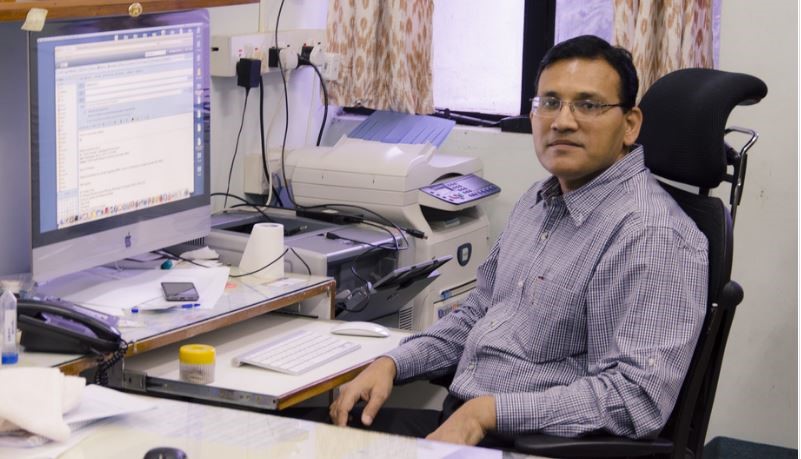
Dr. Giriraj R Chandak at CSIR-CCMBDr. Giriraj R Chandak at CSIR-CCMB

“This assumes significance in the light of our earlier observations that maternal homocysteine levels due to vitamin B12 deficiency are predictive of the future risk of cardio-metabolic risk in their children. Hence, this study provides a novel epigenetic explanation for the association between disordered one-carbon metabolism and risk of adiposity, insulin resistance and diabetes and has translational potential” Dr. Giriraj R Chandak, who led the research, told India Science Wire.

To understand the programming of complex diseases in more detail, the group is currently working a group of mothers who were given micronutrients, to see the effect of supplementation in their offspring. This work is being done in collaboration with Dr. C S Yajnik at KEM Hospital and Research Centre (KEMHRC), Pune. In order to understand the molecular mechanism of programming in more details, similar conditions have been generated in animal models and effects are being analyzed in their cells, tissues, and organs.

“Finding of this study will enrich our understanding of the molecular mechanism of fetal programming, cause, and development of complex diseases. These studies will have potential public health significance and help in designing prevention policies,” added Dr. Chandak.

The research team included Dr. Giriraj R Chandak, Dilip Kumar Yadav and Smeeta Shrestha from –CCMB; Hong Pan and Joanna D Holbrook from Singapore Institute for Clinical Sciences; Caroline HD Fall and Karen A Lillycrop from Southampton General Hospital, UK; Charu V Joglekar and C S Yajnik from KEM Health Research Centre, Pune. The study was funded by CSIR, Wellcome Trust and Department of Biotechnology (DBT). (India Science Wire)

By Yogesh Sharma

For the latest Science, Tech news and conversations, follow Research Stash on TwitterFacebook, and subscribe to our YouTube channel 
Rate

Researchers provided Vitamin B12 and folic acid to a group of children for one year and examined the DNA methylation status by analyzing their blood samples. They found that only vitamin B12 and not folic acid influences regulation of several Type 2 Diabetes associated genes through methylation of a specific microRNA.

Dr. Giriraj R Chandak at CSIR-CCMBDr. Giriraj R Chandak at CSIR-CCMB

“This assumes significance in the light of our earlier observations that maternal homocysteine levels due to vitamin B12 deficiency are predictive of the future risk of cardio-metabolic risk in their children. Hence, this study provides a novel epigenetic explanation for the association between disordered one-carbon metabolism and risk of adiposity, insulin resistance and diabetes and has translational potential” Dr. Giriraj R Chandak, who led the research, told India Science Wire.

To understand the programming of complex diseases in more detail, the group is currently working a group of mothers who were given micronutrients, to see the effect of supplementation in their offspring. This work is being done in collaboration with Dr. C S Yajnik at KEM Hospital and Research Centre (KEMHRC), Pune. In order to understand the molecular mechanism of programming in more details, similar conditions have been generated in animal models and effects are being analyzed in their cells, tissues, and organs.

“Finding of this study will enrich our understanding of the molecular mechanism of fetal programming, cause, and development of complex diseases. These studies will have potential public health significance and help in designing prevention policies,” added Dr. Chandak.

The research team included Dr. Giriraj R Chandak, Dilip Kumar Yadav and Smeeta Shrestha from –CCMB; Hong Pan and Joanna D Holbrook from Singapore Institute for Clinical Sciences; Caroline HD Fall and Karen A Lillycrop from Southampton General Hospital, UK; Charu V Joglekar and C S Yajnik from KEM Health Research Centre, Pune. The study was funded by CSIR, Wellcome Trust and Department of Biotechnology (DBT). (India Science Wire)

By Yogesh Sharma

For the latest Science, Tech news and conversations, follow Research Stash on TwitterFacebook, and subscribe to our YouTube channel 

" }
Lignin from Agro Waste Helps Make Useful Nano-composites

Lignin from Agro Waste Helps Make Useful Nano-composites

Researchers at the Mohali-based Centre of Innovative and Applied Bioprocessing have developed a lignin based nanocomposite which could potentially have commercial value

  • News
  • 2.3K
Read more
Coral reefs in Gulf of Mannar

Invasive Marine Sponge Found In Gulf of Mannar

Coral reefs in the Gulf of Mannar in Tamil Nadu are facing a new threat. Researchers have found that an invasive marine sponge species, Terpios hoshinota, is growing aggressively over live coral colonies in Van Island in the Mannar Bay, which could prove fatal for coral reefs there.

  • News
  • 3.3K
Read more
Here Is a Solution for Crop Residue Burning Problem

Here Is a Solution for Crop Residue Burning Problem

A new study has found that farmers in north India can not only help reduce air pollution but also improve the productivity of their soil and earn more profits if they stop burning their crop residue and instead adopted the concept of no-till farming

  • News
  • 1.8K
Read more

Internet is huge! Help us find great content

Newsletter

Never miss a thing! Sign up for our newsletter to stay updated.

About

Research Stash is a curated collection of tools and News for S.T.E.M researchers

Have any questions or want to partner with us? Reach us at hello@researchstash.com

Navigation

Submit