
Here Is a Solution for Crop Residue Burning Problem

Here Is a Solution for Crop Residue Burning Problem

  • Research Stash
  • News
  • 1.9K

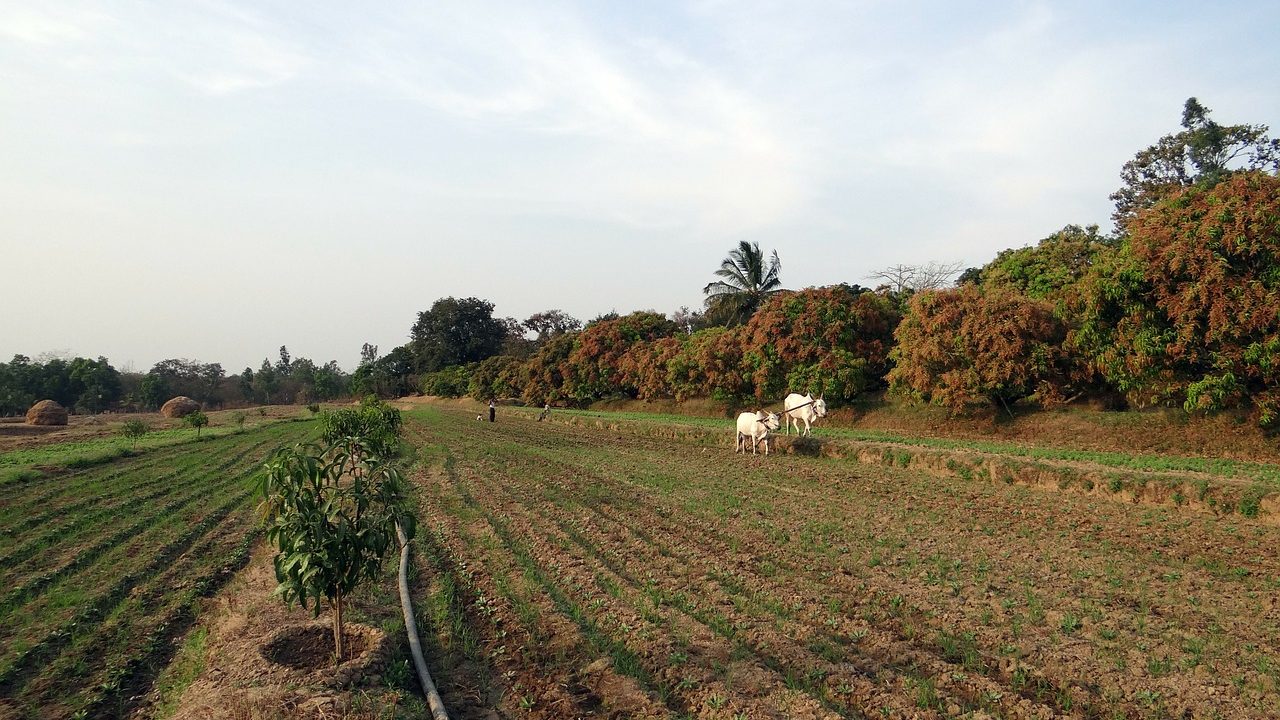
A new study has found that farmers in north India can not only help reduce air pollution but also improve the productivity of their soil and earn more profits if they stop burning their crop residue and instead adopted the concept of no-till farming.

The researchers compared the cost and benefits of 10 distinct land preparation and sowing practices for rice-wheat cropping rotations prevalent in north India, spread across more than 4 million hectares. They also collected primary date from 1,015 farmers in Punjab.

Based on this, they have concluded that the direct seeding of wheat into unplowed soil and with rice residues left behind was the best option. It saved on water, labor and use of agro-chemicals, reduced greenhouse gas emissions, and improved soil health and crop yield and thus benefitting both farmers and the society at large. The Happy Seeder option will eliminate air pollution by crop burning and reduce GHG emissions from on-farm activities by more than 78% relative to all burning options.

The study found that the `Happy Seeder’ based systems are on average 20 percent more profitable than the most common ‘burnt’ systems and almost 10 percent more than the most profitable burning options. Happy Seeder is a tractor-mounted device. It cuts and lifts the residue of the previous crop (in this case the rice straw) and sows a new crop (wheat) in its place.

It is a direct sowing machine that is capable of seeding for the new wheat crop even in the presence of the rice straw residues on the soil surface without any tillage. To add to the benefit for the farmers, they can deploy the system immediately after the harvest of the rice crop. It deposited the straw over the sown area as mulch.

“Our study dovetails with the package of policies put in place by the Government of India last year to stop farmers from burning their crop residue. The package includes a US$166 million subsidy to promote mechanization to manage crop residues in fields,” said Priya Shyamsundar, Lead Economist, Global Science, of The Nature Conservancy and first author of the study.

“We are working to scale up the happy seeder technology to end rice residue burning for farmers’ prosperity and better public health. We have done a detailed analysis to understand public and private costs and benefits of residue management alternatives, building on our long-term research work,” said M.L. Jat, co-author of the study and Principal Scientist, International Maize and Wheat Improvement Center (CIMMYT), while speaking with India Science Wire.

Results of the study have been published in Journal Science. Researchers from The Nature Conservancy, the International Maize and Wheat Improvement Center (CIMMYT), the Indian Council of Agricultural Research (ICAR), the Borlaug Institute for South Asia (BISA) and the University of Minnesota conducted the study. (ISW)

Jyoti Singh

If you liked this article, then please subscribe to our YouTube Channel for the latest Science & Tech news. You can also find us on Twitter & Facebook.

The study found that the `Happy Seeder’ based systems are on average 20 percent more profitable than the most common ‘burnt’ systems and almost 10 percent more than the most profitable burning options. Happy Seeder is a tractor-mounted device. It cuts and lifts the residue of the previous crop (in this case the rice straw) and sows a new crop (wheat) in its place.

It is a direct sowing machine that is capable of seeding for the new wheat crop even in the presence of the rice straw residues on the soil surface without any tillage. To add to the benefit for the farmers, they can deploy the system immediately after the harvest of the rice crop. It deposited the straw over the sown area as mulch.

“Our study dovetails with the package of policies put in place by the Government of India last year to stop farmers from burning their crop residue. The package includes a US$166 million subsidy to promote mechanization to manage crop residues in fields,” said Priya Shyamsundar, Lead Economist, Global Science, of The Nature Conservancy and first author of the study.

“We are working to scale up the happy seeder technology to end rice residue burning for farmers’ prosperity and better public health. We have done a detailed analysis to understand public and private costs and benefits of residue management alternatives, building on our long-term research work,” said M.L. Jat, co-author of the study and Principal Scientist, International Maize and Wheat Improvement Center (CIMMYT), while speaking with India Science Wire.

Results of the study have been published in Journal Science. Researchers from The Nature Conservancy, the International Maize and Wheat Improvement Center (CIMMYT), the Indian Council of Agricultural Research (ICAR), the Borlaug Institute for South Asia (BISA) and the University of Minnesota conducted the study. (ISW)

Jyoti Singh

If you liked this article, then please subscribe to our YouTube Channel for the latest Science & Tech news. You can also find us on Twitter & Facebook.
" }

Stay Simple to Express a Noble Aspiration: the RSC & AlChE Fellow—Prof. Chen Yu-wen

Professor Chen Yu-wen from the Department of Chemical and Materials Engineering, a person wearing retro glasses and looking like an artist, was honorably selected as a Fellow of the Royal Society of Chemistry (RSC) last year and a Fellow of the American Institute of Chemical Engineers (AIChE) in this year.

  • News
  • 2.4K
Read more
Nurturing Young Talents of North-East for Science

Nurturing Young Talents of North-East for Science

Sci-Connect, the programme consisted of a series of quiz competitions at different levels that will culminate in the final round where top three teams of three students each would be selected and presented cash awards

  • News
  • 2.6K
Read more

Seven Taiwan universities rank in Asia-Pacific top 100

A total of seven Taiwan tertiary education institutions are ranked among the 100 best universities in the Asia-Pacific, according to U.K.-based Times Higher Education magazine July 4.

  • News
  • 2.4K
Read more

Internet is huge! Help us find great content

Newsletter

Never miss a thing! Sign up for our newsletter to stay updated.

About

Research Stash is a curated collection of tools and News for S.T.E.M researchers

Have any questions or want to partner with us? Reach us at [email protected]

Navigation

Submit