Lignin from Agro Waste Helps Make Useful Nano-composites

Lignin from Agro Waste Helps Make Useful Nano-composites

  • Research Stash
  • News
  • 2.4K

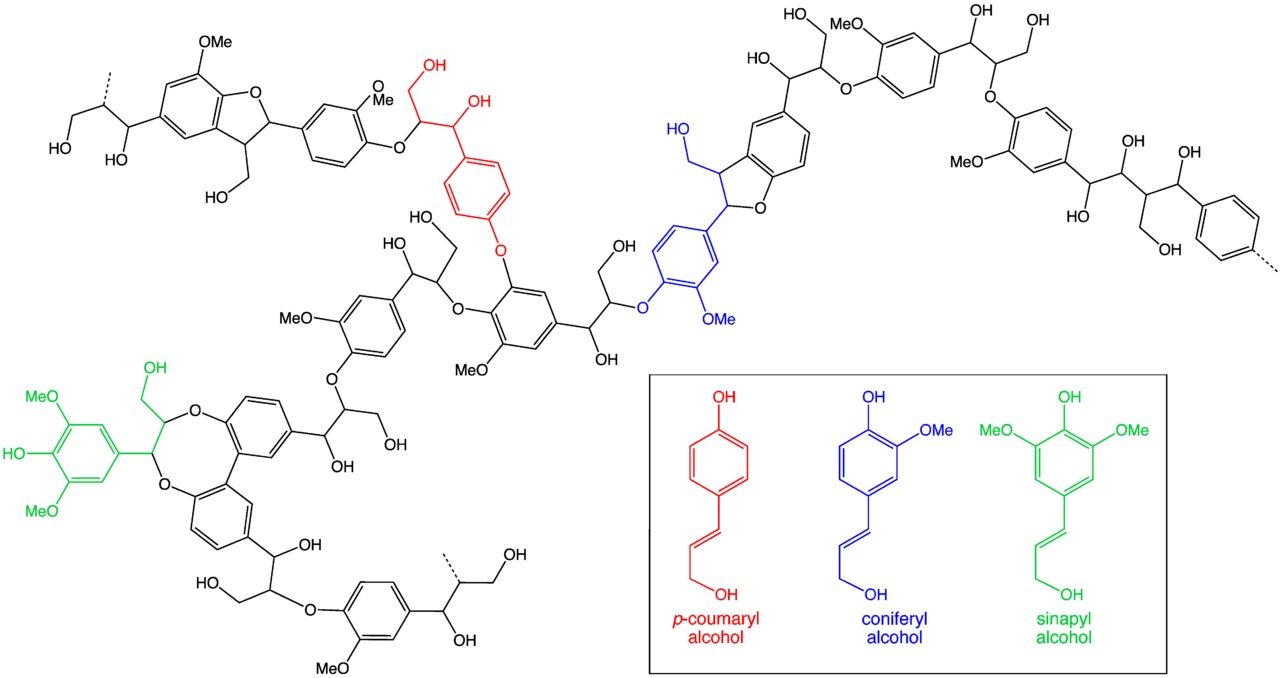
Agricultural waste can find many useful applications. Researchers at the Mohali-based Centre of Innovative and Applied Bioprocessing (CIAB) have developed a lignin-based nanocomposite which could potentially have commercial value. Microbial test results indicate that, in the long run, the lignin-based nanomaterial can act as an additive in coating and packaging materials.

Lignin is a complex organic polymer rich in polyphenols with antimicrobial qualities. It is found in almost all dry plants including crop residues and the woody bark of trees. Abundant quantities of lignin are generated as post-harvest agro-biomass and in paper and pulp industries every year, which often go waste.

“Burning of post-harvest biomass like straw is a common practice among our farmers, which leads to severe environmental pollution. We took up the challenge of converting agro-waste into value-added nanomaterials with antimicrobial properties, thereby not only reducing the pollution but trying to add to farmers’ income,” said Dr. Jayeeta Bhaumik, lead researcher of the study, while talking to India Science Wire.

The team zeroed–in on gold-silver bimetallic nanoparticles to utilize their novel physicochemical properties, and used kraft lignin as the matrix material. Instead of using harsh chemicals and high temperatures to synthesize nanocomposite, researchers applied ‘green’ and reproducible techniques, to derive nanomaterials. The process involved a single-step method utilizing lignin as the sole source for reducing, capping and stabilizing the nano-agents.

After establishing structural stability and morphology of the nanocomposite, the material was subjected to different microbial assays to evaluate its antimicrobial quality. The results indicated that the lignin-nanocomposite retained antimicrobial and antioxidant qualities of lignin.

“The lignin-bimetallic nano complexes were found to exhibit excellent targeting of microbes by the mechanism of reactive oxygen species production and membrane disruption of microbial cells, revealing that nano-complexes were internalized in microbial cells,” explained Dr. Bhaumik.

The new material could contribute to complete valorization of lignin, and large scale production costs and scalability have to be worked out, she added.

Besides Jayeeta Bhaumik, the team included Sanjam Chandna, Neeraj Singh Thakur, Yeddula Nikhileshwar Reddy, and Ravneet Kaur. The research results have been published in the journal ACS Biomaterials Science & Engineering (ISW)

Susheela Srinivas

If you liked this article, then please subscribe to our YouTube Channel for the latest Science & Tech news. You can also find us on Twitter & Facebook.

Rate

The team zeroed–in on gold-silver bimetallic nanoparticles to utilize their novel physicochemical properties, and used kraft lignin as the matrix material. Instead of using harsh chemicals and high temperatures to synthesize nanocomposite, researchers applied ‘green’ and reproducible techniques, to derive nanomaterials. The process involved a single-step method utilizing lignin as the sole source for reducing, capping and stabilizing the nano-agents.

After establishing structural stability and morphology of the nanocomposite, the material was subjected to different microbial assays to evaluate its antimicrobial quality. The results indicated that the lignin-nanocomposite retained antimicrobial and antioxidant qualities of lignin.

“The lignin-bimetallic nano complexes were found to exhibit excellent targeting of microbes by the mechanism of reactive oxygen species production and membrane disruption of microbial cells, revealing that nano-complexes were internalized in microbial cells,” explained Dr. Bhaumik.

The new material could contribute to complete valorization of lignin, and large scale production costs and scalability have to be worked out, she added.

Besides Jayeeta Bhaumik, the team included Sanjam Chandna, Neeraj Singh Thakur, Yeddula Nikhileshwar Reddy, and Ravneet Kaur. The research results have been published in the journal ACS Biomaterials Science & Engineering (ISW)

Susheela Srinivas

If you liked this article, then please subscribe to our YouTube Channel for the latest Science & Tech news. You can also find us on Twitter & Facebook.
" }
India to Enhance Natural Defence Against COVID-19

India to Enhance Natural Defence Against COVID-19

Council of Scientific and Industrial Research has decided to repurpose an approved immunomodulator called Sepsivac to enhance the innate immunity of the body to limit the spread of COVID-19 and fasten the recovery of COVID-19 patients.

  • News
  • 2.1K
Read more
Dr Sagar Sengupta with his colleagues in his lab

Study Opens New Avenue for Preventing Cancer

In a new development in the area of cancer research, scientists at Delhi-based National Institute of Immunology have found a way to stop the degradation of a protein called p53 that prevents cancer cells from proliferating and forming tumors in the body

  • News
  • 4.1K
Read more
AI Helps Identify Bat Species Suspected of Carrying Nipah Virus

AI Helps Identify Bat Species Suspected of Carrying Nipah Virus

The recent outbreak of Nipah virus in Kerala, which follows one that occurred in 2018, has brought the focus back on bats which are known to host the virus. Using machine learning - a form of artificial intelligence – an international group of scientists has identified bat species with the potential to host the Nipah virus

  • News
  • 2.2K
Read more

Internet is huge! Help us find great content

Newsletter

Never miss a thing! Sign up for our newsletter to stay updated.

About

Research Stash is a curated collection of tools and News for S.T.E.M researchers

Have any questions or want to partner with us? Reach us at [email protected]

Navigation

Submit