
Scientists Find New Dimension to Dynamics of Indian Ocean

Scientists Find New Dimension to Dynamics of Indian Ocean

  • Research Stash
  • News
  • 2K

Indian scientists have discovered a hitherto unknown effect of the tropical weather phenomenon known as Madden-Julian Oscillation, which plays an important role in determining the fate of Indian summer monsoon.

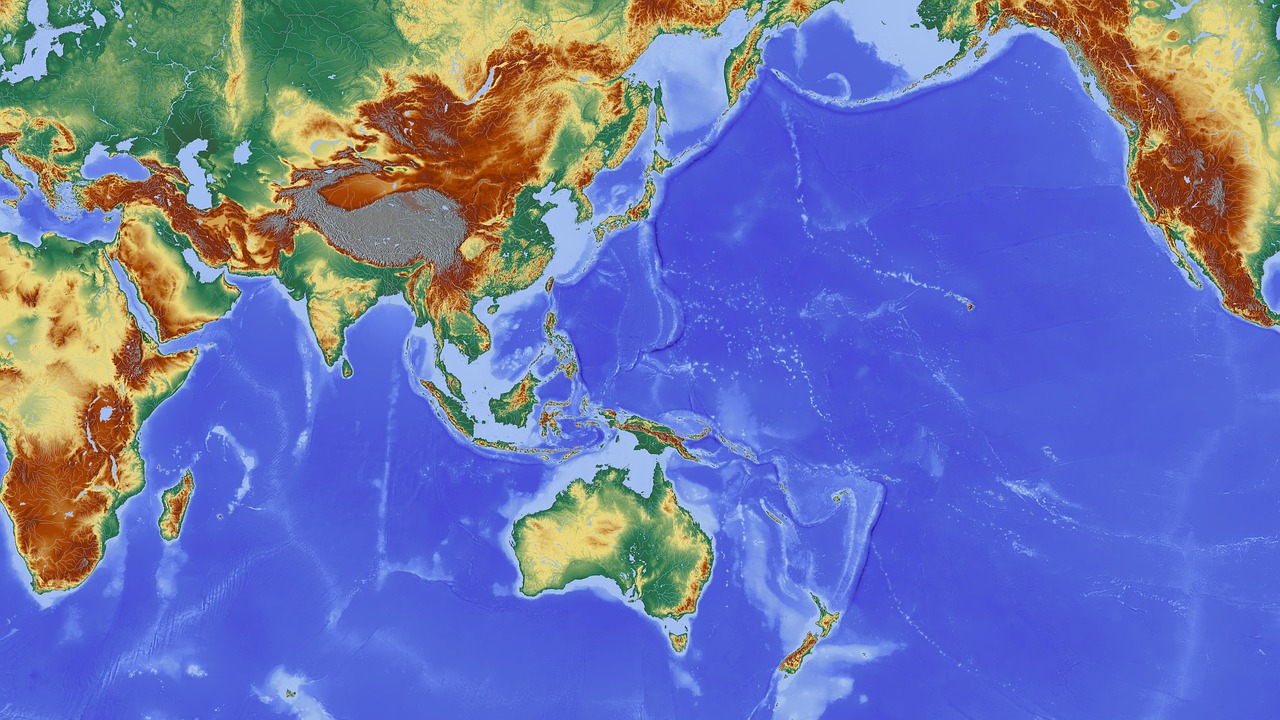
The Madden-Julian Oscillation (MJO) is an eastward moving disturbance of clouds, rainfall, winds, and pressure. It circles the planet along the tropical belt in 30-80 days. During its global ride, it intensifies over three regions – the eastern Indian Ocean, south of the maritime continent and the western Pacific Ocean and transfers a part of its energy to the underlying ocean.

The scientists have now found that when winds of MJO reach the eastern Indian Ocean, particularly over the North West Australian Basin, its energy gets transferred down to the ocean bottom, leading to an oscillation of the entire water column. This results in an interplay of underlying topography of the basin and non-uniform density of seawater across the water column. It subsequently gets radiated out through fast-moving ocean waves that eventually invade the entire tropical Indian Ocean within some hours.

“These waves carry a lot of energy and momentum. The kinetic energy contained within the North Indian Ocean due to these waves is about 20 Peta Joules – similar to the explosion of hundreds of atomic bombs. It will be interesting to explore various manifestations of this energy and how it is eventually dissipated,” explained Dr. S. S. C. Shenoi, Director of Hyderabad-based Indian National Centre for Ocean Information Services (INCOIS) while speaking to India Science Wire.

The scientists have found that the sea level in the Indian Ocean rises and falls by up to four cm every 30 to 80 days because of the movement of the water column. This assumes importance in the context of forecasting impact of cyclonic storms because MJO is a low-pressure system that facilitates cyclone formation over the Indian Ocean. Some of these cyclones intensify and inundate coasts of the Indian subcontinent. Thus, the waves generated by the MJO in the Indian Ocean can add to the impact of cyclones.

In addition, the rise and fall of sea level lead to the exchange of as much as three trillion tons of water between the Indian Ocean and the Pacific Ocean. Such large mass exchange can influence the polar motion of the earth and length of the day; whose variability is of utmost importance to the accuracy of the Global Positioning System (GPS). “Our findings are highly relevant since MJOs are expected to intensify in the wake of global warming,” Dr. Shenoi said.

Besides Dr. Shenoi, the research team included B. Rohith, Arya Paul, S. Prerna, and M. Afroosa (INCOIS); S. S. V. S. Ramakrishna (Andhra Pradesh University); Fabien Durand (University of Toulouse), and Laurent Testut (University of Rochelle, France). The findings have been published in journal Nature Communications. (India Science Wire)

By Sunderarajan Padmanabhan

If you liked this article, then please subscribe to our YouTube Channel for the latest Science & Tech news. You can also find us on Twitter & Facebook.

Rate

“These waves carry a lot of energy and momentum. The kinetic energy contained within the North Indian Ocean due to these waves is about 20 Peta Joules – similar to the explosion of hundreds of atomic bombs. It will be interesting to explore various manifestations of this energy and how it is eventually dissipated,” explained Dr. S. S. C. Shenoi, Director of Hyderabad-based Indian National Centre for Ocean Information Services (INCOIS) while speaking to India Science Wire.

The scientists have found that the sea level in the Indian Ocean rises and falls by up to four cm every 30 to 80 days because of the movement of the water column. This assumes importance in the context of forecasting impact of cyclonic storms because MJO is a low-pressure system that facilitates cyclone formation over the Indian Ocean. Some of these cyclones intensify and inundate coasts of the Indian subcontinent. Thus, the waves generated by the MJO in the Indian Ocean can add to the impact of cyclones.

In addition, the rise and fall of sea level lead to the exchange of as much as three trillion tons of water between the Indian Ocean and the Pacific Ocean. Such large mass exchange can influence the polar motion of the earth and length of the day; whose variability is of utmost importance to the accuracy of the Global Positioning System (GPS). “Our findings are highly relevant since MJOs are expected to intensify in the wake of global warming,” Dr. Shenoi said.

Besides Dr. Shenoi, the research team included B. Rohith, Arya Paul, S. Prerna, and M. Afroosa (INCOIS); S. S. V. S. Ramakrishna (Andhra Pradesh University); Fabien Durand (University of Toulouse), and Laurent Testut (University of Rochelle, France). The findings have been published in journal Nature Communications. (India Science Wire)

By Sunderarajan Padmanabhan

If you liked this article, then please subscribe to our YouTube Channel for the latest Science & Tech news. You can also find us on Twitter & Facebook.
" }
Scientists Develop Mobile Indoor Disinfection Sprayer

Scientists Develop Mobile Indoor Disinfection Sprayer

Scientists at CSIR-Central Mechanical Engineering Research Institute have developed two mobile indoor Disinfection Sprayer units. These units can be used for cleaning and disinfecting pathogenic micro-organisms effectively, especially in hospitals.

  • News
  • 2K
Read more
EMBO Global Investigator Network Winners for 2019

EMBO Global Investigator Network Winners for 2019

Three Indian scientists have been selected to join the European Molecular Biology Organization’s recently launched Global Investigator Network Programme that is designed to support life scientists who are in the early stages of establishing independent laboratories, to have access to career-enhancing training and networking opportunities.

  • News
  • 3K
Read more

The Lunar Eclipse of 31 January: Let us not be frightened of our own shadow!

In the evening of 31 January, as we look towards the eastern sky, we will be witness to the dance of shadows that our Solar System regularly conjures up, as our Earth and the Moon move inexorably in their cosmic orbits around the Sun.

  • News
  • 2.7K
Read more

Internet is huge! Help us find great content

Newsletter

Never miss a thing! Sign up for our newsletter to stay updated.

About

Research Stash is a curated collection of tools and News for S.T.E.M researchers

Have any questions or want to partner with us? Reach us at hello@researchstash.com

Navigation

Submit