More Fruits and Veggies, Less Red Meat: This Is Planet-Friendly Diet

More Fruits and Veggies, Less Red Meat: This Is Planet-Friendly Diet

  • Research Stash
  • News
  • 2.6K

If you want to remain healthy and also keep the planet earth healthy, begin the change on your dining table.

Over the past half a century, food habits have changed globally – leaning more towards unhealthy diets that are high in calories and heavily-processed and animal source foods. This shift has led to not only the rising burden of obesity and non-communicable but has also contributed to environmental degradation.

If we want to live healthily and also keep the planet healthy, the only way is to align our diets with what is good for us as well as the planet, a new study published in medical journal The Lancet on Thursday has concluded.

The global study has recommended a planet reference diet which is good for human health as well as sustainable development. A collective effort to transform diets and food production globally can ensure there is enough food for 10 billion people the planet will have by 2050 and also beyond. The study has been done by The Lancet Commission – a collection of 37 experts from 16 countries.

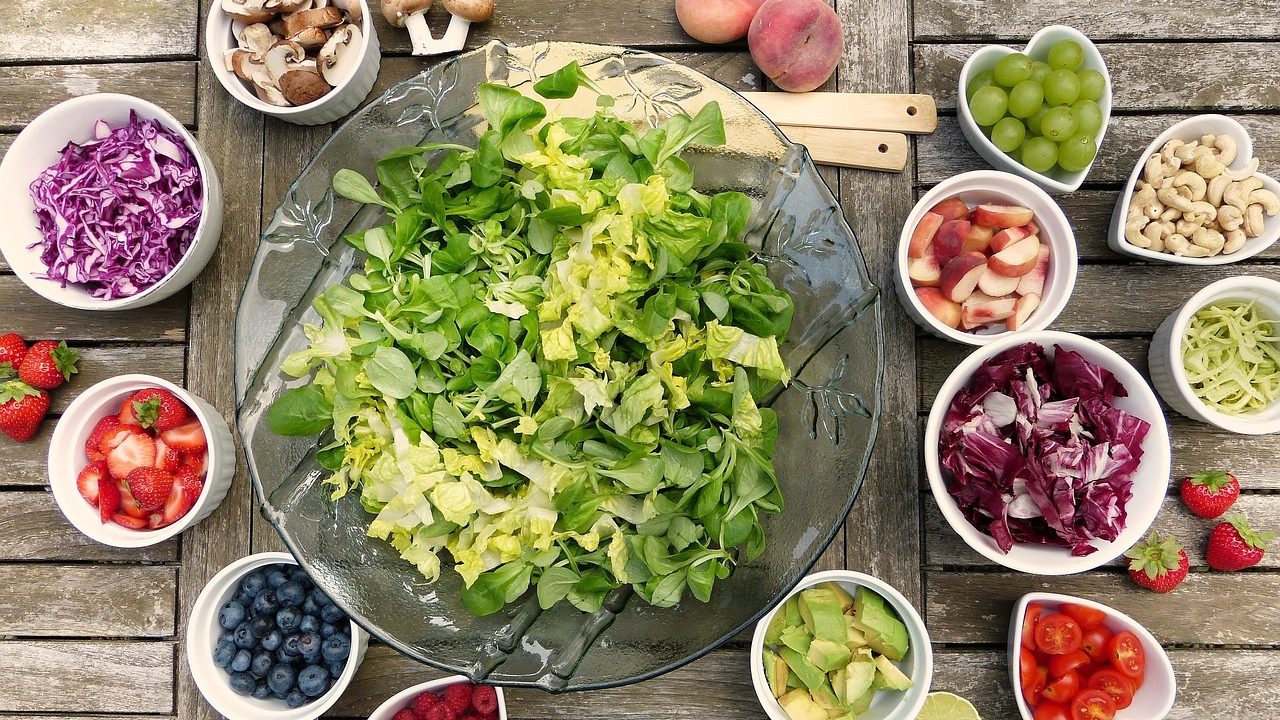
The healthy reference diet recommended largely consists of vegetables, fruits, whole grains, legumes, nut, and unsaturated oils. It also includes a low to moderate amount of seafood and poultry, no or low quantity of red meat, processed meat, added sugar, refined grains and starchy vegetables.

The dietary shift would mean a dramatic reduction on consumption of unhealthy foods like read meat by, at least, 50 percent, with a recommended daily combined intake of 14 grams. On the other hand, there should be a 100 percent increase in the consumption of legumes, nuts, fruits, and vegetables. Multi-sectoral policies have been suggested for this shift.

“Humanity’s dominant diets are not good for us and they are not good for the planet,” the journal said in its editorial. The transformation in global food systems requires changes at multiple levels in the form of incentives, regulations, and the integration of policies in different sectors.

“Rising global demand for food over the next thirty years has to be met by the agricultural and food systems in environment-friendly ways that assure good nutrition to all,” observed Dr. K Srinath Reddy, President, Public Health Foundation of India, one of the co-authors of the study.

Predominantly plant-based foods should be promoted globally, with reduced consumption of red meat in countries where it is unduly high. “A flexitarian diet with plenty of fruits, vegetables, nuts, seeds, a diversity of grains and a moderate amount of fish is appropriate with fowl and small amounts of red meat as an occasional component.

For India, the focus should be on improving the production, preservation, processing, supply, and consumption of fruit and vegetables while increasing the availability of plant protein sources like pulses. Reducing sugar consumption should be a universal goal,” he added.

Sunita Narain, director general, Centre for Science and Environment (CSE) who is also  co-author of the study, told India Science Wire, “the most important takeaway is that we must recognize that our traditional diet, both in terms of plant-based proteins and moderation in meat consumption, is turning out to the best diet in the world. As I have repeatedly said, it is not only about meat, but how much is eaten and how it is grown. That is what the Lancet Commission has recognized.” (India Science Wire)

By Dinesh C Sharma

If you liked this article, then please subscribe to our YouTube Channel for the latest Science & Tech news. You can also find us on Twitter & Facebook.
The global study has recommended a planet reference diet which is good for human health as well as sustainable development. A collective effort to transform diets and food production globally can ensure there is enough food for 10 billion people the planet will have by 2050 and also beyond. The study has been done by The Lancet Commission – a collection of 37 experts from 16 countries.

The healthy reference diet recommended largely consists of vegetables, fruits, whole grains, legumes, nut, and unsaturated oils. It also includes a low to moderate amount of seafood and poultry, no or low quantity of red meat, processed meat, added sugar, refined grains and starchy vegetables.

The dietary shift would mean a dramatic reduction on consumption of unhealthy foods like read meat by, at least, 50 percent, with a recommended daily combined intake of 14 grams. On the other hand, there should be a 100 percent increase in the consumption of legumes, nuts, fruits, and vegetables. Multi-sectoral policies have been suggested for this shift.

“Humanity’s dominant diets are not good for us and they are not good for the planet,” the journal said in its editorial. The transformation in global food systems requires changes at multiple levels in the form of incentives, regulations, and the integration of policies in different sectors.

“Rising global demand for food over the next thirty years has to be met by the agricultural and food systems in environment-friendly ways that assure good nutrition to all,” observed Dr. K Srinath Reddy, President, Public Health Foundation of India, one of the co-authors of the study.

Predominantly plant-based foods should be promoted globally, with reduced consumption of red meat in countries where it is unduly high. “A flexitarian diet with plenty of fruits, vegetables, nuts, seeds, a diversity of grains and a moderate amount of fish is appropriate with fowl and small amounts of red meat as an occasional component.

For India, the focus should be on improving the production, preservation, processing, supply, and consumption of fruit and vegetables while increasing the availability of plant protein sources like pulses. Reducing sugar consumption should be a universal goal,” he added.

Sunita Narain, director general, Centre for Science and Environment (CSE) who is also  co-author of the study, told India Science Wire, “the most important takeaway is that we must recognize that our traditional diet, both in terms of plant-based proteins and moderation in meat consumption, is turning out to the best diet in the world. As I have repeatedly said, it is not only about meat, but how much is eaten and how it is grown. That is what the Lancet Commission has recognized.” (India Science Wire)

By Dinesh C Sharma

If you liked this article, then please subscribe to our YouTube Channel for the latest Science & Tech news. You can also find us on Twitter & Facebook.
" }
Opioid Addiction Treating Drug May Be Repurposed for Type 2 Diabetes

Opioid Addiction Treating Drug May Be Repurposed for Type 2 Diabetes

Researchers from the Indian Institute of Technology, Mandi have unraveled the mechanism by which insulin overload in the body causes insulin resistance that is associated with diabetes.

  • News
  • 1.7K
Read more
IIT Kharagpur Gets New High Power Computing Facility

IIT Kharagpur Gets New High Power Computing Facility

Indian Institute of Technology, Kharagpur, is all set to ramp up its research and development activities with the acquisition of a 1.3 petaflop high power computing facility and a data centre under the National Supercomputing Mission

  • News
  • 2.3K
Read more
Scientists Develop Salt Tolerant Rice Variety

Scientists Develop Salt Tolerant Rice Variety

A group of Indian scientists has developed a new salt-tolerant transgenic rice plant by over-expressing a gene from wild rice called Porteresia coarctata into the commonly used IR 64 indica rice variety. Porteresia coarctata is a native of India, Sri Lanka, Bangladesh, and Myanmar and is grown mainly in saline estuaries

  • News
  • 2K
Read more

Internet is huge! Help us find great content

Newsletter

Never miss a thing! Sign up for our newsletter to stay updated.

About

Research Stash is a curated collection of tools and News for S.T.E.M researchers

Have any questions or want to partner with us? Reach us at [email protected]

Navigation

Submit