Evergreen Shrub May Be a Source of New Cancer Diagnostic Agent

Evergreen Shrub May Be a Source of New Cancer Diagnostic Agent

  • Research Stash
  • News
  • 3.2K

A team of researchers at the Indian Institute of Technology-Roorkee, have developed a set of fluorescent carbon nano-dots that promises to serve as a diagnostic-cum- therapeutic agent for cancer.

Evergreen Shrub May Be a Source of New Cancer Diagnostic Agent

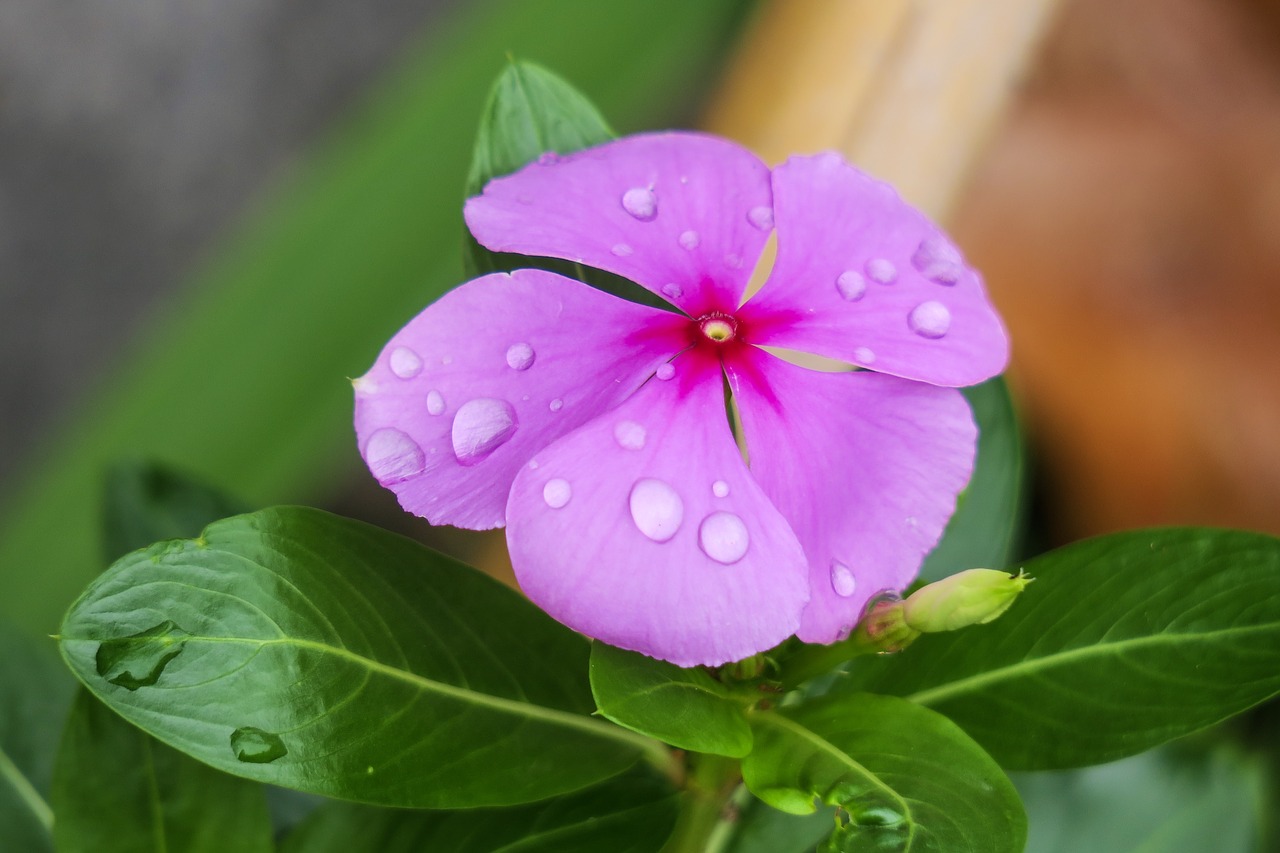
The nanocarbon material has been extracted from the leaves of a rosy periwinkle plant, an evergreen plant that often growing out of crevices of walls. The roots and shoots of this plant –Catharanthus Roseus – are used in Ayurveda for treatment of several diseases. Its extracts are used in traditional Chinese medicine for treatment of diabetes, malaria and Hodgkin’s lymphoma.

The researchers at IIT-Roorkee synthesized carbon nano-dots by heating the leaves in a process called hydrothermal reaction. These nano-dots were found to exhibit strong fluorescence, which makes them potentially suited for use in diagnosis and to mediate anti-cancer activity.
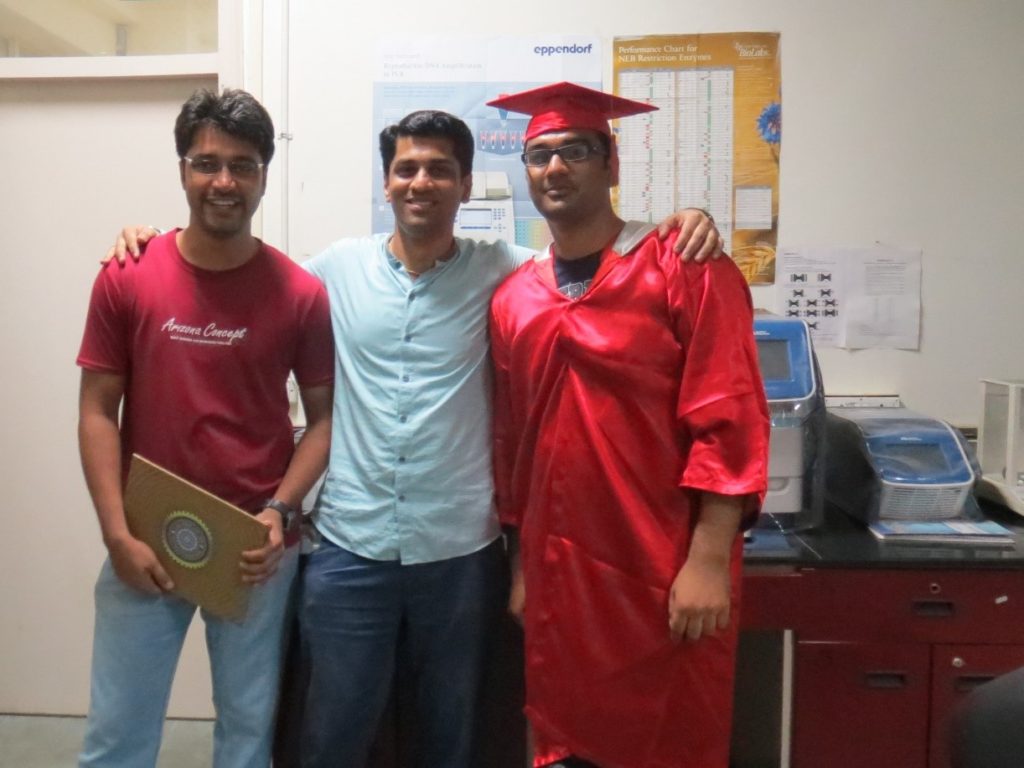
Research team at IIT Roorkee

IMAGE: Research team at IIT Roorkee

The nano-dots were tested in embryonic fibroblast cells of the mouse. When incubated in the presence of carbon nano-dot suspensions for a few hours, these cells showed fluorescence, indicating that the carbon dots had entered the cells. The nano-dots then disrupted microtubule formation in the cell nuclei. Microtubules are the initiators of cell division, and their inhibition prevents the duplication of cells and thus curtails their proliferation.

“With these nano-materials, we can identify cancer cells and track them by an imaging system simultaneously as the cells themselves are being eradicated in a precise manner,” said Dr. P.Gopinath, Assistant Professor at the Institute’s Centre of Nanotechnology. The team now plans animal studies for further evaluation.

The research work was supported by the Science and Engineering Research Board (SERB) and Department of Biotechnology (DBT). A report on the findings was recently published in journal Colloids and Surfaces B: Biointerfaces. (India Science Wire)

By Sunderarajan Padmanabhan

If you liked this article, then please subscribe to our YouTube Channel for the latest Science & Tech news. You can also find us on Twitter & Facebook.
The researchers at IIT-Roorkee synthesized carbon nano-dots by heating the leaves in a process called hydrothermal reaction. These nano-dots were found to exhibit strong fluorescence, which makes them potentially suited for use in diagnosis and to mediate anti-cancer activity.

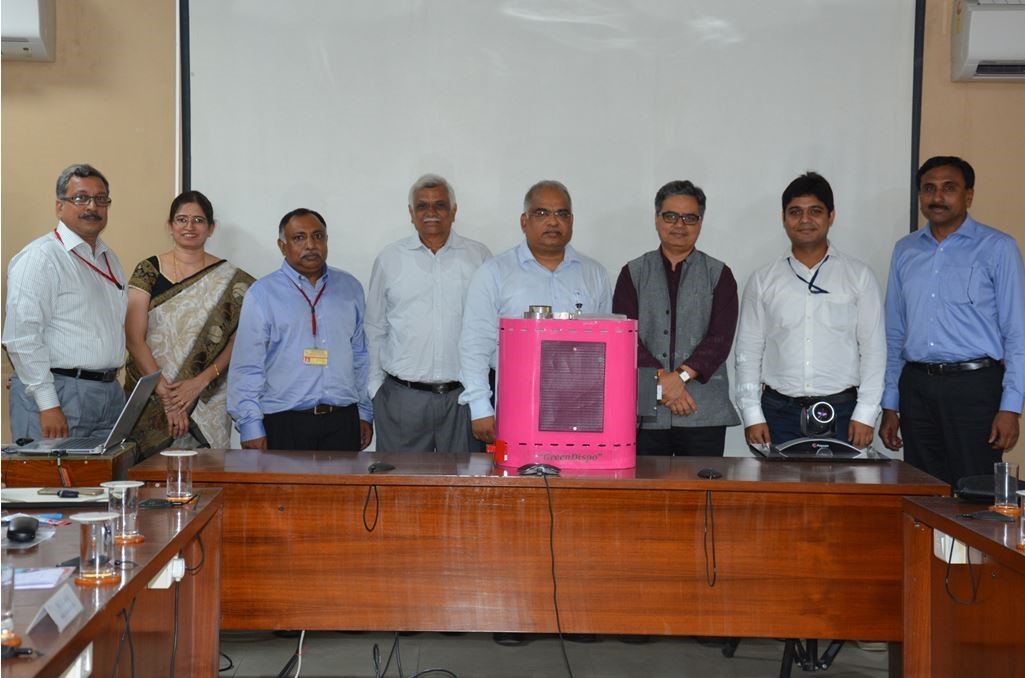
Research team at IIT Roorkee

IMAGE: Research team at IIT Roorkee

The nano-dots were tested in embryonic fibroblast cells of the mouse. When incubated in the presence of carbon nano-dot suspensions for a few hours, these cells showed fluorescence, indicating that the carbon dots had entered the cells. The nano-dots then disrupted microtubule formation in the cell nuclei. Microtubules are the initiators of cell division, and their inhibition prevents the duplication of cells and thus curtails their proliferation.

“With these nano-materials, we can identify cancer cells and track them by an imaging system simultaneously as the cells themselves are being eradicated in a precise manner,” said Dr. P.Gopinath, Assistant Professor at the Institute’s Centre of Nanotechnology. The team now plans animal studies for further evaluation.

The research work was supported by the Science and Engineering Research Board (SERB) and Department of Biotechnology (DBT). A report on the findings was recently published in journal Colloids and Surfaces B: Biointerfaces. (India Science Wire)

By Sunderarajan Padmanabhan

If you liked this article, then please subscribe to our YouTube Channel for the latest Science & Tech news. You can also find us on Twitter & Facebook.

" }
Mathematical Modelling for Sharper Images

Mathematical Modelling for Sharper Images

Researchers have used a grey level indicator-based nonlinear telegraph diffusion model which views the image as an elastic sheet, which when compressed, removes the speckles.

  • News
  • 1.6K
Read more

A one-stop solution for all your research and career needs

You must have often wondered as to why you have to spend so much time trying to find information (jobs, internships, products, reagents, labs, news, protocols etc.) on the internet. Well, that is because the information is scattered all over on different websites, blogs, and social media pages. Hence, my team and I came up […]

  • News
  • 2K
Read more
New Material from Silk Protein & Silver Nano-particles May Make Implants Safe

New Material from Silk Protein & Silver Nano-particles May Make Implants Safe

A scaffold made from silk protein fibroin and silver nanoparticles has been found to have antimicrobial properties and may have application as a biomaterial for implants

  • News
  • 3.1K
Read more

Internet is huge! Help us find great content

Newsletter

Never miss a thing! Sign up for our newsletter to stay updated.

About

Research Stash is a curated collection of tools and News for S.T.E.M researchers

Have any questions or want to partner with us? Reach us at [email protected]

Navigation

Submit