
Two Top R&D Institutions Come Together To Help in Better Disposal of Sanitary Napkins

Top R&D Institutions Come Together To Help in Better Disposal of Sanitary Napkins

  • Research Stash
  • News
  • 1.9K

Two leading Indian scientific institutions have come together with a private partner to launch a new high tech device to ensure that the growing popularity of sanitary napkins does not end up becoming an environmental nightmare.
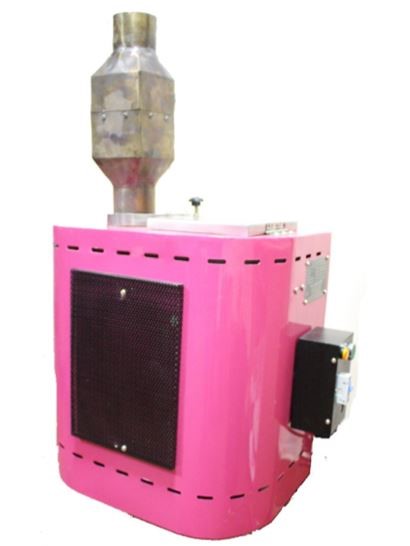
Greendispo prototype

Greendispo prototype

Called GreenDispo, the device has been designed in such that it will incinerate the sanitary napkins completely with minimal flue gas emission. It is estimated that 432 million pads are already been disposed of every month in the country and this is expected to grow multifold in the coming years.

Inappropriate handling of the used pads is already posing a major challenge as the pads grow harmful pathogens causing serious health and environmental hazards. In addition, blocking of drainage paths due to the disposed of napkins is becoming a critical issue.

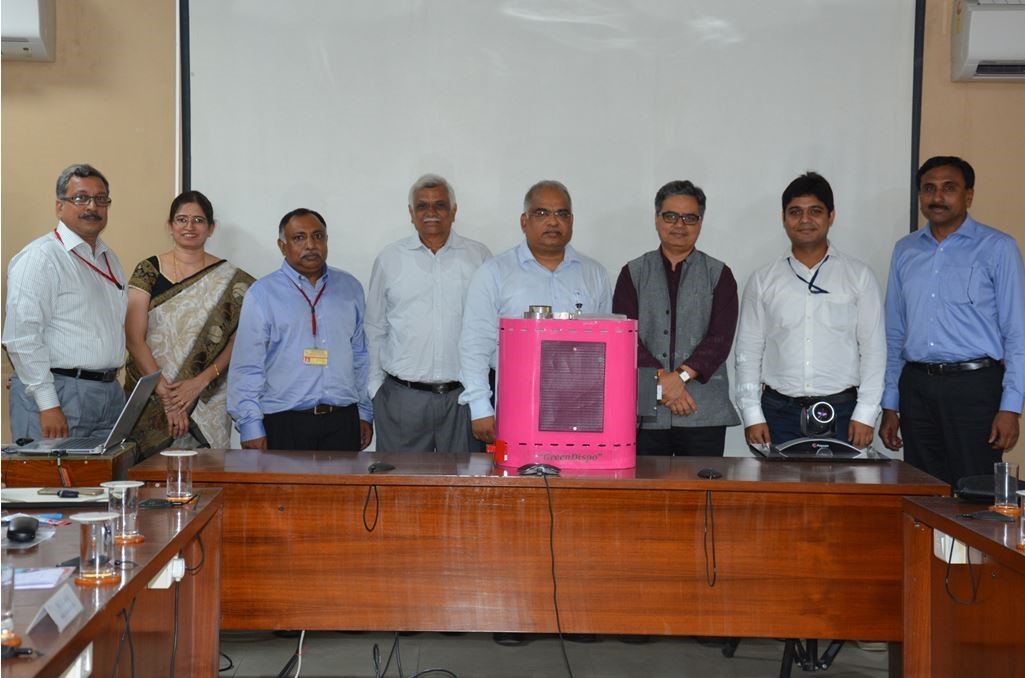
The new device combines the expertise of the Hyderabad-based International Advanced Research Centre for Powder Metallurgy (ARCI) in the area of processing and shaping of ceramics, the knowledge of Council of Scientific and Industrial Research’s Nagpur-based National Environmental Engineering Research Institute in flue gas emission control, and  the skill of Secunderabad-based Sowbal Aerothermics in energy efficient designing and manufacturing.

Launching the product, NEERI Director, Rakesh Kumar, said the specially designed heaters of the device generated a temperature of more than 800 degrees Celsius, which helped in the complete combustion of the used pad. It also had a secondary heating chamber with a temperature of 1050 degrees Celsius to take care of any hazardous emissions from the incinerator.

ARCI Director, Dr. G. Padmanabhan, noted that ARCI experts have designed special ceramic holders for the device to ensure that the heat is channelized most effectively. The concentration of heat to the pads not only provide reduced ignition time, higher peak temperature, an increased life expectancy of the heater element and reduced power consumption.

Mr. V.V.S.Rao of Sowbal Aerothermics said that the device will be available with a power rating of 800 and 1,000 watts and a unit size of two to three cubic feet volume. It is a batch type incinerator suitable for use anywhere including rural areas, colleges, schools, hostels, offices and public places. It has been tested for emissions and reliability of performance through field trials under practical conditions. It will be marketed by Messrs Girl Care under the name of `Pad Burn”. (India Science Wire)

By Sunderarajan Padmanabhan

For the latest Science, Tech news and conversations, follow Research Stash on TwitterFacebook, and subscribe to our YouTube channel 

Rate

Called GreenDispo, the device has been designed in such that it will incinerate the sanitary napkins completely with minimal flue gas emission. It is estimated that 432 million pads are already been disposed of every month in the country and this is expected to grow multifold in the coming years.

Inappropriate handling of the used pads is already posing a major challenge as the pads grow harmful pathogens causing serious health and environmental hazards. In addition, blocking of drainage paths due to the disposed of napkins is becoming a critical issue.

The new device combines the expertise of the Hyderabad-based International Advanced Research Centre for Powder Metallurgy (ARCI) in the area of processing and shaping of ceramics, the knowledge of Council of Scientific and Industrial Research’s Nagpur-based National Environmental Engineering Research Institute in flue gas emission control, and  the skill of Secunderabad-based Sowbal Aerothermics in energy efficient designing and manufacturing.

Launching the product, NEERI Director, Rakesh Kumar, said the specially designed heaters of the device generated a temperature of more than 800 degrees Celsius, which helped in the complete combustion of the used pad. It also had a secondary heating chamber with a temperature of 1050 degrees Celsius to take care of any hazardous emissions from the incinerator.

ARCI Director, Dr. G. Padmanabhan, noted that ARCI experts have designed special ceramic holders for the device to ensure that the heat is channelized most effectively. The concentration of heat to the pads not only provide reduced ignition time, higher peak temperature, an increased life expectancy of the heater element and reduced power consumption.

Mr. V.V.S.Rao of Sowbal Aerothermics said that the device will be available with a power rating of 800 and 1,000 watts and a unit size of two to three cubic feet volume. It is a batch type incinerator suitable for use anywhere including rural areas, colleges, schools, hostels, offices and public places. It has been tested for emissions and reliability of performance through field trials under practical conditions. It will be marketed by Messrs Girl Care under the name of `Pad Burn”. (India Science Wire)

By Sunderarajan Padmanabhan

For the latest Science, Tech news and conversations, follow Research Stash on TwitterFacebook, and subscribe to our YouTube channel 

" }
A Controlled-Release Oral Pill for Kala Azar and Fungal Infections

A Controlled-Release Oral Pill for Kala Azar and Fungal Infections

Researchers have developed a method to produce controlled-release oral tablets for treating fungal infections and kala-azar. The tablets were found to release the drug Amphotericin B in a sustained and controlled manner over a period of 10 days

  • News
  • 1.9K
Read more
Novel susceptibility gene for non-familial hypokalemic periodic paralysis

Novel Susceptibility Gene for Non-Familial Hypokalemic Periodic Paralysis

Researchers from Taiwan recently reported a novel susceptibility gene for non-familial hypokalemic periodic paralysis. This study was published in Neurology

  • News
  • 1.9K
Read more
New Mission to Focus on Connecting Cyber and Physical Systems

New Mission to Focus on Connecting Cyber and Physical Systems

The central government has approved a new national mission at a cost of Rs 3660 crore to support the development of technologies and applications relating to cyber-physical systems

  • News
  • 2.5K
Read more

Internet is huge! Help us find great content

Newsletter

Never miss a thing! Sign up for our newsletter to stay updated.

About

Research Stash is a curated collection of tools and News for S.T.E.M researchers

Have any questions or want to partner with us? Reach us at hello@researchstash.com

Navigation

Submit