

Osteoporosis Drug May Find Use in Cancer Therapy

  • Research Stash
  • News
  • 1.6K

In their quest to find new drugs to treat cancer, scientists are looking to old drugs and trying to repurpose them.

A team of researchers at Icahn School of Medicine at Mount Sinai in the U.S. led by Mone Zaidi, a scientist of Indian origin, has found that a group of drugs called bisphosphonates, which are used for the treatment of osteoporosis, could also be used for treating some lung, breast and colon cancers.
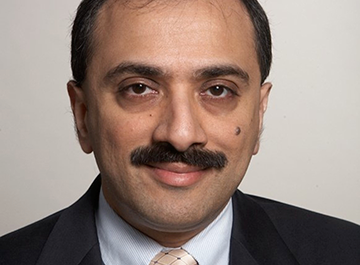
Mone Zaidi, MD, PhD, FRCP

Several studies had earlier shown that the drug group was associated with slower growth of tumors in some patients but not in others. However, the mechanism behind these patterns was unknown.

The team led by Dr. Zaidi have filled the gap by finding out that bisphosphonates block abnormal growth signals that passe through a family of proteins called human epidermal growth factor receptors.

Considering that several cancers are related to these receptors, they could help shut down the ability of these cancers to spread. This is of importance since these cancers tend to be more aggressive than other types.

Bisphosphonates are already approved for human use as effective at preventing bone loss and have had a long track record of safety. They can be applied to cancers quickly if clinical trials for cancer also prove successful.

Speaking to India Science Wire on the sidelines of the India International Science Festival, which is underway here, Prof. Zaidi said the team had already tested with mice models and human cells. “The safety tests have been conducted. Tests on effectiveness remain to be performed.”

Asked if he had any plan to collaborate with Indian researcher, he said, “we would love to work with Indian scientists. We will discuss with the Department of Biotechnology and see how we could take it forward”.

He was among the invited speakers at the `Global Indian Science and Technology Stakeholders Meet” at the festival. The meet provided a platform for Indian origin scientists to interact with policymakers, scientists and other stakeholders and explore collaboration. (India Science Wire)

By Sunderarajan Padmanabhan

If you liked this article, then please subscribe to our YouTube Channel for the latest Science & Tech news. You can also find us on Twitter & Facebook.

Rate

Several studies had earlier shown that the drug group was associated with slower growth of tumors in some patients but not in others. However, the mechanism behind these patterns was unknown.

The team led by Dr. Zaidi have filled the gap by finding out that bisphosphonates block abnormal growth signals that passe through a family of proteins called human epidermal growth factor receptors.

Considering that several cancers are related to these receptors, they could help shut down the ability of these cancers to spread. This is of importance since these cancers tend to be more aggressive than other types.

Bisphosphonates are already approved for human use as effective at preventing bone loss and have had a long track record of safety. They can be applied to cancers quickly if clinical trials for cancer also prove successful.

Speaking to India Science Wire on the sidelines of the India International Science Festival, which is underway here, Prof. Zaidi said the team had already tested with mice models and human cells. “The safety tests have been conducted. Tests on effectiveness remain to be performed.”

Asked if he had any plan to collaborate with Indian researcher, he said, “we would love to work with Indian scientists. We will discuss with the Department of Biotechnology and see how we could take it forward”.

He was among the invited speakers at the `Global Indian Science and Technology Stakeholders Meet” at the festival. The meet provided a platform for Indian origin scientists to interact with policymakers, scientists and other stakeholders and explore collaboration. (India Science Wire)

By Sunderarajan Padmanabhan

If you liked this article, then please subscribe to our YouTube Channel for the latest Science & Tech news. You can also find us on Twitter & Facebook.

" }
New Technology May Help Engineer Natural Proteins in Human Body

New Technology May Help Engineer Natural Proteins in Human Body

Dr. Vishal Rai’s team at Indian Institute of Science Education and Research Bhopal- provides the first modular platform for precision engineering of native proteins. The study was published in the Journal of the American Chemical Society

  • News
  • 2.2K
Read more
Prof. Yadav with his research team

Potent Anti-Obesity Agent Works In Rats

Obesity has emerged as a public health problem, resulting in the significant burden of non-communicable diseases. A team of scientists at Maharaja Sayajirao University (MSU), Baroda have claimed success with a potent anti-obesity agent in studies done in laboratory animals.

  • News
  • 1.6K
Read more
New Book Explodes Myth about Cost of Instruments Used By Sir C V Raman

New Book Explodes Myth about Cost of Instruments Used By Sir C V Raman

It is a part of folklore about Indian science that Sir C V Raman made his Nobel-prize winning discovery in 1928 using instruments which cost just a few hundred rupees. A new book by a science historian has busted this myth.

  • News
  • 3.3K
Read more

Internet is huge! Help us find great content

Newsletter

Never miss a thing! Sign up for our newsletter to stay updated.

About

Research Stash is a curated collection of tools and News for S.T.E.M researchers

Have any questions or want to partner with us? Reach us at hello@researchstash.com

Navigation

Submit