New Gamma Ray Telescope Coming Up in Ladakh

New Gamma Ray Telescope Coming Up in Ladakh

  • Research Stash
  • News
  • 3K

Indian astronomers would soon be able to observe and monitor spectacular celestial events like the explosion of stars, falling of matter into black holes and collision of extraterrestrial objects better. Researchers at Tata Institute of Fundamental Research (TIFR) and Bhabha Atomic Research Centre (BARC) are developing a new gamma-ray telescope.

The four-meter telescope will be able to operate in a bright environment like twilight hours and moon-lit nights, unlike traditional ones that operate only in dark hours of the night. It will be the second such telescope to be available globally. The first one is in La Palma in the Canary Islands set up jointly by Switzerland and Germany in 2011.

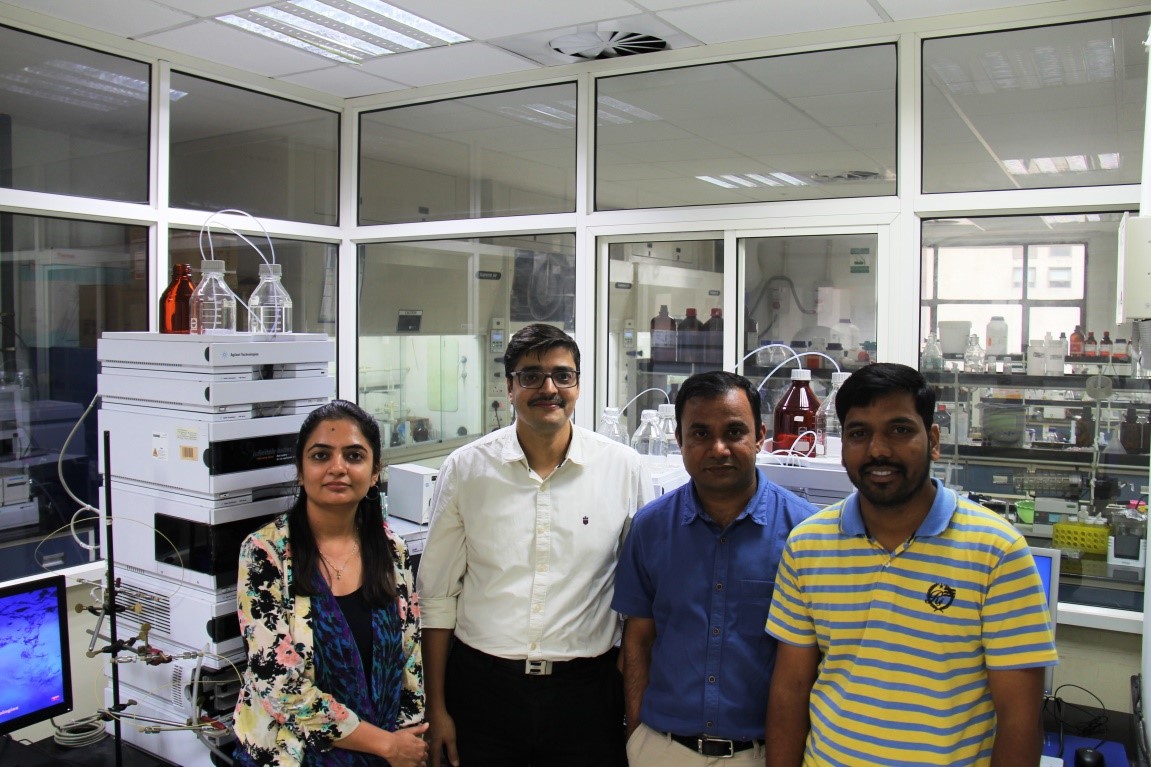
Speaking to India Science Wire, Dr. Varsha Chitnis of Department of High Energy Physics at TIFR, said the imaging camera to be used in the telescope is different from conventional ones. It used pixels made of what is called Geiger-mode avalanche photo-diodes (G-APDs), while conventional telescope cameras are based on photomultiplier tubes (PMTs).

“G-APDs need a much lower operation voltage, are more robust and have higher photon detection efficiency. They can be operated during strong moonlight and are ideal for a gamma-ray telescope,” she added.

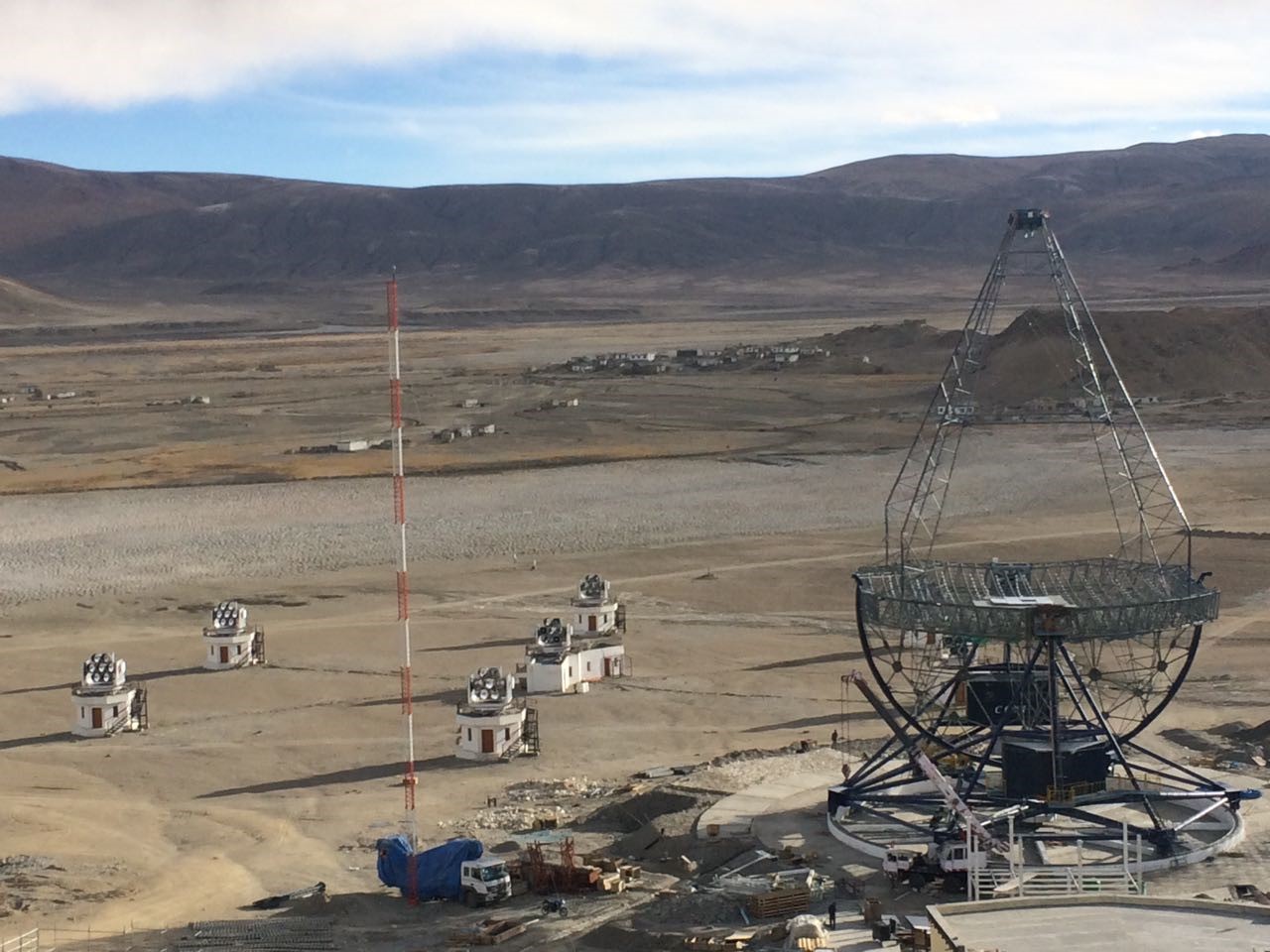
The new telescope will be located near the High Altitude Gamma Ray (HAGAR) array at Hanle in Ladakh which houses the Indian Astronomical Observatory operated by Indian Institute of Astrophysics, Bengaluru.

It will work in tandem with MACE (Major Atmospheric Cerenkov Experiment) – a 21-meter diameter gamma-ray imaging telescope which is also under installation at Hanle. While MACE will operate in discovery mode looking at candidate sources of a gamma ray or very faint objects, the new telescope will keep an eye on blazers. Whenever there is any flaring activity in any of them, it will alert MACE which will then shift its focus to the active blazer.

Gamma rays provide the best window to study what is called the non-thermal universe. Cosmic rays form an important component of the non-thermal universe. It is thought that remnants of supernova explosions accelerate cosmic rays with energies at the lower end of the cosmic ray spectrum and that higher energy cosmic rays could be accelerated in active galactic nuclei.

Gamma rays are also produced when charged particles are accelerated to such high energies through different processes. Thus the study of the gamma-ray emissions from various celestial objects is expected to give a clue regarding the origin of cosmic rays and insights into the emission regions and emission processes in these sources.

The details of the new telescope have been discussed in a recent paper published in the Journal of Astrophysics and Astronomy. (India Science Wire)

By Sunderarajan Padmanabhan

Journal Article 

VHE gamma ray astronomy with HAGAR telescope array

If you liked this article, then please subscribe to our YouTube Channel for the latest Science & Tech news. You can also find us on Twitter & Facebook.
“G-APDs need a much lower operation voltage, are more robust and have higher photon detection efficiency. They can be operated during strong moonlight and are ideal for a gamma-ray telescope,” she added.

The new telescope will be located near the High Altitude Gamma Ray (HAGAR) array at Hanle in Ladakh which houses the Indian Astronomical Observatory operated by Indian Institute of Astrophysics, Bengaluru.

It will work in tandem with MACE (Major Atmospheric Cerenkov Experiment) – a 21-meter diameter gamma-ray imaging telescope which is also under installation at Hanle. While MACE will operate in discovery mode looking at candidate sources of a gamma ray or very faint objects, the new telescope will keep an eye on blazers. Whenever there is any flaring activity in any of them, it will alert MACE which will then shift its focus to the active blazer.

Gamma rays provide the best window to study what is called the non-thermal universe. Cosmic rays form an important component of the non-thermal universe. It is thought that remnants of supernova explosions accelerate cosmic rays with energies at the lower end of the cosmic ray spectrum and that higher energy cosmic rays could be accelerated in active galactic nuclei.

Gamma rays are also produced when charged particles are accelerated to such high energies through different processes. Thus the study of the gamma-ray emissions from various celestial objects is expected to give a clue regarding the origin of cosmic rays and insights into the emission regions and emission processes in these sources.

The details of the new telescope have been discussed in a recent paper published in the Journal of Astrophysics and Astronomy. (India Science Wire)

By Sunderarajan Padmanabhan

Journal Article 

VHE gamma ray astronomy with HAGAR telescope array

If you liked this article, then please subscribe to our YouTube Channel for the latest Science & Tech news. You can also find us on Twitter & Facebook.

" }

Microneedle patches for flu vaccination prove successful in first human clinical trial

Despite the potentially severe consequences of illness and even death, only about 40 percent of adults in the United States receive flu shots each year; however, researchers believe a new self-administered, painless vaccine skin patch containing microscopic needles could significantly increase the number of people who get vaccinated.

  • News
  • 3.1K
Read more

India May Not Achieve SDG Targets on Reducing Child Mortality

A new study has warned that over two-thirds of the districts in the country are unlikely to achieve the UN Sustainable Development Goal (SDG) target of reducing deaths to 25 or less per 1000 live births in under 5-year old children and 12 or less per 1000 live births for newborns by 2030

  • News
  • 2.1K
Read more
New Mission to Focus on Connecting Cyber and Physical Systems

New Mission to Focus on Connecting Cyber and Physical Systems

The central government has approved a new national mission at a cost of Rs 3660 crore to support the development of technologies and applications relating to cyber-physical systems

  • News
  • 2.5K
Read more

Internet is huge! Help us find great content

Newsletter

Never miss a thing! Sign up for our newsletter to stay updated.

About

Research Stash is a curated collection of tools and News for S.T.E.M researchers

Have any questions or want to partner with us? Reach us at [email protected]

Navigation

Submit