
New Migrant Pest Threatens Major Crops 1

New Migrant Pest Threatens Major Crops

  • Research Stash
  • News
  • 2.2K

A new migrant insect that can potentially cause losses to dozens of crops has been found in Karnataka. The pest has been damaging maize plants in certain parts of the state and is not a native and known species in India, scientists from the University of Agricultural Sciences, Bengaluru have reported.
New Migrant Pest Threatens Major Crops

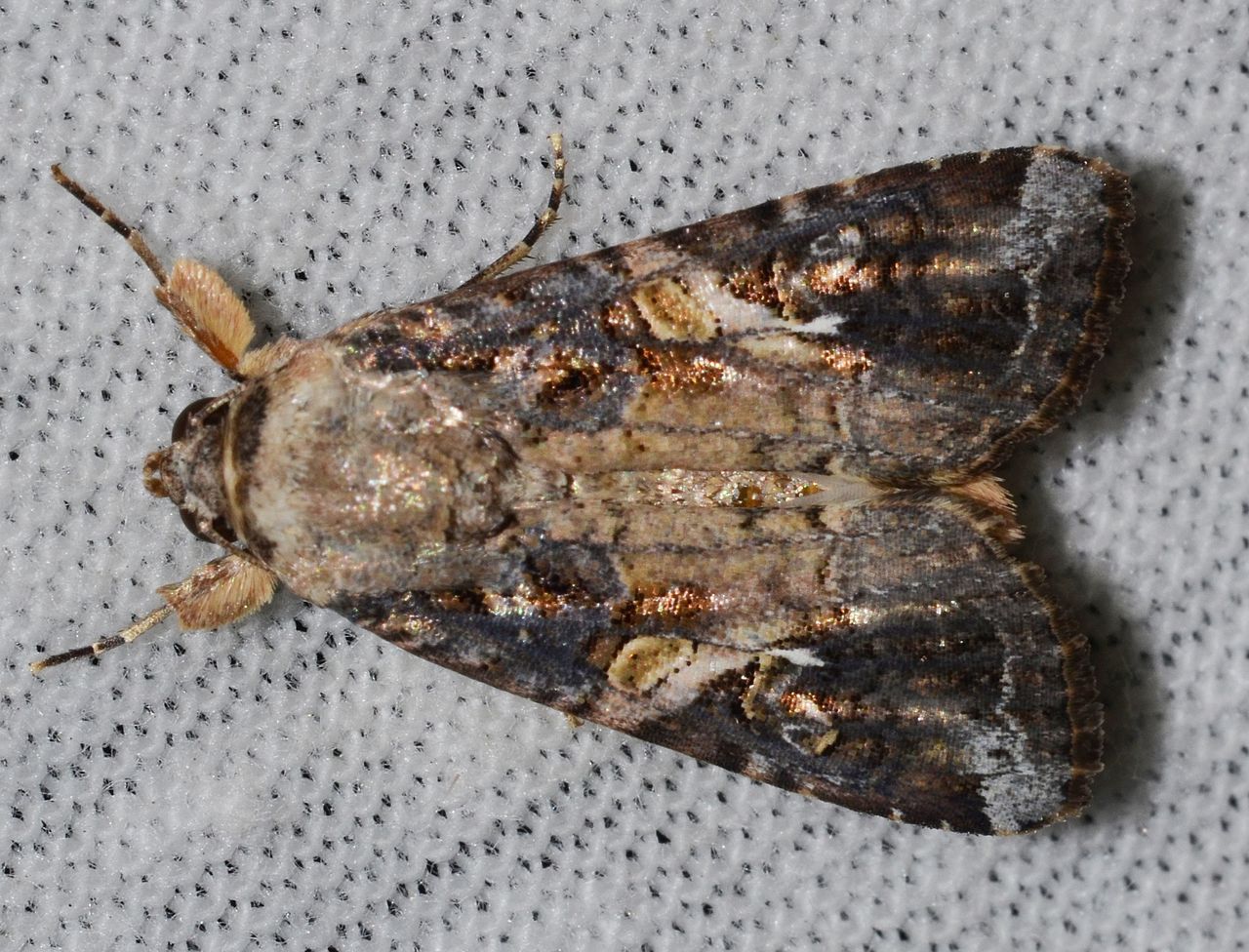
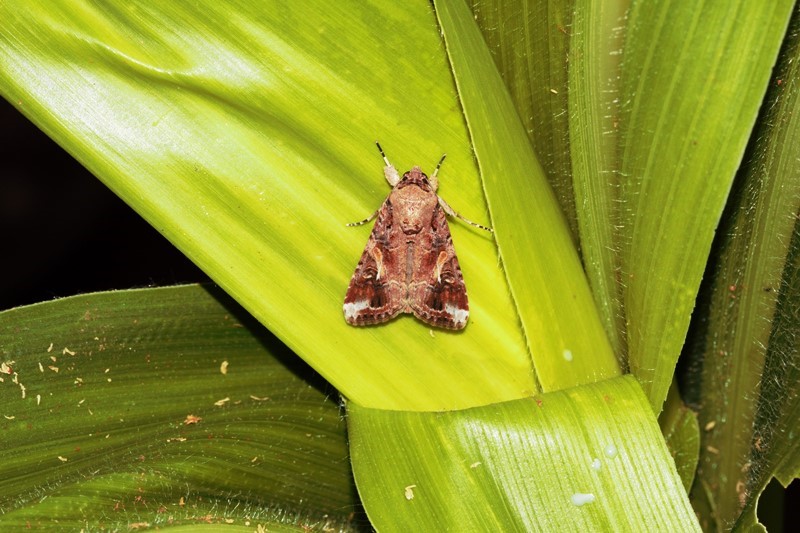
The pest, Spidoptera frugiperda, is a species of armyworm hitherto not found in India. It was first observed during May-June period in maize crops near Gowribidnur in Chikkaballapur district of Karnataka when scientists were investigating crop loss due to caterpillars.  This caused extensive damage to the maize crops there.

“It took some time for rearing the larvae collected from the field,” says Prabhu Ganiger, a researcher at the Department of Entomology of the University. The larvae collected from fields were reared in the laboratory for authentic identification. “We found it is difficult to rear them in the lab because they turn cannibalistic eating each other in captivity,” he explains. Finally, after a month or so we could get the adult and based on their appearance the insect was identified as Spodoptera frugiperda.

University of Agricultural Sciences, Bengaluru team in the field

Spodoptera frugiperda is a known pest in parts of North America from Canada to Chile and Argentina. It has also been reported to have spread to Africa in 2017, causing widespread crop damage. However, so far nobody had reported its presence in Asia.

The finding is significant since its larvae have been found to feed on almost every important crop grown in India including maize, rice, sorghum, sugarcane, cabbage, beet, peanut, soybean, alfalfa, onion, tomato, potato, and cotton.  If not contained, it has potential to turn into a major pest, researchers have warned.

Since such migrant pests do not have natural enemies in the new land, they spread far and wide causing extensive damage. Four years ago a new invasive South American tomato leaf miner moth, Tuta absoluta had caused extensive loss to tomato in India.

“It is very easy to distinguish the larva from similar spodoptera and cutworms. They have black spots on all over the body. And there are four distinctive black spots near the tail.  Farmers can easily identify the new migrant with these features,” explains Dr. Ganiger.

However, scientists are not sure how the pest landed in India. “We can only speculate,” says Dr. Ganiger.  Some eggs might have been carried inadvertently by tourists or their eggs could have been carried by clouds from far off and rained here. Instances of such raining of insect eggs and plant pollens are well known.  Meanwhile “creating awareness through every medium is essential to prevent its spread,” he says.

The research study, published in journal Current Science, has been authored by Dr. Ganiger along with his colleagues – M. Yeshwanth, K.  Muralimohan, N. Vinay, A. R. V. Kumar and Head of Entomology Department Dr. K. Chandrashekara. (India Science Wire)

By Kollegala Sharma

If you liked this article, then please subscribe to our YouTube Channel for the latest Science & Tech news. You can also find us on Twitter & Facebook.

Rate

“It took some time for rearing the larvae collected from the field,” says Prabhu Ganiger, a researcher at the Department of Entomology of the University. The larvae collected from fields were reared in the laboratory for authentic identification. “We found it is difficult to rear them in the lab because they turn cannibalistic eating each other in captivity,” he explains. Finally, after a month or so we could get the adult and based on their appearance the insect was identified as Spodoptera frugiperda.

University of Agricultural Sciences, Bengaluru team in the field

Spodoptera frugiperda is a known pest in parts of North America from Canada to Chile and Argentina. It has also been reported to have spread to Africa in 2017, causing widespread crop damage. However, so far nobody had reported its presence in Asia.

The finding is significant since its larvae have been found to feed on almost every important crop grown in India including maize, rice, sorghum, sugarcane, cabbage, beet, peanut, soybean, alfalfa, onion, tomato, potato, and cotton.  If not contained, it has potential to turn into a major pest, researchers have warned.

Since such migrant pests do not have natural enemies in the new land, they spread far and wide causing extensive damage. Four years ago a new invasive South American tomato leaf miner moth, Tuta absoluta had caused extensive loss to tomato in India.

“It is very easy to distinguish the larva from similar spodoptera and cutworms. They have black spots on all over the body. And there are four distinctive black spots near the tail.  Farmers can easily identify the new migrant with these features,” explains Dr. Ganiger.

However, scientists are not sure how the pest landed in India. “We can only speculate,” says Dr. Ganiger.  Some eggs might have been carried inadvertently by tourists or their eggs could have been carried by clouds from far off and rained here. Instances of such raining of insect eggs and plant pollens are well known.  Meanwhile “creating awareness through every medium is essential to prevent its spread,” he says.

The research study, published in journal Current Science, has been authored by Dr. Ganiger along with his colleagues – M. Yeshwanth, K.  Muralimohan, N. Vinay, A. R. V. Kumar and Head of Entomology Department Dr. K. Chandrashekara. (India Science Wire)

By Kollegala Sharma

If you liked this article, then please subscribe to our YouTube Channel for the latest Science & Tech news. You can also find us on Twitter & Facebook.

" }
A Blueprint to Develop A Rapid qRT-PCR kit To Detect SARS-CoV-2

A Blueprint to Develop A Rapid qRT-PCR kit To Detect SARS-CoV-2

Researchers at the Advanced Centre for Treatment, Research, and Education in Cancer have published a report in the Cell Press journal ‘Heliyon’ in which they present a Rapid qRT-PCR kit To Detect SARS-CoV-2

  • News
  • 2K
Read more
India to Work on Futuristic Concept of “Cyber Twins”

India to Work on Futuristic Concept of “Cyber Twins”

Just imagine being able to know what Dr. A P J Abdul Kalam, who expired in July 2015, would have thought about today’s test firing of the supersonic missile or any other current issue of his interest.

  • News
  • 2.9K
Read more
“Brain on a Chip” Reveals How the Brain Folds

“Brain on a Chip” Reveals How the Brain Folds

Physics and biology meet in a new model of brain development. Being born with a “tabula rasa” – a clean slate – in the case of the brain is something of a curse. Our brains are already wrinkled like walnuts by the time we are born.

  • News
  • 3.3K
Read more

Internet is huge! Help us find great content

Newsletter

Never miss a thing! Sign up for our newsletter to stay updated.

About

Research Stash is a curated collection of tools and News for S.T.E.M researchers

Have any questions or want to partner with us? Reach us at [email protected]

Navigation

Submit