A Blueprint to Develop A Rapid qRT-PCR kit To Detect SARS-CoV-2

A Blueprint to Develop A Rapid qRT-PCR kit To Detect SARS-CoV-2

  • Research Stash
  • News
  • 2K

Amidst the COVID-19 pandemic, within about 3 months, over and above 8.78 lakhs positives cases and more than 23K death have been reported in India. Thus, radical measures are needed to flatten the rate of growing infection. The development of diagnostic kits to perform rapid, accurate test with low false-negative RT-PCR results in a cost-effective manner — may help in the early implementation of epidemiological containment measures.

Now a research team led by Dr. Amit Dutt at Advanced Centre for Treatment, Research, and Education in Cancer (ACTREC), Navi Mumbai – have published a report in the Cell Press journal Heliyon where they present a rapid, accurate and easy to implement real-time PCR based assay with automated analysis at a cost of under $3 per reaction and turnaround time of less than 2hour. The study may facilitate faster in-house testing across laboratories to detect SARS-CoV-2.

“We have identified a unique conserved region in the SARS-CoV-2 Nucleocapsid gene. Using molecular biology techniques, we have generated synthetic DNA and RNA molecules for 3 such regions and spiked in the human genomic DNA and total RNA at varying concentrations to generate synthetic reference samples mimicking a true positive COVID-19 sample for the study. The standardizations performed were validated using COVID 19 positive and negative clinical specimens,” explained to SciSoup Dr. Amit Dutt, a scientist at ACTREC, Navi Mumbai, and corresponding author in this study.

In this study, the reference sample was used to compare the detection limit of two different chemistries (molecular biology methods): a probe-free SYBR Green dye-based methodology and a TaqMan probe-based RT-PCR assay. The probe-based assay was found to be more sensitive with detection of up to 15 RNA copies, as compared to 150 RNA copies of the probe-free method.

This was further developed into a one-step, one-tube, multiplex diagnostic kit. The detection accuracy of the kit was evaluated using a panel of 26 clinical specimens by performing 184 validations with dilutions of samples ranging from 1-100 ng.

Bhasker Dharavath and Neelima Yadav, ACTREC based researchers and co-first author of the study, say the kit was found to be 100% specific and 100% sensitive under limited settings based on accurate identification of 5 positive samples out of 26 samples and calling rest 21 negative samples as negative. The actual accuracy can only be established with a larger sample set, laments Bhasker and Neelima.

Furthermore, to minimize variability and automate the qRT-PCR downstream analysis of multiple samples in the same run, they developed an open-access freely available GUI based analytical tool COVID qPCR Analyzer tool.

“This is a novel automated computational tool to detect the virus in an unambiguous and reproducible manner with minimal requirement of third-party tools, and applicable to all kinds of real-time PCR machine for COVID detection,” says Sanket Desai, another co-first author of the study.

“Our study would empower researchers across research institutes to build their capacity for developing a highly accurate and validated diagnostic kit to detect SARS-CoV-2 infection at a fraction of cost, in an Atmanirbhar way,” said Dr. Dutt.

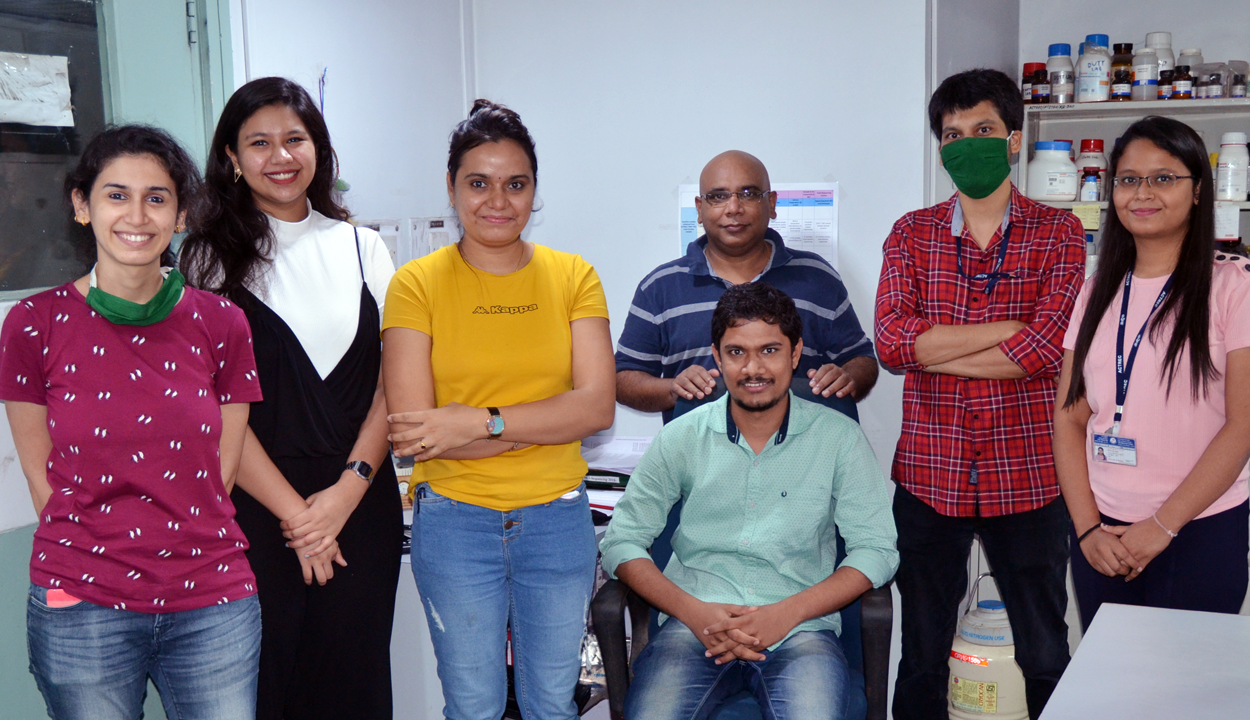
The research team included Bhasker Dharavath, Neelima Yadav, Sanket Desai, Roma Sunder, Rohit Mishra, Madhura Ketkar, Prasanna Bhanshe, Anurodh Gupta, Archana Kumari Redhu, Nikhil Patkar, Shilpee Dutt, and Sudeep Gupta and Amit Dutt.

Ratneshwar Thakur

If you liked this article, then please subscribe to our YouTube Channel for the latest Science & Tech news. You can also find us on Twitter & Facebook
In this study, the reference sample was used to compare the detection limit of two different chemistries (molecular biology methods): a probe-free SYBR Green dye-based methodology and a TaqMan probe-based RT-PCR assay. The probe-based assay was found to be more sensitive with detection of up to 15 RNA copies, as compared to 150 RNA copies of the probe-free method.

This was further developed into a one-step, one-tube, multiplex diagnostic kit. The detection accuracy of the kit was evaluated using a panel of 26 clinical specimens by performing 184 validations with dilutions of samples ranging from 1-100 ng.

Bhasker Dharavath and Neelima Yadav, ACTREC based researchers and co-first author of the study, say the kit was found to be 100% specific and 100% sensitive under limited settings based on accurate identification of 5 positive samples out of 26 samples and calling rest 21 negative samples as negative. The actual accuracy can only be established with a larger sample set, laments Bhasker and Neelima.

Furthermore, to minimize variability and automate the qRT-PCR downstream analysis of multiple samples in the same run, they developed an open-access freely available GUI based analytical tool COVID qPCR Analyzer tool.

“This is a novel automated computational tool to detect the virus in an unambiguous and reproducible manner with minimal requirement of third-party tools, and applicable to all kinds of real-time PCR machine for COVID detection,” says Sanket Desai, another co-first author of the study.

“Our study would empower researchers across research institutes to build their capacity for developing a highly accurate and validated diagnostic kit to detect SARS-CoV-2 infection at a fraction of cost, in an Atmanirbhar way,” said Dr. Dutt.

The research team included Bhasker Dharavath, Neelima Yadav, Sanket Desai, Roma Sunder, Rohit Mishra, Madhura Ketkar, Prasanna Bhanshe, Anurodh Gupta, Archana Kumari Redhu, Nikhil Patkar, Shilpee Dutt, and Sudeep Gupta and Amit Dutt.

Ratneshwar Thakur

If you liked this article, then please subscribe to our YouTube Channel for the latest Science & Tech news. You can also find us on Twitter & Facebook
" }
The Egyptian fruit bat: The representation of three dimensional space in the mammalian cortex resembles a box of marbles. Photo: Steve Gettle; Design: Maayan Visuals

When the Brain’s GPS Goes Off the Grid

In a new study published in Nature today, Weizmann Institute of Science researchers, in collaboration with colleagues from the Hebrew University of Jerusalem, unveiled for the first time how three-dimensional space is represented in the mammalian cortex by the brain’s “GPS” system.

  • News
  • 1.8K
Read more

Researchers Quantify Damage Caused By Peafowls to Farmers

A team of researchers from Kerala Forest Research Institute and Christ College in Thrissur in Central Kerala has sought to find out whether it was possible to pay compensation to the farmers affected by the problem like it is done for damages caused by wild animals like elephants.

  • News
  • 2.1K
Read more
How Will Global Warming Affect El Niño in The 21st Century?

How Will Global Warming Affect El Niño in The 21st Century?

El Niño remains the largest climate phenomenon that occurs frequently producing droughts, floods, wildfires, dust and snow storms, fish kill, and even elevated risks of civil conflicts

  • News
  • 2.9K
Read more

Internet is huge! Help us find great content

Newsletter

Never miss a thing! Sign up for our newsletter to stay updated.

About

Research Stash is a curated collection of tools and News for S.T.E.M researchers

Have any questions or want to partner with us? Reach us at [email protected]

Navigation

Submit