
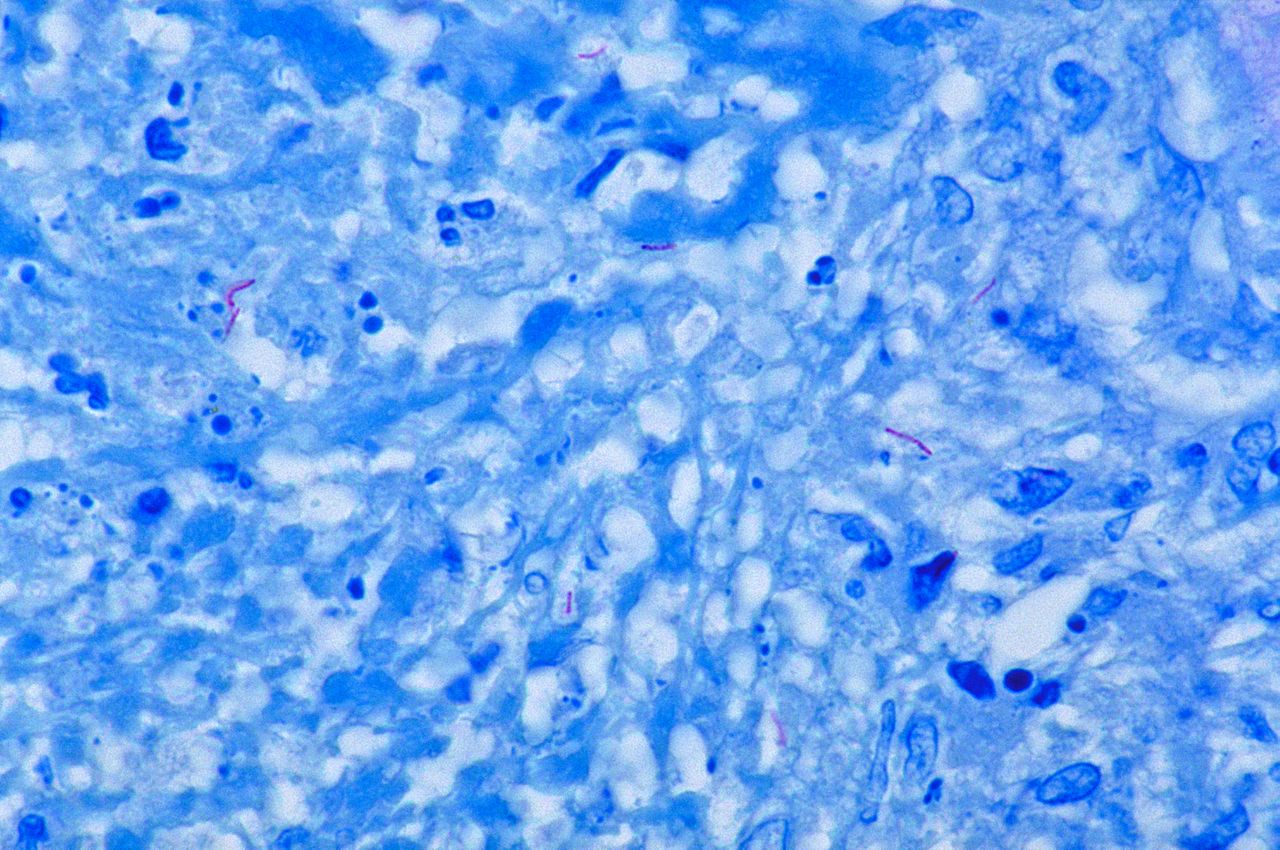
Scientists Pave the Way for a Vaccine against Tuberculosis

Scientists Pave the Way for a Vaccine against TB

  • Research Stash
  • News
  • 2.8K

The scope for developing a new vaccine against the dreaded disease of Tuberculosis through the biological route has become brighter, with researchers at Kolkata-based Indian Institute of Chemical Biology (IICB) and Bose Institute identifying a potential trouble spot and figuring out ways to deal with it.

Scientists across the world have been looking at MPT63, a protein secreted by Mycobacterium tuberculosis, the bacteria that cause TB, as a potential drug target. Studies are underway to find out how best to use it.

The stability, delivery efficiency and specificity of a biologically derived drug are often optimized by combining it with a nano-particle. However, the conjugation of a bio-molecule with nanoparticles is easier said than done. The task is particularly difficult when it comes to proteins as they are very dynamic and their structures could change with changes in their environment or their sequence.

Consequently, their level of activity can also change. Sometimes, even a slight change in the protein environment or a subtle modification in their sequence can result in a radical change in protein conformation that can transform it from being highly active to being totally dormant or vice versa.

Over the years, scientists across the world have conducted studies on different aspects of MPT63. But, none so far on the issue of what would happen if the protein were to be combined with a nanoparticle.

Dr. Krishnananda Chattopadhyay

Researchers at IICB and Bose Institute recently took up the task and they have come up with some interesting findings. They found that the protein turned inactive when combined with a nano-particle. But, it could be reversed through some careful manipulation of the sequence through genetic engineering.

Speaking to India Science Wire, leader of the research team, Dr. Krishnananda Chattophadhyay, said, “We were prepared for any result though we were hoping against hope that everything will be fine. But, it was not to be. Our worse fears came true. The protein, which was so active in its native form, became dormant. We then conducted a detailed genetic analysis and found that the switch from active to dormant conformation was being modulated by a few small sequences within the protein. We changed the sequence slightly in the problem areas using genetic engineering techniques and the protein became functional again”.

Besides its application in finding a breakthrough against TB, the new work is expected to be of importance in terms of the further development of the growing sector of biopharmaceuticals. “Big pharmaceutical companies worldwide are investing billions of dollars in developing biopharmaceuticals, which are based on large molecules, mostly proteins like monoclonal antibodies.

Any slight change in these proteins-be its nano-particle binding or its adsorption onto the vial it is stored in a pharmacy-can result its loss of activity making the drug practically useless. Our work may perhaps come handy in solving the problem”, he said.

Apart from Dr. Chattophadhyay, the research team consisted of Achinta Sannigrahi, Sayantani Chall and Amrita Kundu of Structural Biology & Bio-Informatics Division at IICB, and Junaid Jibran Jawed, and Subrata Majumdar of  Department of Molecular Medicine, Bose Institute, Kolkata.

The team has sent a report on their work to American Chemical Society’s journal, `Langmuir’, which has accepted it for publication. The work was conducted with a fund from the Central Government’s Department of Science and Technology’s Science and Engineering Research Board.

Commenting on the work, Prof. (Dr.) Subhendu Ghosh, Head of the Department of Biophysics at University of Delhi South Campus, said, “The study bears importance as far as the Nanoparticle derived drug delivery system is concerned. A novel finding; if brought into practical applicability would certainly contribute to the field of health sciences & therapeutics”. (India Science Wire)

By Sunderarajan Padmanabhan

Journal Reference

Nanoparticle Induced Conformational Switch Between α-Helix and β-Sheet Attenuates Immunogenic Response of MPT63

If you liked this article, then please subscribe to our YouTube Channel for the latest Science and Tech news. You can also find us on Twitter and Facebook.
Rate

Consequently, their level of activity can also change. Sometimes, even a slight change in the protein environment or a subtle modification in their sequence can result in a radical change in protein conformation that can transform it from being highly active to being totally dormant or vice versa.

Over the years, scientists across the world have conducted studies on different aspects of MPT63. But, none so far on the issue of what would happen if the protein were to be combined with a nanoparticle.

Dr. Krishnananda Chattopadhyay

Researchers at IICB and Bose Institute recently took up the task and they have come up with some interesting findings. They found that the protein turned inactive when combined with a nano-particle. But, it could be reversed through some careful manipulation of the sequence through genetic engineering.

Speaking to India Science Wire, leader of the research team, Dr. Krishnananda Chattophadhyay, said, “We were prepared for any result though we were hoping against hope that everything will be fine. But, it was not to be. Our worse fears came true. The protein, which was so active in its native form, became dormant. We then conducted a detailed genetic analysis and found that the switch from active to dormant conformation was being modulated by a few small sequences within the protein. We changed the sequence slightly in the problem areas using genetic engineering techniques and the protein became functional again”.

Besides its application in finding a breakthrough against TB, the new work is expected to be of importance in terms of the further development of the growing sector of biopharmaceuticals. “Big pharmaceutical companies worldwide are investing billions of dollars in developing biopharmaceuticals, which are based on large molecules, mostly proteins like monoclonal antibodies.

Any slight change in these proteins-be its nano-particle binding or its adsorption onto the vial it is stored in a pharmacy-can result its loss of activity making the drug practically useless. Our work may perhaps come handy in solving the problem”, he said.

Apart from Dr. Chattophadhyay, the research team consisted of Achinta Sannigrahi, Sayantani Chall and Amrita Kundu of Structural Biology & Bio-Informatics Division at IICB, and Junaid Jibran Jawed, and Subrata Majumdar of  Department of Molecular Medicine, Bose Institute, Kolkata.

The team has sent a report on their work to American Chemical Society’s journal, `Langmuir’, which has accepted it for publication. The work was conducted with a fund from the Central Government’s Department of Science and Technology’s Science and Engineering Research Board.

Commenting on the work, Prof. (Dr.) Subhendu Ghosh, Head of the Department of Biophysics at University of Delhi South Campus, said, “The study bears importance as far as the Nanoparticle derived drug delivery system is concerned. A novel finding; if brought into practical applicability would certainly contribute to the field of health sciences & therapeutics”. (India Science Wire)

By Sunderarajan Padmanabhan

Journal Reference

Nanoparticle Induced Conformational Switch Between α-Helix and β-Sheet Attenuates Immunogenic Response of MPT63

If you liked this article, then please subscribe to our YouTube Channel for the latest Science and Tech news. You can also find us on Twitter and Facebook.

" }
Roman Catholics Of India’s Western Coast Genetically Close to Gaud Saraswat Brahmins

Roman Catholics Of India’s Western Coast Genetically Close to Gaud Saraswat Brahmins

The researchers have found that the Roman Catholics of Goa, Kumta, and Mangalore regions are the remnants of very early lineages of a Brahmin community of India, majorly with Indo-European-specific genetic composition.

  • News
  • 1.9K
Read more
Records of Historical Supernova Found in Karnataka

Records of Historical Supernova Found in Karnataka

Imagine walking at dusk under a blue sky that is gradually turning black. Twinkling stars are beginning to appear here and there. And suddenly you discover new star dazzling that was not there the previous night. Could it be Venus or perhaps a comet?

  • News
  • 3.2K
Read more
Experts Suggest More Protected Areas in Sikkim

Experts Suggest More Protected Areas in Sikkim

Scientists from the University of Delhi have suggested the creation of three more protected areas in Sikkim, besides expansion of three existing three wildlife sanctuaries to help conserve endemic plants in the Himalayan state

  • News
  • 2.3K
Read more

Internet is huge! Help us find great content

Newsletter

Never miss a thing! Sign up for our newsletter to stay updated.

About

Research Stash is a curated collection of tools and News for S.T.E.M researchers

Have any questions or want to partner with us? Reach us at hello@researchstash.com

Navigation

Submit