Technology to Improve Life of Thermal Power Plant Boilers

Technology to Improve Life of Thermal Power Plant Boilers

  • Research Stash
  • News
  • 1.7K

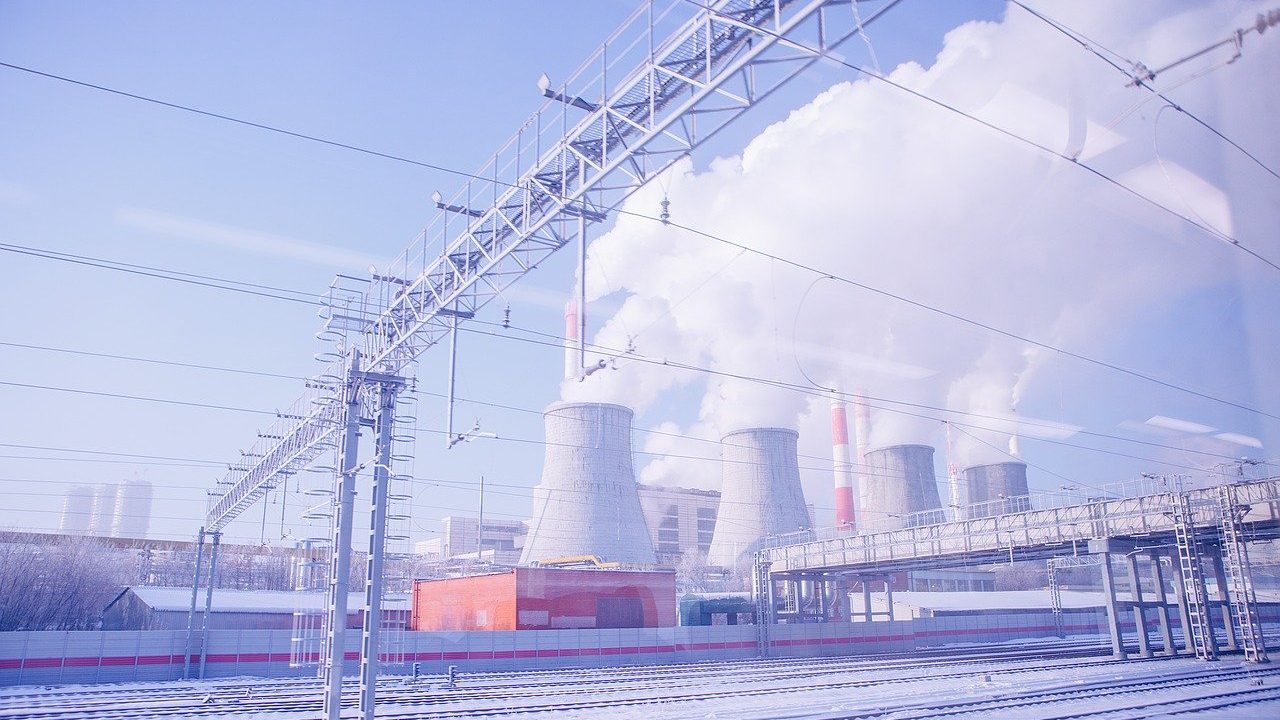
A new laser-based clad coating technology has been developed that promises to help enhance the life of boilers used in thermal power plants by two to three times compared to currently used surfacing technologies.

Laser cladding is a technique for fusing a coating material on a substrate. It allows materials to be deposited accurately, selectively, and with minimal heat input into the underlying substrate. This process allows for property improvements of the surface of a part, including better wear resistance, thus allowing for the repair of damaged or worn surfaces.

In advanced supercritical and ultra-supercritical thermal power plants, various parts of the boiler and its accessories such as feeder nozzle tip, re-heater boiler tube bends, burner spreaders often degrade due to severe wear and corrosion at high temperatures and thereby require frequent replacements.  Shutdown due to such problems severely affects power production.

To overcome this challenge, scientists from the International Advanced Research Centre for Powder Metallurgy and New Materials (ARCI), an autonomous institute of the Department of Science and Technology, Government of India led by Dr. S. M. Shariff, have developed a laser-based clad coating technology (LCCT) that provides adequate protection to the boiler parts ensuring life span improvement beyond two years. An Indian patent has also been granted to the novel technology.

The technology involves fusing a Nickel-based soft matrix with hard metallic carbide particles of tungsten, chromium, or vanadium on steel parts by employing a high-power laser integrated into a multi-axis robot with process monitoring and control. The technology has been successfully tested for feeder nozzle tips of boilers used in NTPC’s 200 and 500 Megawatt thermal power plants at Farakka and Korba.

If you liked this article, then please subscribe to our YouTube Channel for the latest Science & Tech news. You can also find us on Twitter & Facebook
Rate

To overcome this challenge, scientists from the International Advanced Research Centre for Powder Metallurgy and New Materials (ARCI), an autonomous institute of the Department of Science and Technology, Government of India led by Dr. S. M. Shariff, have developed a laser-based clad coating technology (LCCT) that provides adequate protection to the boiler parts ensuring life span improvement beyond two years. An Indian patent has also been granted to the novel technology.

The technology involves fusing a Nickel-based soft matrix with hard metallic carbide particles of tungsten, chromium, or vanadium on steel parts by employing a high-power laser integrated into a multi-axis robot with process monitoring and control. The technology has been successfully tested for feeder nozzle tips of boilers used in NTPC’s 200 and 500 Megawatt thermal power plants at Farakka and Korba.

If you liked this article, then please subscribe to our YouTube Channel for the latest Science & Tech news. You can also find us on Twitter & Facebook

" }
A Non-Invasive Method Developed to Assess Burn Wound Healing

A Non-Invasive Method Developed to Assess Burn Wound Healing

Researchers at the Manipal Academy of Higher Education used commercially available 325 nm laser light to inspect healing by exploring tissue fluorophores, and a detector to collect re-emitted light

  • News
  • 3.5K
Read more
Kashmir’s Dal Lake Harbors Bacteria That Can Degrade Pesticides

Kashmir’s Dal Lake Harbors Bacteria That Can Degrade Pesticides

Researchers have reported the presence of naturally occurring chlorpyrifos- resistant bacteria in the environments of Kashmir Valley. Chlorpyrifos is an organophosphorus insecticide widely used in the region

  • News
  • 4.1K
Read more

Scientific Protocol in The Offing for Cloud Seeding

Scientists at the Indian Institute of Tropical Meteorology (IITM) here are preparing to launch a study during the coming monsoon season to understand physical properties of clouds and particulate matter in the atmosphere and also their interaction, as part of an exercise to formulate a scientific protocol for cloud seeding operations to produce artificial rains.

  • News
  • 1.7K
Read more

Internet is huge! Help us find great content

Newsletter

Never miss a thing! Sign up for our newsletter to stay updated.

About

Research Stash is a curated collection of tools and News for S.T.E.M researchers

Have any questions or want to partner with us? Reach us at [email protected]

Navigation

Submit