
NCL Develops Face Mask with Better Filtration Efficiency

NCL Develops Face Mask with Better Filtration Efficiency

  • Research Stash
  • News
  • 2.3K

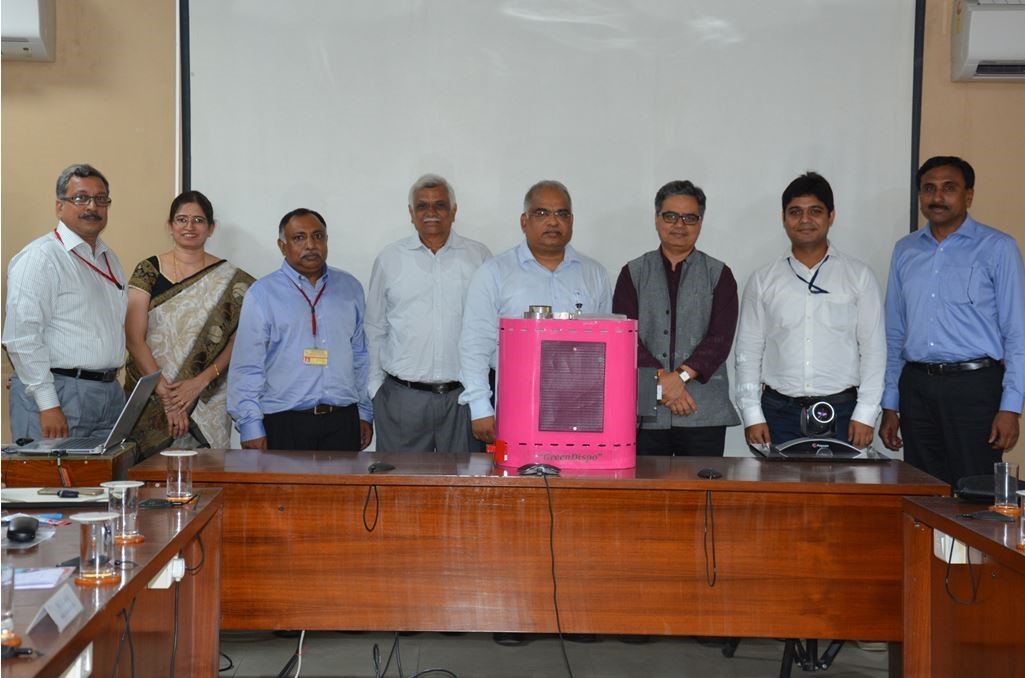
National Chemical Laboratory (NCL), Pune, has developed a face mask with better filtration efficiency compared to those available in the market. Scientists at NCL, a constituent of the Council of Scientific and Industrial Research (CSIR), have used the institution’s patented bacterial nano cellulose technology along with nano-coating to develop the new face mask.

The cotton cloth coated in a solution of bacterial cellulose and nanomaterial has been found to be effective in preventing the penetration of bacterial growth, indicating promise as a material for face mask filter. A team of scientists, led by Dr. Syed Dastager, Dr. Mahesh Dharne, and Dr. Shubhangi Umbarkar, prepared the prototype of the face mask using Spun bond polypropylene medical-grade cloth to evaluate bacterial filtration efficiency (BFE), particulate filter efficiency (PFE), breathability, flammability, and splash resistance tests.

Coimbatore-based South India Textile Research Association (SITRA), a government-approved certifying nodal agency for medical textiles, conducted these tests on CSIR-NCL’s sample face masks for confirming the quality. The bacterial filtration efficiency (BFE) of the CSIR-NCL mask is 99.9% according to the ASTM (formerly known as American Society for Testing and Materials) standard using aerosols of human pathogen Staphylococcus aureus, found in the upper respiratory tract and on the skin.

The particulate filter efficiency (PFE), another quality indicator for face masks, showed a high value of 92.63%, indicating a high restriction of hazardous particulates. The face mask qualified the tests for splash resistance to measure prevention against splashes of blood and body fluids. The pressure differential indicated easy breathability through the facemask as a medical-grade and is of Class-1 material in the flammability test.

CSIR-NCL has licensed the biopolymer nano-coated technology to Pune-based MSME SETLAB INDIA. The technology is transferred as per the CSIR guidelines for COVID-19 for rapid indigenous production. SETLAB plans to start production in the next few days with 5000 masks per day and will gradually reach the target of one lakh masks per day. (ISW)

Umashankar Mishra

If you liked this article, then please subscribe to our YouTube Channel for the latest Science & Tech news. You can also find us on Twitter & Facebook
Rate

The particulate filter efficiency (PFE), another quality indicator for face masks, showed a high value of 92.63%, indicating a high restriction of hazardous particulates. The face mask qualified the tests for splash resistance to measure prevention against splashes of blood and body fluids. The pressure differential indicated easy breathability through the facemask as a medical-grade and is of Class-1 material in the flammability test.

CSIR-NCL has licensed the biopolymer nano-coated technology to Pune-based MSME SETLAB INDIA. The technology is transferred as per the CSIR guidelines for COVID-19 for rapid indigenous production. SETLAB plans to start production in the next few days with 5000 masks per day and will gradually reach the target of one lakh masks per day. (ISW)

Umashankar Mishra

If you liked this article, then please subscribe to our YouTube Channel for the latest Science & Tech news. You can also find us on Twitter & Facebook

" }

Science publishes Super Steel breakthrough developed by HKU-led Beijing-HK-Taiwan team at low cost

Automotive, aerospace and defense applications require metallic materials with ultra-high strength. However, in some particular high-loading structural applications, metallic materials shall also have large ductility and high toughness to facilitate the precise forming of structural components and to avoid the catastrophic failure of components during service.

  • News
  • 2.1K
Read more

Stone Age Tools Found in TN Suggest Reframing of ‘Out of Africa’ Theories

Armed with newly discovered Stone Age tools in a village near Chennai, Indian scientists are challenging the popular scientific theory that the Middle Palaeolithic was brought to India by modern humans dispersing from Africa only around 125,000 years ago or later.

  • News
  • 3.2K
Read more

New Technique May Help Deploy Neural Networks On Portable Devices

A team of researchers at the Indian Institute of Technology, Hyderabad has developed a new technique that promises to help deploy high volume artificial neural networks on mobile phones and portable devices

  • News
  • 2.5K
Read more

Internet is huge! Help us find great content

Newsletter

Never miss a thing! Sign up for our newsletter to stay updated.

About

Research Stash is a curated collection of tools and News for S.T.E.M researchers

Have any questions or want to partner with us? Reach us at hello@researchstash.com

Navigation

Submit