
Study Paves the Way for New Approach to Boost Rice Yield

Study Paves the Way for New Approach to Boost Rice Yield

  • Research Stash
  • News
  • 1.9K

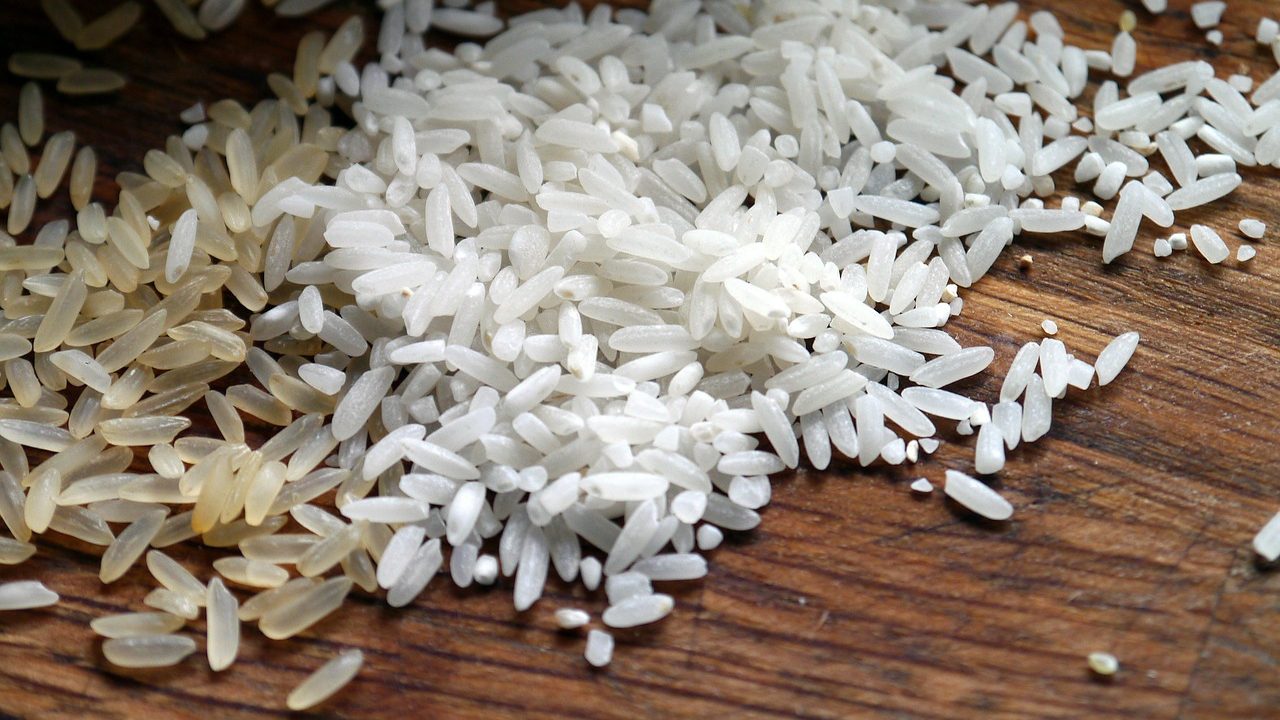
Rice yield in India is low compared to other countries like China and Japan though it has the largest area under rice cultivation. Now scientists at the National Institute of Plant Genome Research (NIPGR) here have identified a gene that is involved in regulating the size of rice grain. The new development represents a new approach towards developing rice varieties that produce bigger and consequently heavier grains.

The researchers had found in earlier studies that expression of a particular gene, OsMed15a, was higher at different stages of seed development. The observation led them to explore its role further. They scanned 509 different rice genotypes and found that the nucleotide sequences of the OsMed15a gene varied depending on the size of a grain. OsMed15a was also found to play major role in regulating the expression of three other genes – GW2, GW5, and DR11I- which determine grain size and weight.

“When we suppressed the expression of OsMed15a in transgenic plants using RNAi technology, the seeds became smaller and wider,” explained Dr. Jitender K. Thakur, lead researcher, while speaking to India Science Wire. For further work, the group is collaborating with Ranchi-based Indian Institute of Agriculture Biotechnology so that grain size could be increased substantially through standard breeding methods.

“This study is important as it establishes OsMed15a as a connecting link between some of the different genes important for grain size/ weight trait in rice.  In the next phase, using high throughput ‘omics’ tools, we would be delineating complete network of genes and proteins being connected through OsMed51a,” Dr. Thakur said.

He also noted that the size and shape of the rice grain are not only important for boosting yield but also contribute to the market value of rice. “Indians prefer long and slender rice grains. There is some small grain rice which is full of pleasant aroma. We are trying to introgress long-grain allele of OsMed15a in these varieties so that the seeds become longer. We hope that in this way we would be able to produce location-specific long grain aromatic rice”, he added.

The research team included Dr. Swarup K. Parida, Nidhi Dwivedi, Sourobh Maji, Mohd Waseem, Pallabi Thakur, and Vinay Kumar. The study results will be published in the journal BBA – Gene Regulatory Mechanisms. This work was supported by grants from the Science and Engineering Research Board (SERB) and Department of Biotechnology (DBT). (ISW)

Sunderarajan Padmanabhan

If you liked this article, then please subscribe to our YouTube Channel for the latest Science & Tech news. You can also find us on Twitter & Facebook.
Rate

“This study is important as it establishes OsMed15a as a connecting link between some of the different genes important for grain size/ weight trait in rice.  In the next phase, using high throughput ‘omics’ tools, we would be delineating complete network of genes and proteins being connected through OsMed51a,” Dr. Thakur said.

He also noted that the size and shape of the rice grain are not only important for boosting yield but also contribute to the market value of rice. “Indians prefer long and slender rice grains. There is some small grain rice which is full of pleasant aroma. We are trying to introgress long-grain allele of OsMed15a in these varieties so that the seeds become longer. We hope that in this way we would be able to produce location-specific long grain aromatic rice”, he added.

The research team included Dr. Swarup K. Parida, Nidhi Dwivedi, Sourobh Maji, Mohd Waseem, Pallabi Thakur, and Vinay Kumar. The study results will be published in the journal BBA – Gene Regulatory Mechanisms. This work was supported by grants from the Science and Engineering Research Board (SERB) and Department of Biotechnology (DBT). (ISW)

Sunderarajan Padmanabhan

If you liked this article, then please subscribe to our YouTube Channel for the latest Science & Tech news. You can also find us on Twitter & Facebook.
" }
Changes in Livestock Breeding Needed To Boost A2 Milk

Changes in Livestock Breeding Needed To Boost A2 Milk

A study done by scientists at Centre for Technology Alternatives for Rural Areas of Indian Institute of Technology Bombay, and Central Island Agricultural Research Institute, ICAR, Port Blair, has evaluated the status of the beta-casein type of milk protein in Indian cattle and suggested changes in livestock breeding to promote A2 type milk.

  • News
  • 2.9K
Read more
Drones From War Symbols to Technology of Hope

Drones: From War Symbols to Technology of Hope

A team of scientists at the Department of Computer Science and Engineering, Indian Institute of Technology, Roorkee has developed drone technologies for applications in precision agriculture and railway track monitoring

  • News
  • 2.2K
Read more
Science Centers in Villages Can Help Spread Science Literacy

Science Centers in Villages Can Help Spread Science Literacy

Science and technology communication can help spread the scientific way of thinking among people and make science accessible to them.

  • News
  • 2.2K
Read more

Internet is huge! Help us find great content

Newsletter

Never miss a thing! Sign up for our newsletter to stay updated.

About

Research Stash is a curated collection of tools and News for S.T.E.M researchers

Have any questions or want to partner with us? Reach us at hello@researchstash.com

Navigation

Submit