

Scientists Provide New Insight into Bipolar Disorder

Scientists Provide New Insight into Bipolar Disorder

  • Research Stash
  • News
  • 1.6K

Bipolar disorder is a mental health condition in which patients undergo intense mood shifts that oscillate between depression and elevated moods. Normally patients experience episodes few and far between or occur many times a year, often disrupting their functionality. At other times, they are seen to adjust reasonably adequately with medication and psychotherapy.
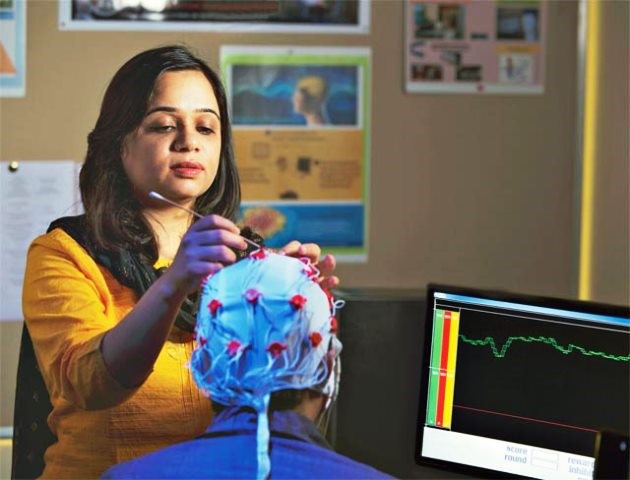
Dr Divya Sadana
Dr. Divya Sadana

Now researchers have found that such patients carry some residual impairment in terms of processing of information even in their ‘normal’ phases.

The study has been done jointly by researchers from the National Institute of Mental Health and Neuroscience (NIMHANS), Bengaluru, and All India Institute of Medical Sciences, New Delhi. It included two groups of 30 individuals each, matched in age, gender and education. The first group comprised those with bipolar disorder while the other was a control group of healthy individuals.

“We hypothesized that individuals could have deficiencies in the form of slow mental thinking or speed of motor activity, difficulties in concentrating for required task duration, difficulties in planning and decision making or had mild forgetfulness even in their normal phase. We found that few deficiencies do continue,” said Dr. Divya Sadana, the first author of the study, while speaking to India Science Wire.

Dr Jamuna Rajeswaran, Dr Divya Sadana and Dr Rajnish Kumar Gupta
Dr. Jamuna Rajeswaran, Dr. Divya Sadana, and Dr. Rajnish Kumar Gupta

The two groups were subjected to a set of 10 to 12 neuropsychological assessments and questionnaires, standardized to the Indian adult profile that determines the speed of processing information, attention, fluency, planning, mental flexibility, and memory functions. The test called NIMHANS Neuropsychological Battery is used to assess cognitive deficits in bipolar disorder patients.

The normal phase of the bipolar patients was ensured by checking that they did not have a relapse of the condition in the last three months.

“The results indicated that the bipolar group had ‘statistically significant’ low scores on the speed of processing information as compared to healthy controls, although there was no significant difference in memory and executive functions,” explained Dr. Rajnish K Gupta, a team member, who was involved in the statistical analysis of the study.

In the bipolar group, processing speed deficits continue in the euthymic phase. “However, better performance has been observed on unstructured tasks compared to healthy control.  These cognitive markers have implications in diagnosis and rehabilitation,” added Dr. Jamuna Rajeswaran, the leader of the team. She noted that although the sample size was small, the methodology adopted was robust and the study was spread over five years to ensure exact matching between the two groups.

The team comprised Divya Sadana, Rajnish Kumar Gupta, Sanjeev Jain, Ravi G.S, K. Thennarasu, and Jamuna Rajeswaran (NIMHANS); and S. Senthil Kumaran (AIIMS). The results have been published in the journal Asian Journal of Psychiatry. (ISW)

Susheela Srinivas

If you liked this article, then please subscribe to our YouTube Channel for the latest Science & Tech news. You can also find us on Twitter & Facebook.
Rate

“We hypothesized that individuals could have deficiencies in the form of slow mental thinking or speed of motor activity, difficulties in concentrating for required task duration, difficulties in planning and decision making or had mild forgetfulness even in their normal phase. We found that few deficiencies do continue,” said Dr. Divya Sadana, the first author of the study, while speaking to India Science Wire.

Dr Jamuna Rajeswaran, Dr Divya Sadana and Dr Rajnish Kumar Gupta
Dr. Jamuna Rajeswaran, Dr. Divya Sadana, and Dr. Rajnish Kumar Gupta

The two groups were subjected to a set of 10 to 12 neuropsychological assessments and questionnaires, standardized to the Indian adult profile that determines the speed of processing information, attention, fluency, planning, mental flexibility, and memory functions. The test called NIMHANS Neuropsychological Battery is used to assess cognitive deficits in bipolar disorder patients.

The normal phase of the bipolar patients was ensured by checking that they did not have a relapse of the condition in the last three months.

“The results indicated that the bipolar group had ‘statistically significant’ low scores on the speed of processing information as compared to healthy controls, although there was no significant difference in memory and executive functions,” explained Dr. Rajnish K Gupta, a team member, who was involved in the statistical analysis of the study.

In the bipolar group, processing speed deficits continue in the euthymic phase. “However, better performance has been observed on unstructured tasks compared to healthy control.  These cognitive markers have implications in diagnosis and rehabilitation,” added Dr. Jamuna Rajeswaran, the leader of the team. She noted that although the sample size was small, the methodology adopted was robust and the study was spread over five years to ensure exact matching between the two groups.

The team comprised Divya Sadana, Rajnish Kumar Gupta, Sanjeev Jain, Ravi G.S, K. Thennarasu, and Jamuna Rajeswaran (NIMHANS); and S. Senthil Kumaran (AIIMS). The results have been published in the journal Asian Journal of Psychiatry. (ISW)

Susheela Srinivas

If you liked this article, then please subscribe to our YouTube Channel for the latest Science & Tech news. You can also find us on Twitter & Facebook.

" }
Scientists Provide New Insight into Basophils Activation

Scientists Provide New Insight into Basophils Activation

Dr. Jagadeesh Bayry’s  team at Institut National de la Santé et de la Recherche Médicale (French National Institute of Health and Medical Research, INSERM), Paris, France- have discovered that Tregs instead of suppressing the activities of basophils, they trigger these cells to express  activation markers, to secrete cytokines and support their allergic responses.

  • News
  • 3.3K
Read more

Giant LEAP to View Materials – One Atom at A Time

India is a leading player in nanotechnology research globally. To facilitate research in this sector, a national facility for Atom Probe Tomography has been established at the Indian Institute of Technology Madras, in partnership with several other institutes

  • News
  • 2.4K
Read more
Festival of Innovation and Entrepreneurship Opens At Rashtrapati Bhawan on Monday

Festival of Innovation and Entrepreneurship Opens At Rashtrapati Bhawan on Monday

The Festival of Innovation and Entrepreneurship (FINE) – an initiative of the Office of the President of India to recognize and reward innovations – will open at Rashtrapati Bhawan on Monday.

  • News
  • 2.2K
Read more

Internet is huge! Help us find great content

Newsletter

Never miss a thing! Sign up for our newsletter to stay updated.

About

Research Stash is a curated collection of tools and News for S.T.E.M researchers

Have any questions or want to partner with us? Reach us at hello@researchstash.com

Navigation

Submit