New Initiatives to Boost Technology Incubators in India

New Initiatives to Boost Technology Incubators in India

  • Research Stash
  • News
  • 1.9K

The government has decided to set up 15 new biotechnology incubators and another 15 new technology business incubators during the coming financial year.

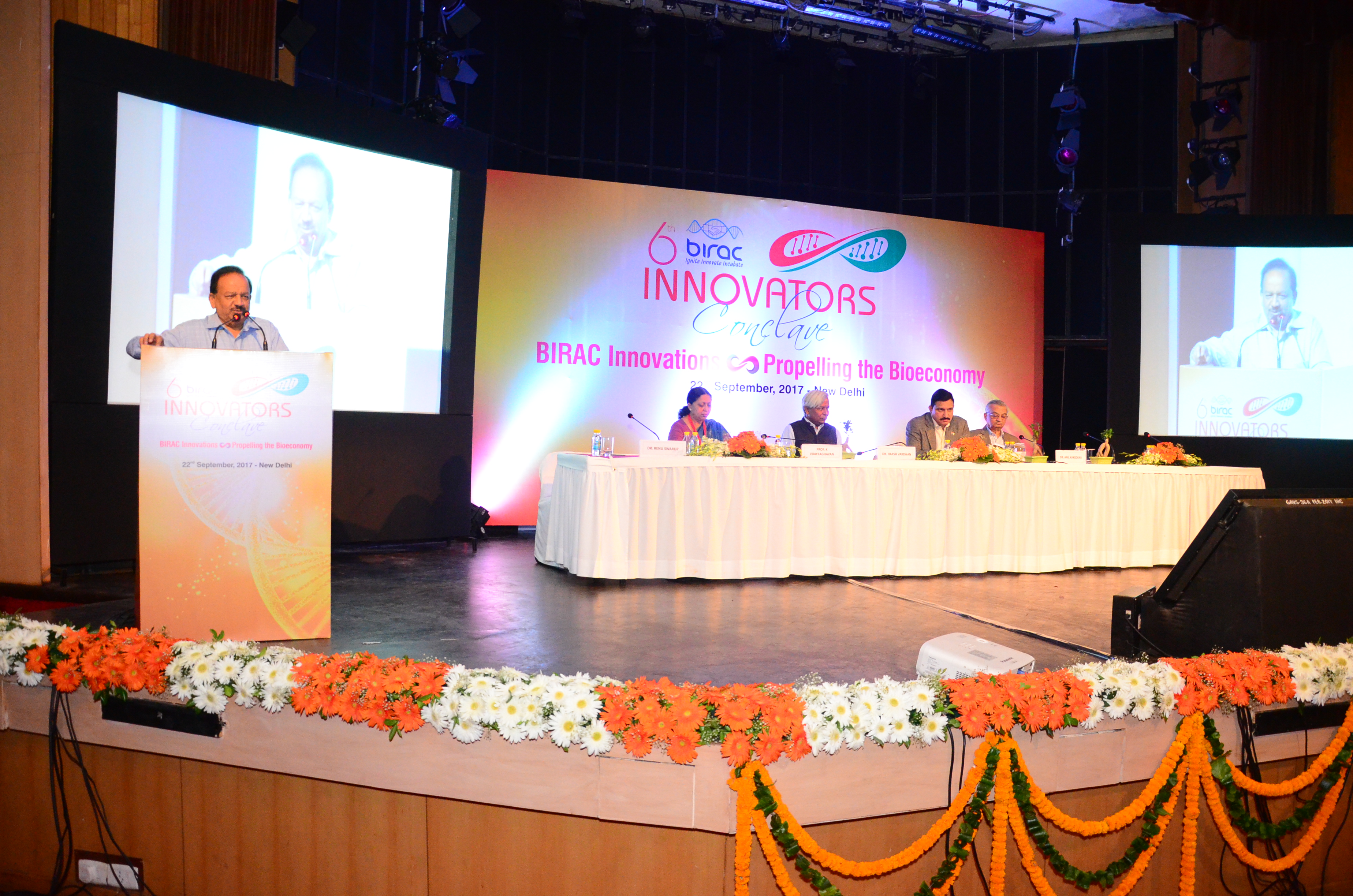
The new initiatives spelled out in the budget is designed to help translate new technologies developed by biotech and other companies into products of use to society. Addressing a press conference, Minister for Science and Technology and Earth Sciences, Dr. Harsh Vardhan, noted that apart from the incubators, the Biotechnology Industry Research Assistance Council (BIRAC) will support setting up of 3,000 additional start-ups in different parts of the country.

He said the budget allocation for science and technology has been increasing since 2014 when the present government took office. “The allocation for Department of Science and Technology (DST) for the last five years has witnessed a whopping 90 percent increase over preceding five years (2009-10 to 2013-14), followed by a 65 percent increase for Department of Biotechnology (DBT), 43 percent for Council of Scientific and Industrial Research (CSIR) and 26 percent for the Ministry of Earth Sciences (MoES)”.

Asked about reports of fund shortage faced by CSIR last year, he agreed that there was an issue because the Council had to implement the Seventh Pay Commission recommendations for its employees. But, this year, that problem will not be there.

He noted that CSIR, as well as DST, DBT, and MoES, have been allocated more funds this year. The increase is eight percent for DST, 3.56 percent for CSIR, 6.7 percent for DBT, and 12.7 percent for MoES.

He noted that among other new initiatives, the India Meteorological Department under MoES would provide agro-meteorological advisory to 50 million farmers by the end of the year, against 24 million farmers at present. In addition, a new Mission for Cyber-Physical-Systems will be launched. (India Science Wire)

By Sunderarajan Padmanabhan

Image BIRAC

For the latest Science and Tech news and conversations, follow Research Stash on TwitterFacebook, and subscribe to our YouTube channel 
Asked about reports of fund shortage faced by CSIR last year, he agreed that there was an issue because the Council had to implement the Seventh Pay Commission recommendations for its employees. But, this year, that problem will not be there.

He noted that CSIR, as well as DST, DBT, and MoES, have been allocated more funds this year. The increase is eight percent for DST, 3.56 percent for CSIR, 6.7 percent for DBT, and 12.7 percent for MoES.

He noted that among other new initiatives, the India Meteorological Department under MoES would provide agro-meteorological advisory to 50 million farmers by the end of the year, against 24 million farmers at present. In addition, a new Mission for Cyber-Physical-Systems will be launched. (India Science Wire)

By Sunderarajan Padmanabhan

Image BIRAC

For the latest Science and Tech news and conversations, follow Research Stash on TwitterFacebook, and subscribe to our YouTube channel 
" }
Intranasal COVID Vaccine Gets DCGA Emergency Use Authorisation

Intranasal COVID Vaccine Gets DCGA Emergency Use Authorisation

The Department of Biotechnology and its PSU, Biotechnology Industry Research Assistance Council, on Wednesday announced that the Drug Controller General of India had given emergency use authorization for the first-of-its-kind intranasal COVID-19 vaccine developed by Bharat Biotech.

  • News
  • 3.5K
Read more
How AI May Help Diagnose Mental Illnesses

How AI May Help Diagnose Mental Illnesses

Artificial intelligence is finding new applications in a range of fields. Now researchers from India and Canada have developed a machine learning-based tool that can diagnose schizophrenia with high accuracy

  • News
  • 2.8K
Read more
How Biological Response May Help Avert another Mass Extinction of Species

How Biological Response May Help Avert another Mass Extinction of Species

A recently published study in journal Proceedings of the National Academy of Science documents how sea stars resort to rapid genetic selection when subjected to the shock of mortality due to a wasting disease.

  • News
  • 2.1K
Read more

Internet is huge! Help us find great content

Newsletter

Never miss a thing! Sign up for our newsletter to stay updated.

About

Research Stash is a curated collection of tools and News for S.T.E.M researchers

Have any questions or want to partner with us? Reach us at [email protected]

Navigation

Submit