New Method to Study Insect Muscles Developed

New Method to Study Insect Muscles Developed

  • Research Stash
  • News
  • 2.2K

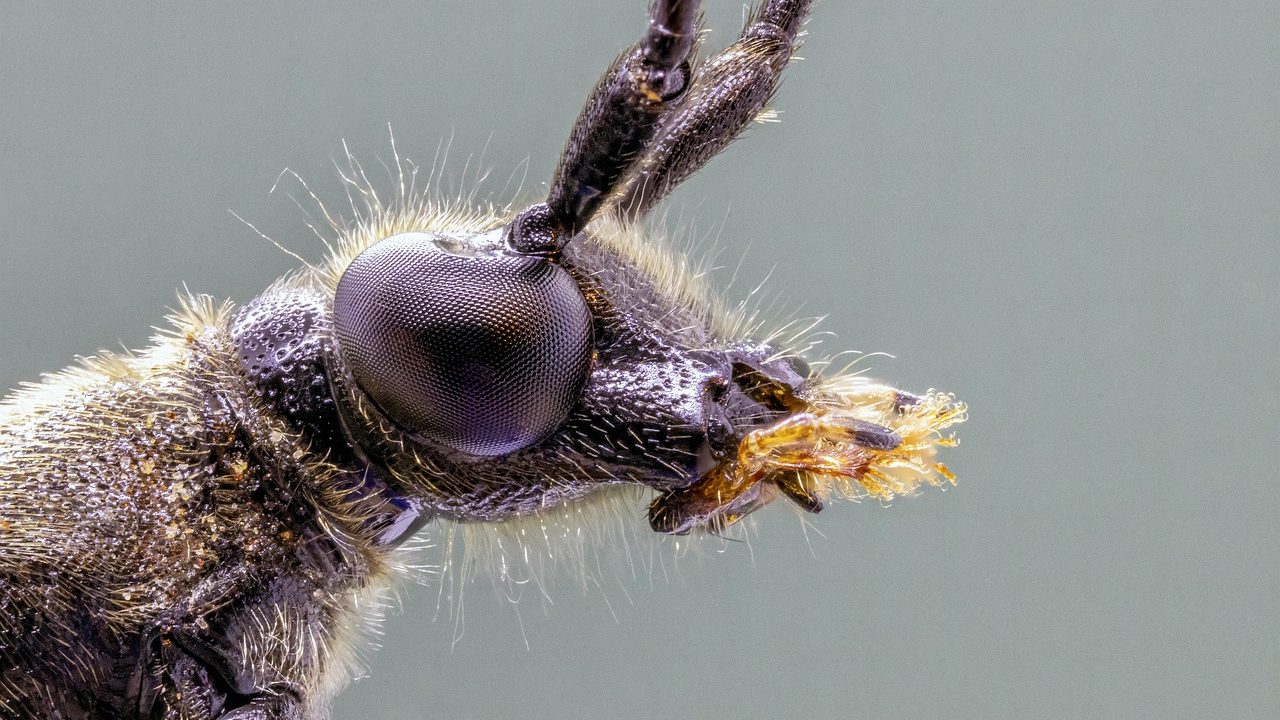
Much like birds, insects exhibit remarkably variable and versatile flights. Fruit flies, for instance, achieve wing beat frequencies of approximately 200 Hertz. A subset of muscles in insect thoraces called `indirect flight muscles’ power beating of the wings.

An understanding of this mechanism could help scientists how human muscles function. These muscles are the only reported large muscle group in the fruit fly that shares with mammals the architecture of myofibrils, which are the basic functional units of skeletal muscle. Till now scientists have only been able to investigate the molecular details of their function. They have not been able to visualize the overall structure.

Now researchers from Bengaluru-based National Center for Biological Sciences and Manipal Academy of Higher Education have found a way to visualize the muscles using Micro-level computed tomography (micro-CT) scanning.

Using the new method, the researchers studied one type of indirect flight muscles called dorsal longitudinal muscles and found that their volume increased with age but differently in male and female.

“Without this method that we have developed, such studies would not have been possible. These studies were on the darling of geneticists, the humble fruit fly. Combined with the power of genetics, this method may also help us understand human muscle diseases better,” researchers observed in a statement issued by the Bangalore Life Science Cluster.

The level of very high resolution achieved by researchers enabled them to see differences and remarkable similarities between the muscles of fruit flies and honey bees. “We now seek flight design secrets from other insects as well as what we can learn about our own muscles, supported partly by this method,” the group said.

The research team included K. VijayRaghavan, Dhananjay Chaturvedi, Sunil Prabhakar, Krishan B. Atreya, and Aman Aggarwal. The findings have been published journal Open Biology.

Sunderarajan Padmanabhan

If you liked this article, then please subscribe to our YouTube Channel for the latest Science & Tech news. You can also find us on Twitter & Facebook.

Using the new method, the researchers studied one type of indirect flight muscles called dorsal longitudinal muscles and found that their volume increased with age but differently in male and female.

“Without this method that we have developed, such studies would not have been possible. These studies were on the darling of geneticists, the humble fruit fly. Combined with the power of genetics, this method may also help us understand human muscle diseases better,” researchers observed in a statement issued by the Bangalore Life Science Cluster.

The level of very high resolution achieved by researchers enabled them to see differences and remarkable similarities between the muscles of fruit flies and honey bees. “We now seek flight design secrets from other insects as well as what we can learn about our own muscles, supported partly by this method,” the group said.

The research team included K. VijayRaghavan, Dhananjay Chaturvedi, Sunil Prabhakar, Krishan B. Atreya, and Aman Aggarwal. The findings have been published journal Open Biology.

Sunderarajan Padmanabhan

If you liked this article, then please subscribe to our YouTube Channel for the latest Science & Tech news. You can also find us on Twitter & Facebook.
" }

NCKU President shares her love of science with high school girls in Taiwan

National Cheng Kung University (NCKU) President Huey-Jen Jenny Su was invited by Taipei First Girls High School (TFG) to share her learning experience and reflection on being a female scientist in global community on April 14 in Taipei.

  • News
  • 3.1K
Read more
Tourist guides participating in astronomy workshop at Jantar Mantar

Tourists Can Now Get Better Insight into Astronomical Heritage in Jaipur

The Jantar Mantar monument in Jaipur is a UNESCO world heritage site. It is an astronomical observatory built in the early 18th century by Rajput king Sawai Jai Singh II. It houses 19 astronomical instruments made out of masonry, stone, and brass.

  • News
  • 1.8K
Read more
Scientists Seek Global Action On Reactive Nitrogen

Scientists Seek Global Action On Reactive Nitrogen

Around 200 scientists from 44 countries have called upon the UN Secretary-General Antonio Guterres to take global level action on reactive nitrogen and address the crisis being caused by the unregulated release of nitrogen across the world

  • News
  • 1.6K
Read more

Internet is huge! Help us find great content

Newsletter

Never miss a thing! Sign up for our newsletter to stay updated.

About

Research Stash is a curated collection of tools and News for S.T.E.M researchers

Have any questions or want to partner with us? Reach us at [email protected]

Navigation

Submit