Study Finds Gaps in Conservation Efforts in Western Ghats

Study Finds Gaps in Conservation Efforts in Western Ghats

  • Research Stash
  • News
  • 1.7K

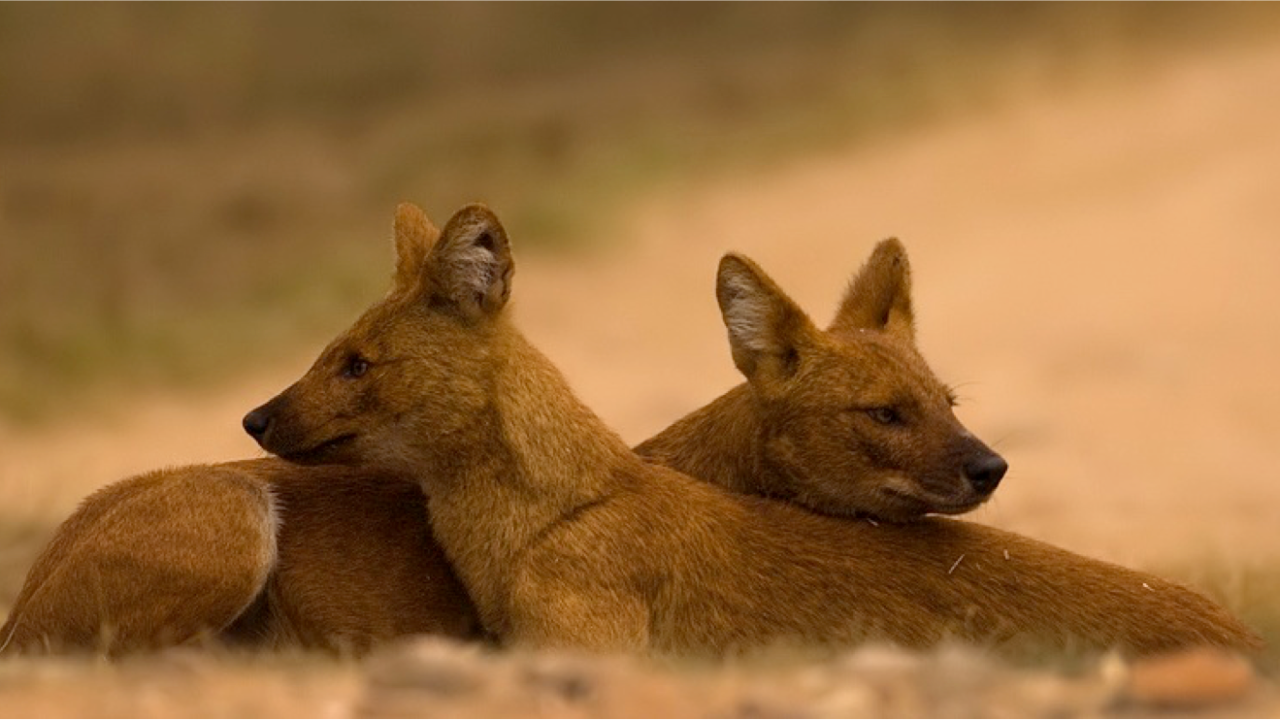
A new study has found that expansion of protected areas in the Western Ghats has not helped the lot of Dhole, commonly known as the Asiatic wild dog, even while enabling the recovery of populations of tigers and other big carnivores.

Dhole is an apex social carnivore in the tropical forests of South and South East Asia. Conservation of such carnivores leads to the well-being of the entire ecosystem. There are many conservation projects based on this concept. These have helped improve the population of bigger carnivores like the tiger. However, there is not much knowledge about what has happened to smaller and less known but equally important animals like dholes.

As a part of a long-term study, a team of scientists have now estimated the dhole population and its occupancy pattern in 16 protected forest reserves and adjoining landscapes covering an area of 37,000 sq. km in Karnataka portion of Western Ghats. They have found that there are 49 sites in the surveyed areas, which faced the threat of local extinction of the animal.

The researchers used a unique methodology for the study. They combined indirect sign survey data and dynamic occupancy modelling techniques. It is not possible to employ the normally used capture-mark-recapture camera trap-based survey method for estimating the dhole population because they do not have uniquely identifiable marks on their bodies.

Generally, dholes hunt in packs and tend to venture into forested landscapes adjoining protected areas. Anthropogenic factors, which fragment and alter landscapes, affected dholes. Under certain circumstances, the dhole population might even get restricted within the fragmented areas, forming meta-populations. If due conservation efforts are not taken towards these isolated populations, they might get wiped out. The new study has explicitly emphasised on the conservation of these dhole metapopulations.

In a paper published in journal Scientific Reports, researchers emphasised that factors linked to human use of dhole habitats pose the highest level of threats to dhole populations. “The presence of livestock adjacent to reserve areas negatively affected dhole occupancy. It affects habitat quality as livestock competes with the wild prey of dholes. Free-ranging feral dogs also adversely affect dhole populations because of competition for prey and by hosting a range of pathogens harmful to dholes”, the study has observed.

Speaking to India Science Wire, the lead author of the study, Arjun Srivathsa of the Wildlife Conservation Society-India, Bengaluru, said, “Tigers and leopards are likely a lot more resilient compared to dholes. Dholes are perhaps a lot more sensitive to forest cover and therefore require more nuanced approaches for population recovery”.

Besides Dr. Srivathsa, the research team included Dr K. Ullas Karanth, and Dr N. Samba Kumar of the Centre for Wildlife Studies, Bengaluru, and Dr Madan K. Oli of the University of Florida, USA. (India Science Wire).

By S Suresh Ramanan

If you liked this article, then please subscribe to our YouTube Channel for the latest Science & Tech news. You can also find us on Twitter & Facebook.
Rate

The researchers used a unique methodology for the study. They combined indirect sign survey data and dynamic occupancy modelling techniques. It is not possible to employ the normally used capture-mark-recapture camera trap-based survey method for estimating the dhole population because they do not have uniquely identifiable marks on their bodies.

Generally, dholes hunt in packs and tend to venture into forested landscapes adjoining protected areas. Anthropogenic factors, which fragment and alter landscapes, affected dholes. Under certain circumstances, the dhole population might even get restricted within the fragmented areas, forming meta-populations. If due conservation efforts are not taken towards these isolated populations, they might get wiped out. The new study has explicitly emphasised on the conservation of these dhole metapopulations.

In a paper published in journal Scientific Reports, researchers emphasised that factors linked to human use of dhole habitats pose the highest level of threats to dhole populations. “The presence of livestock adjacent to reserve areas negatively affected dhole occupancy. It affects habitat quality as livestock competes with the wild prey of dholes. Free-ranging feral dogs also adversely affect dhole populations because of competition for prey and by hosting a range of pathogens harmful to dholes”, the study has observed.

Speaking to India Science Wire, the lead author of the study, Arjun Srivathsa of the Wildlife Conservation Society-India, Bengaluru, said, “Tigers and leopards are likely a lot more resilient compared to dholes. Dholes are perhaps a lot more sensitive to forest cover and therefore require more nuanced approaches for population recovery”.

Besides Dr. Srivathsa, the research team included Dr K. Ullas Karanth, and Dr N. Samba Kumar of the Centre for Wildlife Studies, Bengaluru, and Dr Madan K. Oli of the University of Florida, USA. (India Science Wire).

By S Suresh Ramanan

If you liked this article, then please subscribe to our YouTube Channel for the latest Science & Tech news. You can also find us on Twitter & Facebook.
" }
Scientists Develop 'Black Gold' - A Wonder Material

Scientists Develop ‘Black Gold’ – A Wonder Material

Indians are fascinated with gold, making India one of the largest consumers of the yellow metal globally. Now Indian scientists have tinkered with the chemistry of the material and turned it into ‘black gold’ which they say can be potentially used for applications ranging from solar energy harvesting to desalinating seawater

  • News
  • 3.2K
Read more
Dr Pravat Mandal and Dr. Deepika Shukla at NBRC

Big Data May Help Get New Clues to Alzheimer’s

Despite rapid developments in medicine, early detection of neurodegenerative disorders remains a challenge. Now a group of Indian researchers has sought to apply Big Data analytics to hunt for early signatures of the Alzheimer’s.

  • News
  • 2.4K
Read more
Super Tiny Particles Derived From Table Sugar Can Detect Lead in Water

Super Tiny Particles Derived From Table Sugar Can Detect Lead in Water

Nanotechnology deals with particles that are several thousand times smaller than a human hair, and it is being put to use in a variety of applications such as drug delivery and diagnostic tests.

  • News
  • 5.5K
Read more

Internet is huge! Help us find great content

Newsletter

Never miss a thing! Sign up for our newsletter to stay updated.

About

Research Stash is a curated collection of tools and News for S.T.E.M researchers

Have any questions or want to partner with us? Reach us at hello@researchstash.com

Navigation

Submit