Scientists Synthesize Cannabis Like Products in Lab

Scientists Synthesize Cannabis Like Products in Lab

  • Research Stash
  • News
  • 2K

Cannabinoids are chemicals extracted from cannabis and they find a range of medical applications. Given regulatory and other restrictions on the cultivation of cannabis, scientists have been looking for chemically synthesizing cannabinoids in the laboratory.

Indian scientists have now developed a new process for chemically synthesizing two such cannabis chemicals – Serinolamide A and Columbamide D. These two compounds have been previously isolated from marine algae found in Papua New Guinea and Malaysia. However, commercial use of these products is limited since it is difficult to procure sufficient quantities of marine sources for their isolation.


Researchers from the National Chemical Laboratory, Pune have succeeded in synthesizing these two compounds in the laboratory through a chemical process.

“The development of a simple and efficient synthetic approach to produce these marine natural products is of high value. We accomplished the total synthesis of serinolamide A and Columbamide D in less number of steps and good overall yields,” said Dr. M. Muthukrishnan, who led the research effort, while speaking to India Science Wire.

Cannabis works by activating a biological system in the body called “Endo-cannabinoid system”. This system acts through a set of neurotransmitters called Endo-cannabinoids, which bind it to its receptors in the body and regulate a range of functions such as appetite, perception of pain, mood, and memory.

For the synthesis of both these products, scientist used a common intermediate, (R)-7, which was derived after some chemical reactions were performed on commercially available chemical, (R)-benzyl glycidyl ether (R)-3. After synthesis of this common intermediate, a number of different steps were performed for the synthesis of the two products.

Although previous studies have also reported the possibility of chemical synthesis of cannabinoids, researchers said the new method used less number of steps and yields obtained were 66% for Serinolamide A and 62% for Columbamide D.

“The strategy we have developed for the preparation of the two chemicals is simple. It is from a common intermediate, starting from the easily available starting material. We can prepare similar natural products using the same strategy. These fatty acid amides are biologically significant. Preparation of newer analogs and study of their biological activity will be carried out,” said Dr. M. Muthukrishnan.

The research results have been published in the journal ACS Omega. Besides Dr. Muthukrishnan, the team included Ganesh S. Ghotekar from NCL and Mohammad Mujahid from Shri Shivaji College of Arts, Commerce, and Science. (India Science Wire)

By Dr. Aditi Jain

If you liked this article, then please subscribe to our YouTube Channel for the latest Science & Tech news. You can also find us on Twitter & Facebook.
Rate

“The development of a simple and efficient synthetic approach to produce these marine natural products is of high value. We accomplished the total synthesis of serinolamide A and Columbamide D in less number of steps and good overall yields,” said Dr. M. Muthukrishnan, who led the research effort, while speaking to India Science Wire.

Cannabis works by activating a biological system in the body called “Endo-cannabinoid system”. This system acts through a set of neurotransmitters called Endo-cannabinoids, which bind it to its receptors in the body and regulate a range of functions such as appetite, perception of pain, mood, and memory.

For the synthesis of both these products, scientist used a common intermediate, (R)-7, which was derived after some chemical reactions were performed on commercially available chemical, (R)-benzyl glycidyl ether (R)-3. After synthesis of this common intermediate, a number of different steps were performed for the synthesis of the two products.

Although previous studies have also reported the possibility of chemical synthesis of cannabinoids, researchers said the new method used less number of steps and yields obtained were 66% for Serinolamide A and 62% for Columbamide D.

“The strategy we have developed for the preparation of the two chemicals is simple. It is from a common intermediate, starting from the easily available starting material. We can prepare similar natural products using the same strategy. These fatty acid amides are biologically significant. Preparation of newer analogs and study of their biological activity will be carried out,” said Dr. M. Muthukrishnan.

The research results have been published in the journal ACS Omega. Besides Dr. Muthukrishnan, the team included Ganesh S. Ghotekar from NCL and Mohammad Mujahid from Shri Shivaji College of Arts, Commerce, and Science. (India Science Wire)

By Dr. Aditi Jain

If you liked this article, then please subscribe to our YouTube Channel for the latest Science & Tech news. You can also find us on Twitter & Facebook.

" }
Scientists Figure Out How Plants Make Use of Good Microbes for Their Growth

Scientists Figure Out How Plants Make Use of Good Microbes for Their Growth

The group led by Dr. Jyothi Lakshmi Vadassery has found that an ion channel called CNGC19 in the plants could be playing a decisive role in helping the plants to benefit from the good microbes

  • News
  • 2K
Read more
New Absorbent May Make Diapers Eco-Friendly

New Absorbent May Make Diapers Eco-Friendly

scientists from the Department of Chemistry at Indian Institute of Technology, Madras have developed a biodegradable superabsorbent polymer using chitosan (a kind of sugar extracted from seafood waste), citric acid and urea. This superabsorbent has the capacity – it can absorb 1250 gm of water for each gram of the polymer

  • News
  • 3.3K
Read more
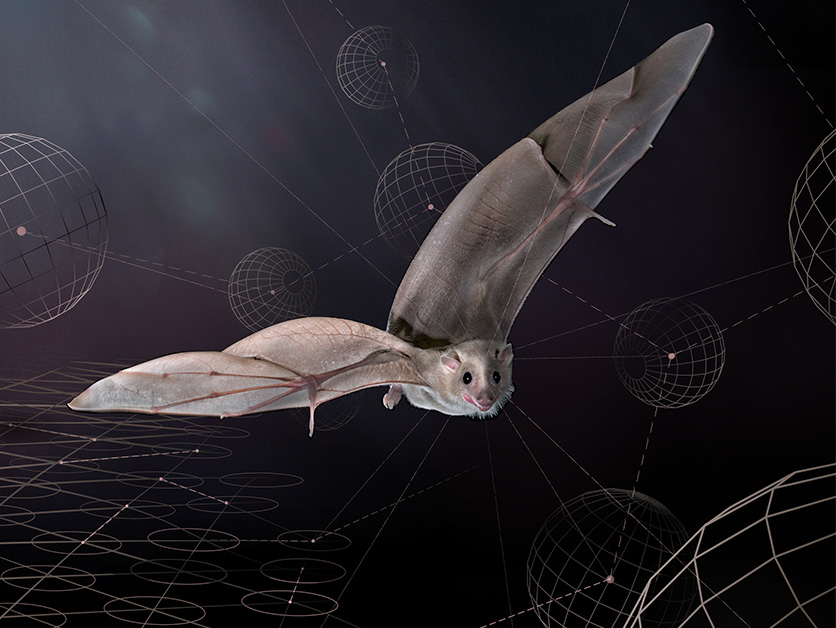
The Egyptian fruit bat: The representation of three dimensional space in the mammalian cortex resembles a box of marbles. Photo: Steve Gettle; Design: Maayan Visuals

When the Brain’s GPS Goes Off the Grid

In a new study published in Nature today, Weizmann Institute of Science researchers, in collaboration with colleagues from the Hebrew University of Jerusalem, unveiled for the first time how three-dimensional space is represented in the mammalian cortex by the brain’s “GPS” system.

  • News
  • 1.6K
Read more

Internet is huge! Help us find great content

Newsletter

Never miss a thing! Sign up for our newsletter to stay updated.

About

Research Stash is a curated collection of tools and News for S.T.E.M researchers

Have any questions or want to partner with us? Reach us at hello@researchstash.com

Navigation

Submit