
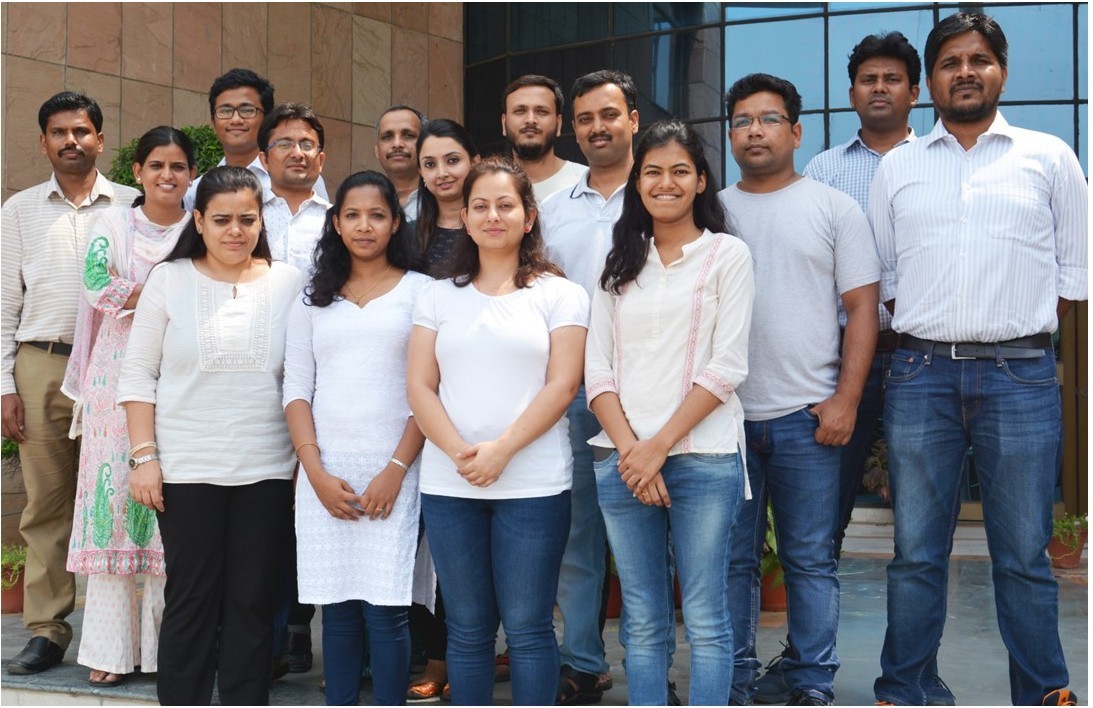
Team of researchers at National Institute of Plant Genome Research

Scientists Unravel the Fungus Responsible for Sheath Blight Disease in Rice

  • Research Stash
  • News
  • 3.1K

A team of scientists at National Institute of Plant Genome Research has unraveled the genomic diversity associated with aggressiveness of two Indian strains of Rhizoctonia solani, the fungal pathogen that causes the dreaded Sheath Blight disease in rice.

Team of researchers at National Institute of Plant Genome Research

The researchers have identified several genes and gene families in the strain that might account for their disease aggressiveness. This genomic insight is expected to help develop rice varieties resistant to sheath blight disease.

Sheath Blight disease is a major issue in rice cultivation. It can cause up to 60 percent reduction in rice yield. It is difficult to breed disease-resistant rice varieties, as there is a lack of natural source of disease resistance. Consequently, controlling the disease in a sustainable manner has remained a challenge.

Now, a solution could be in the offing following the new findings. The researchers, who have been working to characterize the Indian strains of the fungal pathogen for the past four to five years, decided to study the genome of two of the hyper-aggressive strains.

Their analysis revealed that there has been expansion and emergence of various genes and gene families in both these Indian strains. In the process, they have identified various pathogenicity-associated genes and gene families that might account for their disease aggressiveness.
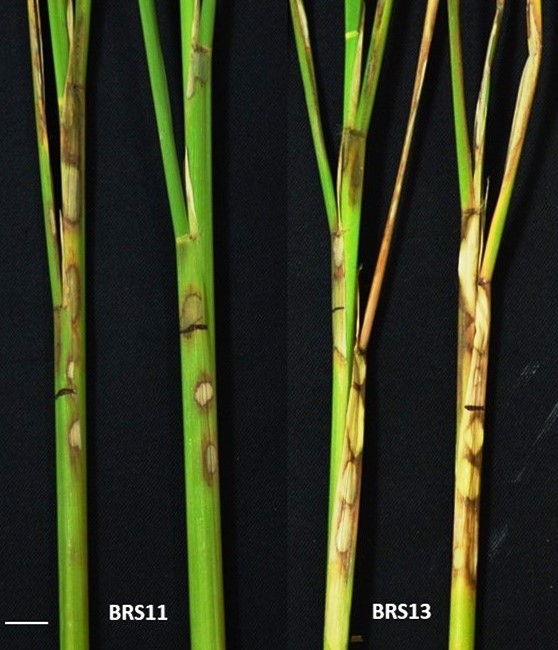
Rhizoctonia solani infected rice

Speaking to India Science Wire, leader of the team, Dr. Gopaljee Jha said, “Our team sequenced the genome of the two aggressive fungus strains called BRS11 and BRS13 and compared them with the already available genome of Rhizoctonia solani AG1-IA group. We have identified several Single Nucleotide Polymorphisms and insertion or deletion of bases in both these genomes”.

Asked about future plans, he said, “Further characterization of the identified genes will be helpful to understand their role in the pathogenesis of the fungus. The genetic manipulation of the pathogenicity-associated genes in rice through various biotechnological approaches may prove helpful in developing sheath blight resistant rice”.

In addition to Dr. Jha, the researchers included Srayan Ghosh, Neelofar Mirza, Poonam Kanwar, and Kriti Tyagi. They have published a report on their study in the research journal Functional and Integrative Genomics.

By Umashankar Mishra

If you liked this article, then please subscribe to our YouTube Channel for the latest Science & Tech news. You can also find us on Twitter & Facebook.
Rate

Now, a solution could be in the offing following the new findings. The researchers, who have been working to characterize the Indian strains of the fungal pathogen for the past four to five years, decided to study the genome of two of the hyper-aggressive strains.

Their analysis revealed that there has been expansion and emergence of various genes and gene families in both these Indian strains. In the process, they have identified various pathogenicity-associated genes and gene families that might account for their disease aggressiveness.

Rhizoctonia solani infected rice

Speaking to India Science Wire, leader of the team, Dr. Gopaljee Jha said, “Our team sequenced the genome of the two aggressive fungus strains called BRS11 and BRS13 and compared them with the already available genome of Rhizoctonia solani AG1-IA group. We have identified several Single Nucleotide Polymorphisms and insertion or deletion of bases in both these genomes”.

Asked about future plans, he said, “Further characterization of the identified genes will be helpful to understand their role in the pathogenesis of the fungus. The genetic manipulation of the pathogenicity-associated genes in rice through various biotechnological approaches may prove helpful in developing sheath blight resistant rice”.

In addition to Dr. Jha, the researchers included Srayan Ghosh, Neelofar Mirza, Poonam Kanwar, and Kriti Tyagi. They have published a report on their study in the research journal Functional and Integrative Genomics.

By Umashankar Mishra

If you liked this article, then please subscribe to our YouTube Channel for the latest Science & Tech news. You can also find us on Twitter & Facebook.
" }
An Isabgol Based Wound Material to Treat Diabetic Wounds

An Isabgol Based Wound Material to Treat Diabetic Wounds

Treatment of chronic non-healing wounds in diabetes is a major clinical challenge. To address this problem, researchers at Indian Institute of Technology (IIT), Madras have developed a new wound dressing material. They have developed it, using reduced graphene oxide loaded Nanocomposite scaffolds and Isabgol.

  • News
  • 2.7K
Read more
Cellulose Nanofibers from Bagasse Can Help in Controlled Release of Pesticides

Cellulose Nanofibers from Bagasse Can Help in Controlled Release of Pesticides

Scientists at Pune-based National Chemical Laboratory of Council of Scientific and Industrial Research have developed an environment-friendly controlled release formulation system for applying agrochemicals in agricultural fields

  • News
  • 3.1K
Read more
Asthma Medicine Mode of Action Revealed

Asthma Medicine Mode of Action Revealed

In a research article published in Nature, a team of researchers including Prof. Arun Shukla’s laboratory at IIT Kanpur, describe the structure of an asthma drug in complex with its target receptor and a regulatory protein in action.

  • News
  • 1.9K
Read more

Internet is huge! Help us find great content

Newsletter

Never miss a thing! Sign up for our newsletter to stay updated.

About

Research Stash is a curated collection of tools and News for S.T.E.M researchers

Have any questions or want to partner with us? Reach us at hello@researchstash.com

Navigation

Submit