

Antibiotic Resistant Bacteria Found in River Water

Antibiotic Resistant Bacteria Found in River Ganga

  • Research Stash
  • News
  • 3.8K

Antibiotic resistance appears to be spreading in the environment. A new study has found a large number of bacteria which are resistant to commonly used antibiotics in stretches of river Ganga.
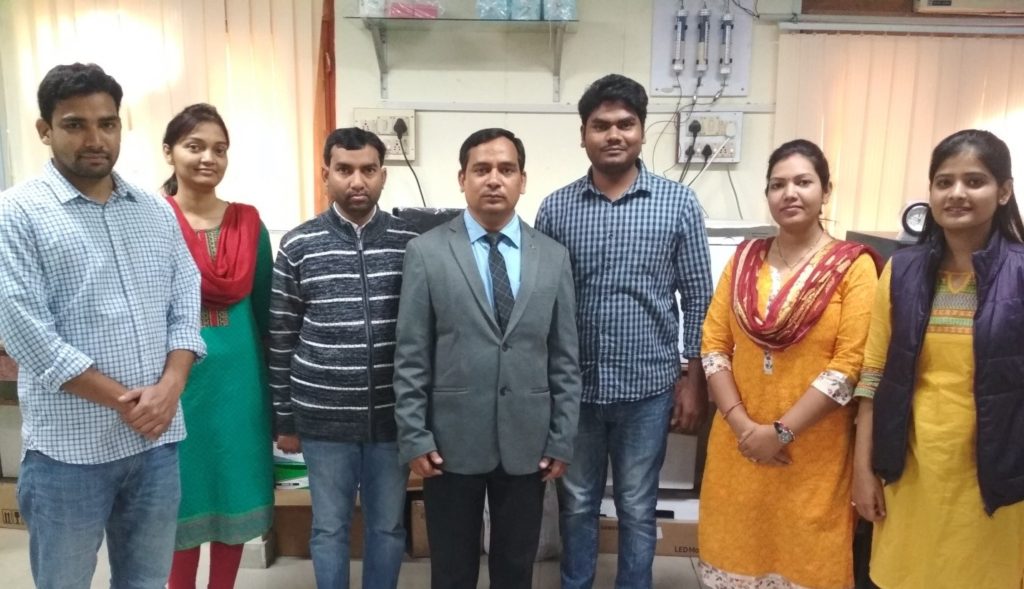
Members of research team at BHU
Members of the research team at BHU

Residues of antibiotics reach water bodies through waste discharged from households, drug manufacturing units, hospitals and poultry industry where antibiotics are used in feed. These antibiotics in water lead to the evolution of bacteria that are resistant to antibiotics, which then grow in numbers and spread in the environment. The situation could pose a danger to human health as an infection with such kind of resistant bacteria could become untreatable.

The new study, done by researchers from the Banaras Hindu University (BHU), has found the presence of antibiotic as well as and metal resistant bacteria in river Ganga. Researchers collected water and sediment samples from five river banks – Assi, Bhadaini, Harishchandra Dr. Rajendra Prasad and Rajghat. The DNA was extracted from these samples and subjected to a high throughput technique to sequence DNA of all bacteria present in the samples.

A comparison of this information with existing sequences of antibiotic and metal resistance genes showed that bacteria resistant to antibiotics like beta-lactam, multidrug/efflux, and elfamycin are highly abundant in the river water. At the same time, bacteria resilient to a range of commonly used antibiotics were also present in water samples.

In the case of metals, bacteria had genes resistant to ions of silver, copper, iron, chromium, arsenic, and zinc. “This study suggests that antibiotics and metals are the driving force for the emergence of resistance genes, and their subsequent propagation and accumulation in the environmental bacteria,” researchers have pointed out.

“Varanasi region receives over 309.8 million liters of treated and untreated domestic waste daily by various point and non-point sources, which may be contributing to the accumulation of resistant genes in the environment,” explained Dr. Suresh Kumar Dubey, professor at Molecular Ecology Laboratory, Centre of Advanced Study in Botany at BHU and author of the study, while speaking to India Science Wire.

The results of this study, he said, will be useful to regulatory agencies like state and central pollution control boards in making a policy change to enforce pollution control regulation to stop further input of antibiotics and toxic metals in the river through a domestic, hospital and industrial wastewater.

The study was done by Dr. Bhaskar Reddy and Dr. S. K Dubey with support from the Department of Science and Technology (DST) and the Science and Engineering Board (SERB).  The study results have been published in the journal Environmental Pollution. (India Science Wire)

By Dr. Aditi Jain

River Ganges water as reservoir of microbes with antibiotic and metal ion resistance genes: High throughput metagenomic approach

If you liked this article, then please subscribe to our YouTube Channel for the latest Science & Tech news. You can also find us on Twitter & Facebook.
Rate

A comparison of this information with existing sequences of antibiotic and metal resistance genes showed that bacteria resistant to antibiotics like beta-lactam, multidrug/efflux, and elfamycin are highly abundant in the river water. At the same time, bacteria resilient to a range of commonly used antibiotics were also present in water samples.

In the case of metals, bacteria had genes resistant to ions of silver, copper, iron, chromium, arsenic, and zinc. “This study suggests that antibiotics and metals are the driving force for the emergence of resistance genes, and their subsequent propagation and accumulation in the environmental bacteria,” researchers have pointed out.

“Varanasi region receives over 309.8 million liters of treated and untreated domestic waste daily by various point and non-point sources, which may be contributing to the accumulation of resistant genes in the environment,” explained Dr. Suresh Kumar Dubey, professor at Molecular Ecology Laboratory, Centre of Advanced Study in Botany at BHU and author of the study, while speaking to India Science Wire.

The results of this study, he said, will be useful to regulatory agencies like state and central pollution control boards in making a policy change to enforce pollution control regulation to stop further input of antibiotics and toxic metals in the river through a domestic, hospital and industrial wastewater.

The study was done by Dr. Bhaskar Reddy and Dr. S. K Dubey with support from the Department of Science and Technology (DST) and the Science and Engineering Board (SERB).  The study results have been published in the journal Environmental Pollution. (India Science Wire)

By Dr. Aditi Jain

River Ganges water as reservoir of microbes with antibiotic and metal ion resistance genes: High throughput metagenomic approach

If you liked this article, then please subscribe to our YouTube Channel for the latest Science & Tech news. You can also find us on Twitter & Facebook.

" }

India Needs More Astronomers, Astronomy Education

New discoveries in astronomy in recent years have generated a lot of excitement globally, and Indian scientists have contributed to them in large measure. However, the country is lacking when it comes to promoting astronomy education at different levels and the number of professional astronomers it needs.

  • News
  • 1.8K
Read more
India to Enhance Natural Defence Against COVID-19

India to Enhance Natural Defence Against COVID-19

Council of Scientific and Industrial Research has decided to repurpose an approved immunomodulator called Sepsivac to enhance the innate immunity of the body to limit the spread of COVID-19 and fasten the recovery of COVID-19 patients.

  • News
  • 2K
Read more
Thirteen Young Scientists Get Shanti Swarup Bhatnagar Prize

Thirteen Young Scientists Get Shanti Swarup Bhatnagar Prize

A total of 13 scientists from different institutions across the country have been chosen for the prestigious Shanti Swarup Bhatnagar prize for 2018

  • News
  • 3.2K
Read more

Internet is huge! Help us find great content

Newsletter

Never miss a thing! Sign up for our newsletter to stay updated.

About

Research Stash is a curated collection of tools and News for S.T.E.M researchers

Have any questions or want to partner with us? Reach us at hello@researchstash.com

Navigation

Submit