How Heavy Metals Are Helping Spread Drug Resistance

How Heavy Metals Are Helping Spread Drug Resistance

  • Research Stash
  • News
  • 1.9K

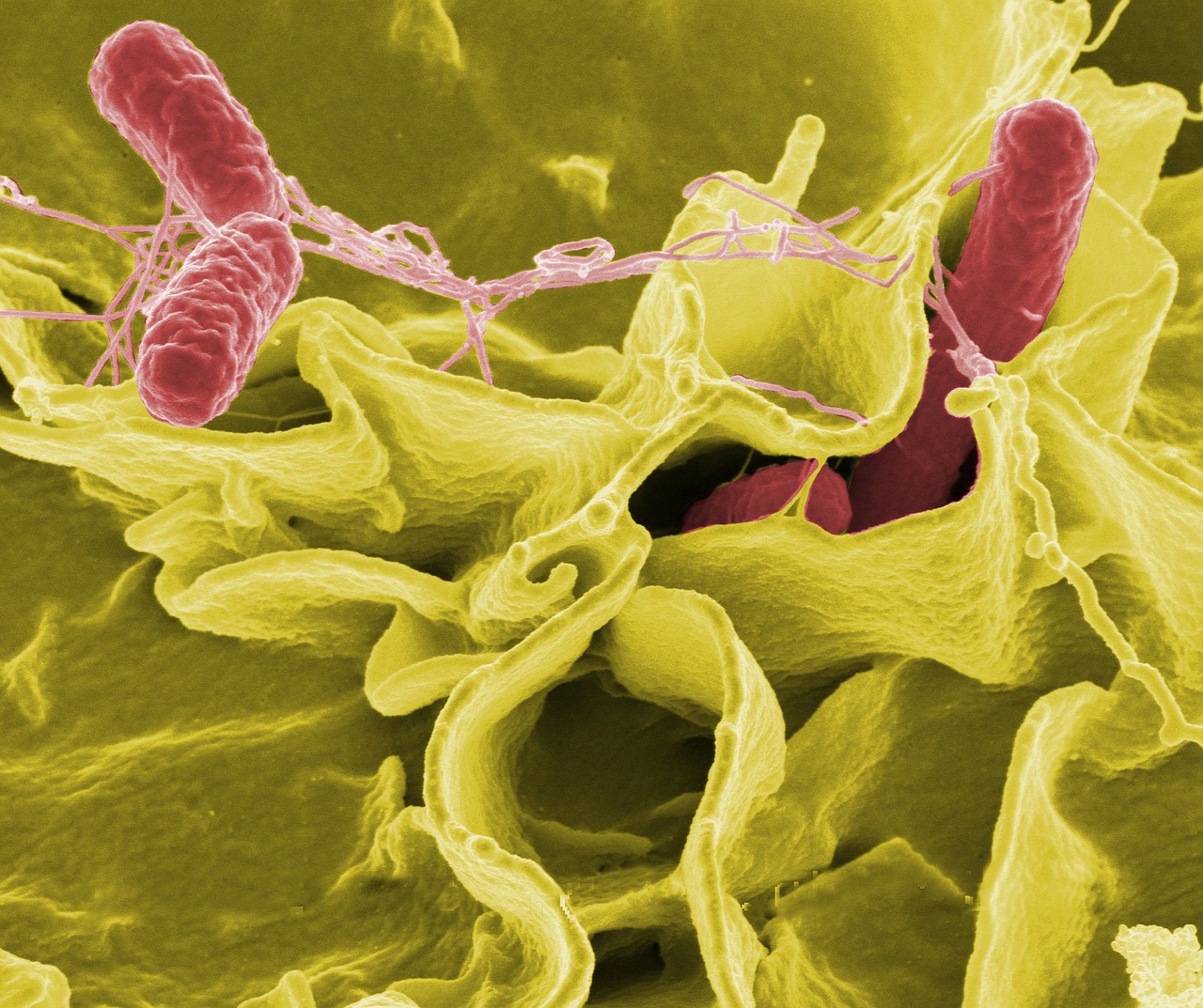
Exposure to cadmium is making typhoid-causing bacteria, Salmonella, stronger and difficult-to-treat with conventional antibiotics, a new study has suggested.

Researchers have identified exposure to cadmium as a reason for Salmonella becoming resistant to antibiotics and have deciphered how cadmium affects the bacteria. Results of the study, published in Scientific Reports, indicate that antibiotics that could treat a severe infection are becoming less effective and those which could only treat mild infections are becoming ineffective.

Salmonella is found in sewage and is exposed to heavy metals discharged from household and industrial waste. In order to survive, the bacteria have undergone various changes at the cell level.

Conventional antibiotics were designed to act on certain components of the bacteria. With the bacteria changing in various ways, these antibiotics are becoming ineffective and slowly useless.

Some antibiotics are unable to enter the bacteria because of a thicker protective layer, while others are unable to bind to the target protein within the bacteria as the protein itself has changed or has been taken up by cadmium readily because it ‘looks like’ calcium and zinc (which are needed by bacterial cells for various functions) and cannot be dislodged easily or the bacterial cells have become stronger due to increase of particles that protect them from dying.

Typhoid spreads through contaminated food and water. If not treated properly at the right stage the disease can even prove fatal.

“With the knowledge of exactly how cadmium changes Salmonella, it would be easy to find alternative methods to counteract the action or even open up potential to come up with new alternatives taking into account the modified Salmonella attributes,” said Dr. Praveen Rishi from the Department of Microbiology, Panjab University, who led the study.

The research team included Ujjwal Jit Kaur and Simran Preet. (India Science Wire)

By Monika Kundu Srivastava

If you liked this article, then please subscribe to our YouTube Channel for the latest Science & Tech news. You can also find us on Twitter & Facebook.

Rate

Conventional antibiotics were designed to act on certain components of the bacteria. With the bacteria changing in various ways, these antibiotics are becoming ineffective and slowly useless.

Some antibiotics are unable to enter the bacteria because of a thicker protective layer, while others are unable to bind to the target protein within the bacteria as the protein itself has changed or has been taken up by cadmium readily because it ‘looks like’ calcium and zinc (which are needed by bacterial cells for various functions) and cannot be dislodged easily or the bacterial cells have become stronger due to increase of particles that protect them from dying.

Typhoid spreads through contaminated food and water. If not treated properly at the right stage the disease can even prove fatal.

“With the knowledge of exactly how cadmium changes Salmonella, it would be easy to find alternative methods to counteract the action or even open up potential to come up with new alternatives taking into account the modified Salmonella attributes,” said Dr. Praveen Rishi from the Department of Microbiology, Panjab University, who led the study.

The research team included Ujjwal Jit Kaur and Simran Preet. (India Science Wire)

By Monika Kundu Srivastava

If you liked this article, then please subscribe to our YouTube Channel for the latest Science & Tech news. You can also find us on Twitter & Facebook.

" }
Ozone Pollution Can Damage Wheat Crop

Ozone Pollution Can Damage Wheat Crop

Air pollution is not only injurious to human health but also to plant life. Scientists from Banaras Hindu University (BHU) have found that most wheat cultivars developed after the year 2000 are more sensitive to damage due to ozone, a byproduct of air pollution.

  • News
  • 3.3K
Read more

A green light for green chemistry: the discovery of new enzymes synthesizing alkaloid natural products

 In nature, living organisms use primary metabolites containing simple building blocks as their starting materials. An important part of utilizing these starting materials is enzymes, which efficiently catalyze a variety of chemical reactions and generate a large number of natural products through biosynthetic pathways.

  • News
  • 2.7K
Read more

A Rare Celestial Feast “Super Blue Moon Eclipse” Is On the Way

A rare celestial treat awaits us on January 31. We are going to witness what is called a "Super Blue Moon eclipse": Three celestial events -- a "super-moon", a "blue moon", and a total lunar eclipse will occur simultaneously.

  • News
  • 2.3K
Read more

Internet is huge! Help us find great content

Newsletter

Never miss a thing! Sign up for our newsletter to stay updated.

About

Research Stash is a curated collection of tools and News for S.T.E.M researchers

Have any questions or want to partner with us? Reach us at hello@researchstash.com

Navigation

Submit