
Bacteria from Rotten Pomegranate Can Be Used For Producing Cellulose

Bacteria from Rotten Pomegranate Can Be Used For Producing Cellulose

  • Research Stash
  • News
  • 5.6K

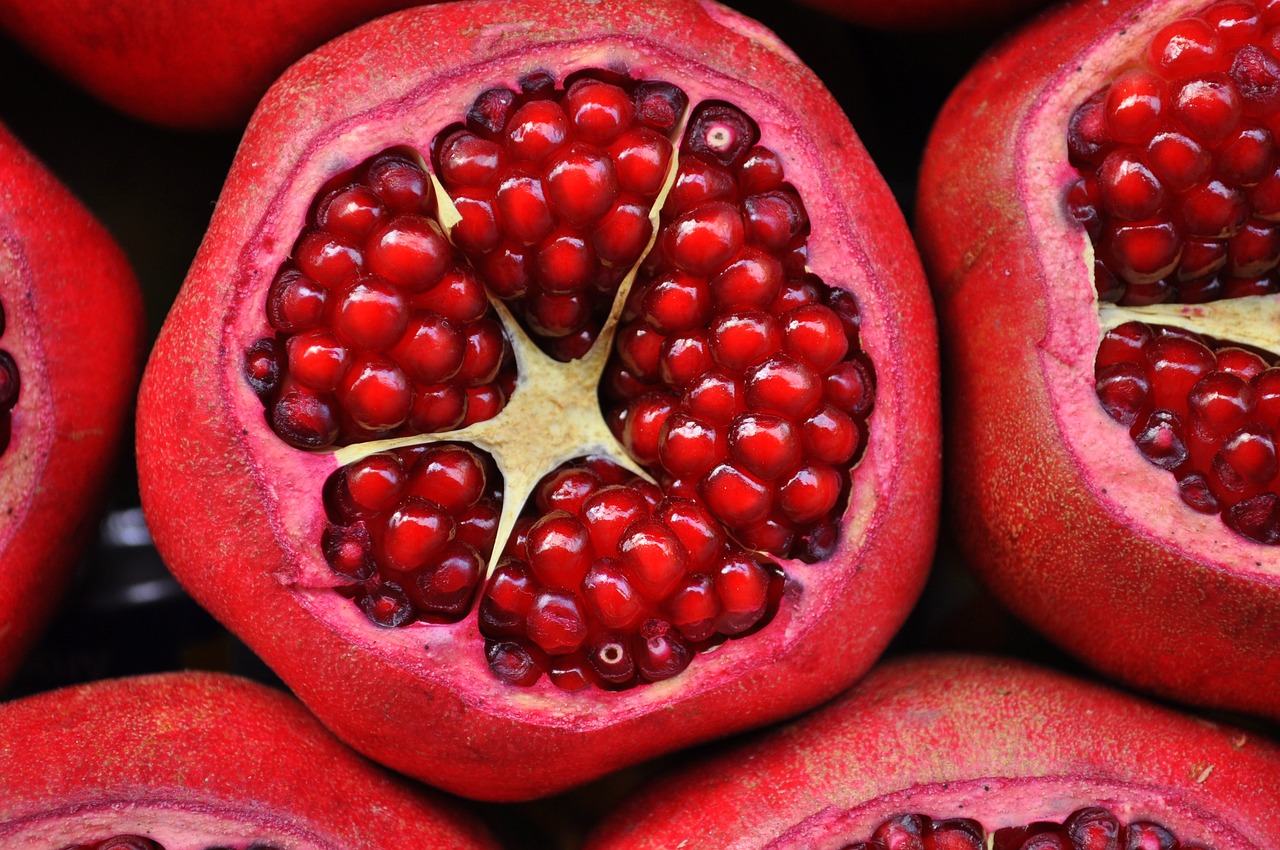
Scientists at the Pune-based National Chemical Laboratory (NCL) have isolated a bacterial strain from rotten pomegranate which promises to help produce bacterial cellulose on a large scale.
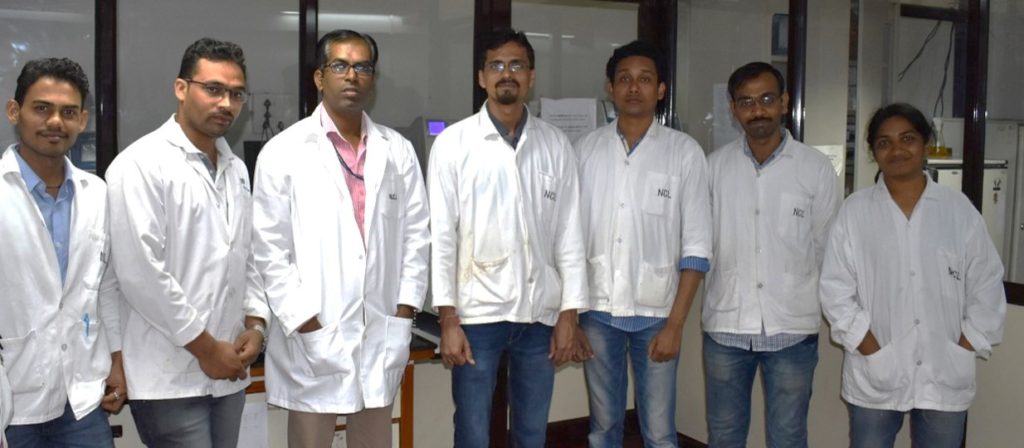
The research team involved in this study

IMAGE: The research team involved in this study

Plants produce cellulose, an abundant biopolymer in the world, which is used for paper and pulp production. Similarly, certain bacteria too can produce cellulose. Bacterial cellulose has better physicochemical properties such as crystallinity, tensile strength, moldability, and larger surface area since they are devoid of lignin and hemicelluloses material.

These characteristics make them suitable for biotechnological and biomedical applications like bone and tissue scaffold material, wound dressing material and even as a drug delivery agent.

Conventionally, a bacterium named Komagataeibacter Xylinus is used for producing bacterial cellulose. Its genome was completely sequenced in 2018 which aimed at understanding the cellulose production process. The bacterium and its strains produce good quality bacterial cellulose. However, the yield is low and the cost of production is high, making it unfavorable for large-scale production.

The team of scientists from NCL screened different rotten fruits such as dragon fruit, mango, orange, lime, banana and fig for alternative cellulose producing bacteria and cultured them under laboratory conditions. They isolated a bacterium called K. rhaeticusPG2 from rotten pomegranate which showed promising results.

The team assessed the feasibility for large-scale production from the isolated strain using different carbon sources like fructose, lactose, sorbitol, glycerol, etc. in the standard media. They reported that the highest production was possible when glycerol was used as a carbon source.

“It normally costs Rs. 60 to produce approximately 9 grams of bacterial cellulose using standard media. However, the strain we have found can give the same output using waste glycerol in the media as a carbon source for less than Rs.15,” said Dr. Syed G. Dastager, leader of the research team, while speaking to India Science Wire.

The research team also included Dr.Meghana N.Thorat. The results of the study have been published in journal RSC Advances. The laboratory has also signed a memorandum of understanding with Singhghad Dental College, Pune for its medical application, especially in endodontics.  (India Science Wire)

By S Suresh Ramanan

Journal Article

High yield production of cellulose by a Komagataeibacter rhaeticus PG2 strain isolated from pomegranate as a new host

If you liked this article, then please subscribe to our YouTube Channel for the latest Science & Tech news. You can also find us on Twitter & Facebook.
Plants produce cellulose, an abundant biopolymer in the world, which is used for paper and pulp production. Similarly, certain bacteria too can produce cellulose. Bacterial cellulose has better physicochemical properties such as crystallinity, tensile strength, moldability, and larger surface area since they are devoid of lignin and hemicelluloses material.

These characteristics make them suitable for biotechnological and biomedical applications like bone and tissue scaffold material, wound dressing material and even as a drug delivery agent.

Conventionally, a bacterium named Komagataeibacter Xylinus is used for producing bacterial cellulose. Its genome was completely sequenced in 2018 which aimed at understanding the cellulose production process. The bacterium and its strains produce good quality bacterial cellulose. However, the yield is low and the cost of production is high, making it unfavorable for large-scale production.

The team of scientists from NCL screened different rotten fruits such as dragon fruit, mango, orange, lime, banana and fig for alternative cellulose producing bacteria and cultured them under laboratory conditions. They isolated a bacterium called K. rhaeticusPG2 from rotten pomegranate which showed promising results.

The team assessed the feasibility for large-scale production from the isolated strain using different carbon sources like fructose, lactose, sorbitol, glycerol, etc. in the standard media. They reported that the highest production was possible when glycerol was used as a carbon source.

“It normally costs Rs. 60 to produce approximately 9 grams of bacterial cellulose using standard media. However, the strain we have found can give the same output using waste glycerol in the media as a carbon source for less than Rs.15,” said Dr. Syed G. Dastager, leader of the research team, while speaking to India Science Wire.

The research team also included Dr.Meghana N.Thorat. The results of the study have been published in journal RSC Advances. The laboratory has also signed a memorandum of understanding with Singhghad Dental College, Pune for its medical application, especially in endodontics.  (India Science Wire)

By S Suresh Ramanan

Journal Article

High yield production of cellulose by a Komagataeibacter rhaeticus PG2 strain isolated from pomegranate as a new host

If you liked this article, then please subscribe to our YouTube Channel for the latest Science & Tech news. You can also find us on Twitter & Facebook.
" }
Specialty Rice Varieties of Kerala Are Storehouse of Nutrition

Specialty Rice Varieties of Kerala Are Storehouse of Nutrition

Rice is a staple food for millions of Indians. It can also be a vital source of nutrition and health-benefiting substances if some of the nutritious varieties of rice traditionally grown can be popularized and polishing is kept to a minimum, a new study of diverse rice varieties done in Kerala has concluded.

  • News
  • 8.6K
Read more
New Nanocomposite Can Help in Clean Air Applications

New Nanocomposite Can Help in Clean Air Applications

Carbon monoxide is a major air pollutant posing threat to human health. A team of scientists led by the researcher at the Indian Institute of Technology (IIT) Gandhinagar have developed a nanocomposite material that can selectively convert environmental carbon monoxide into less toxic carbon dioxide.

  • News
  • 2.6K
Read more
Children Are at Higher Risk from Fluoride Contaminated Drinking Water

Researchers Identify the Major Sources of Fluoride Contamination

The researcher concluded that the accumulation of fluoride in water is not due to evapotranspiration or due to calcite precipitation. Fertilizers are sources of fluoride contamination.

  • News
  • 1.9K
Read more

Internet is huge! Help us find great content

Newsletter

Never miss a thing! Sign up for our newsletter to stay updated.

About

Research Stash is a curated collection of tools and News for S.T.E.M researchers

Have any questions or want to partner with us? Reach us at [email protected]

Navigation

Submit