
Judicious Use of Bio Insecticide May Help Control Filariasis Vector

Judicious Use of Bio Insecticide May Help Control Filariasis Vector

  • Research Stash
  • News
  • 2.3K

Filariasis is a public health problem in some parts of India. It is caused by parasitic worms which get deposited on the skin and penetrate on their own or through openings created by mosquito bites to reach the lymphatic system. Effective mosquito control can help control filariasis.

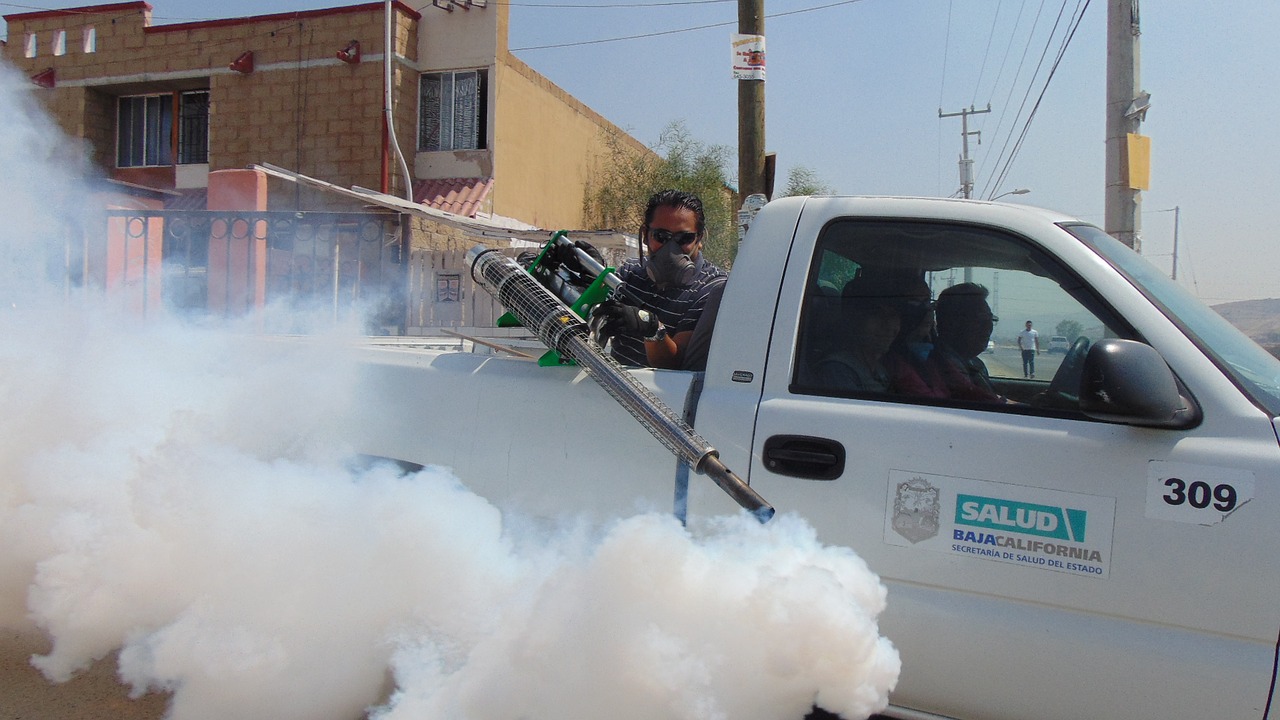
Researchers have now found that using a commercially available bioinsecticide – spinosad – in right doses can help control Culex quinquefasciatus mosquitoes that spread filariasis. Spinosad is a bio larvicide that is naturally produced and acts by killing the larvae of insects. It works by overexciting the nervous system of target insect or their larvae.

Two preparations of spinosad were selected and used in various breeding areas of the Culex mosquito such as cesspits, drains and abandoned wells in Cuddalore in Tamil Nadu where filariasis is widespread. The 20 percent emulsified concentrate preparation was found to be more effective than 12 percent suspension concentrate in providing protection.

The emulsified concentrate caused 90 to 100 percent reduction of mosquito larvae in 7-14 days in cesspits, 10-17 days in drains and 14-30 days in abandoned wells, according to results published recently in Indian Journal of Medical Research. Spinosad was also more effective than chemical insecticides.

The study was conducted by researchers at the Vector Control Research Centre of Indian Council of Medical Research (ICMR) in Puducherry, as part of WHO Pesticide Evaluation Scheme (WHOPES).

Though the cost of spinosad-based preparations is higher compared to chemical insecticides, they remain effective for a longer time, thereby reducing the frequency of application. This compensates the higher cost by minimizing operational cost. “Due to their unique action, spinosads can be used in rotation for various insect resistant management programmes and also as a part of integrated vector management wherein resources have to be utilized optimally,” the research paper said.

“These findings are important because there are far too many preparations of spinosad available in the market but there is no data on their effectiveness. Even though there are other good chemical insecticides and bio larvicides, most of them do not have a long-term effect.

Spinosad is effective and no insect has yet developed a resistance to it,” observed Dr Kamaraju Raghavendra from National Institute of Malaria Research, New Delhi, who was not connected with the study.

Monika Kundu Srivastava

For the latest Science, Tech news and conversations, follow Research Stash on TwitterFacebook, and subscribe to our YouTube channel 

The emulsified concentrate caused 90 to 100 percent reduction of mosquito larvae in 7-14 days in cesspits, 10-17 days in drains and 14-30 days in abandoned wells, according to results published recently in Indian Journal of Medical Research. Spinosad was also more effective than chemical insecticides.

The study was conducted by researchers at the Vector Control Research Centre of Indian Council of Medical Research (ICMR) in Puducherry, as part of WHO Pesticide Evaluation Scheme (WHOPES).

Though the cost of spinosad-based preparations is higher compared to chemical insecticides, they remain effective for a longer time, thereby reducing the frequency of application. This compensates the higher cost by minimizing operational cost. “Due to their unique action, spinosads can be used in rotation for various insect resistant management programmes and also as a part of integrated vector management wherein resources have to be utilized optimally,” the research paper said.

“These findings are important because there are far too many preparations of spinosad available in the market but there is no data on their effectiveness. Even though there are other good chemical insecticides and bio larvicides, most of them do not have a long-term effect.

Spinosad is effective and no insect has yet developed a resistance to it,” observed Dr Kamaraju Raghavendra from National Institute of Malaria Research, New Delhi, who was not connected with the study.

Monika Kundu Srivastava

For the latest Science, Tech news and conversations, follow Research Stash on TwitterFacebook, and subscribe to our YouTube channel 

" }
Indian School Kids Shine at Intel Science Fair

Indian School Kids Shine at Intel Science Fair

Young innovators from India proved their mettle once again with many of them winning top awards at the just concluded annual International Science and Engineering Fair organized by IT major Intel at Pittsburgh in the USA from May 12 to May 18.

  • News
  • 3.6K
Read more
An Isabgol Based Wound Material to Treat Diabetic Wounds

An Isabgol Based Wound Material to Treat Diabetic Wounds

Treatment of chronic non-healing wounds in diabetes is a major clinical challenge. To address this problem, researchers at Indian Institute of Technology (IIT), Madras have developed a new wound dressing material. They have developed it, using reduced graphene oxide loaded Nanocomposite scaffolds and Isabgol.

  • News
  • 2.7K
Read more
Indo-U.S. Science and Technology Forum celebrates 18th Foundation Day

Indo-U.S. Science and Technology Forum celebrates 18th Foundation Day

The Indo-U.S. Science and Technology Forum (IUSSTF) celebrated its 18th Foundation Day here on Wednesday in the presence of Minister for Science & Technology, Earth Sciences, Environment, Forests and Climate Change, Dr. Harsh Vardhan, and the Ambassador of the United States to India, Mr. Kenneth Juster.

  • News
  • 3.3K
Read more

Internet is huge! Help us find great content

Newsletter

Never miss a thing! Sign up for our newsletter to stay updated.

About

Research Stash is a curated collection of tools and News for S.T.E.M researchers

Have any questions or want to partner with us? Reach us at [email protected]

Navigation

Submit