New Guar Gum Based Hydrogel May Help Save Drought-Hit Crops

New Guar Gum Based Hydrogel May Help Save Drought-Hit Crops

  • Research Stash
  • News
  • 6.2K

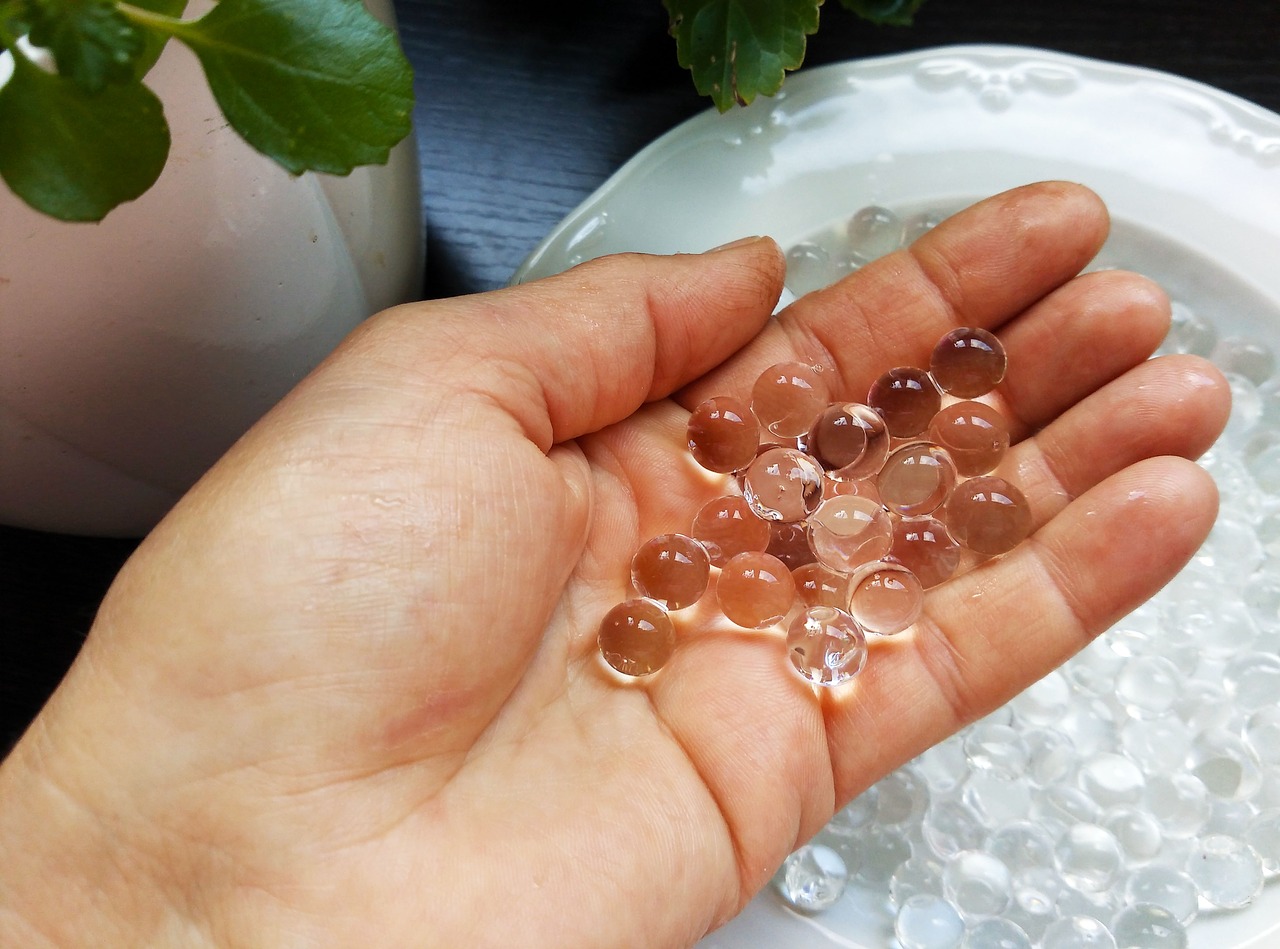
Scientists have developed a hydrogel from the gum of guar (cluster bean) that can increase soil moisture and help farmers save their crops in case of water scarcity.

Hydrogels are a network of polymers that can hold a large amount of water and are extensively used in diapers and sanitary napkins. Synthetic hydrogels are, however, not readily biodegradable and their degradation products are considered to be hazardous for the environment.

Nandkishore Thombare

Nandkishore Thombare

“The Guar gum-based hydrogel is biodegradable. Besides increasing moisture content, it adds organic content to the soil upon degradation,” explained Nandkishore Thombare, a scientist at Ranchi-based Indian Institute of Natural Resins and Gums and a member of the research team, while speaking to India Science Wire.

The Indian Agricultural Research Institute (IARI) had earlier developed and successfully commercialized a semi-synthetic hydrogel, popularly called Pusa Gel. It was found to save water-stressed crops.  “Our work is similar to previous research in principle but we have used a different starting material. Pusa gel uses cellulose and zeolites while we have relied on Guar gum,” Thombare said.

The hydrogel was found to absorb up to 800 ml water per gram and improved porosity, moisture absorption and retention capacity of the soil significantly. Water holding a capacity of soil increased up to 54 percent of its original and porosity also increased up to 9 percent of its original.

A microscopic analysis of the newly-synthesized hydrogel showed spongy surface and both macro and micropores which allowed direct penetration of the water resulting in the higher swelling capacity as compared to the non-porous and compact surface of guar gum. While the maximum water holding capacity of untreated soil was found to be 33.59 percent, an addition of 0.3 percent of powdered hydrogel improved the capacity by around 54 percent.

Addition of hydrogel also lowered bulk density of the soil signifying increased porosity by 9 per cent. Higher porosity improves soil aeration and microbial count thus improving the overall quality of the soil.

“Guar gum-based hydrogels have a good potential in agriculture because of their high water absorption capacity and biodegradability. But the study does not mention the degraded products and post-polymerization effects. The residual effect of grafters and crosslinkers on microorganisms is also not clear,” commented K S V Poorna Chandrika, a scientist with agricultural chemistry department of the Hyderabad-based Indian Institute of Oilseeds Research, who is not connected with the study.

The research team also wants to work further on the hydrogen it has developed. “We need increase shelf life of the product as its absorption capacity declines over time. Our next plan is to standardize the synthesis process of the product to address that issue. We also need to test its scalability,” Thombare said.

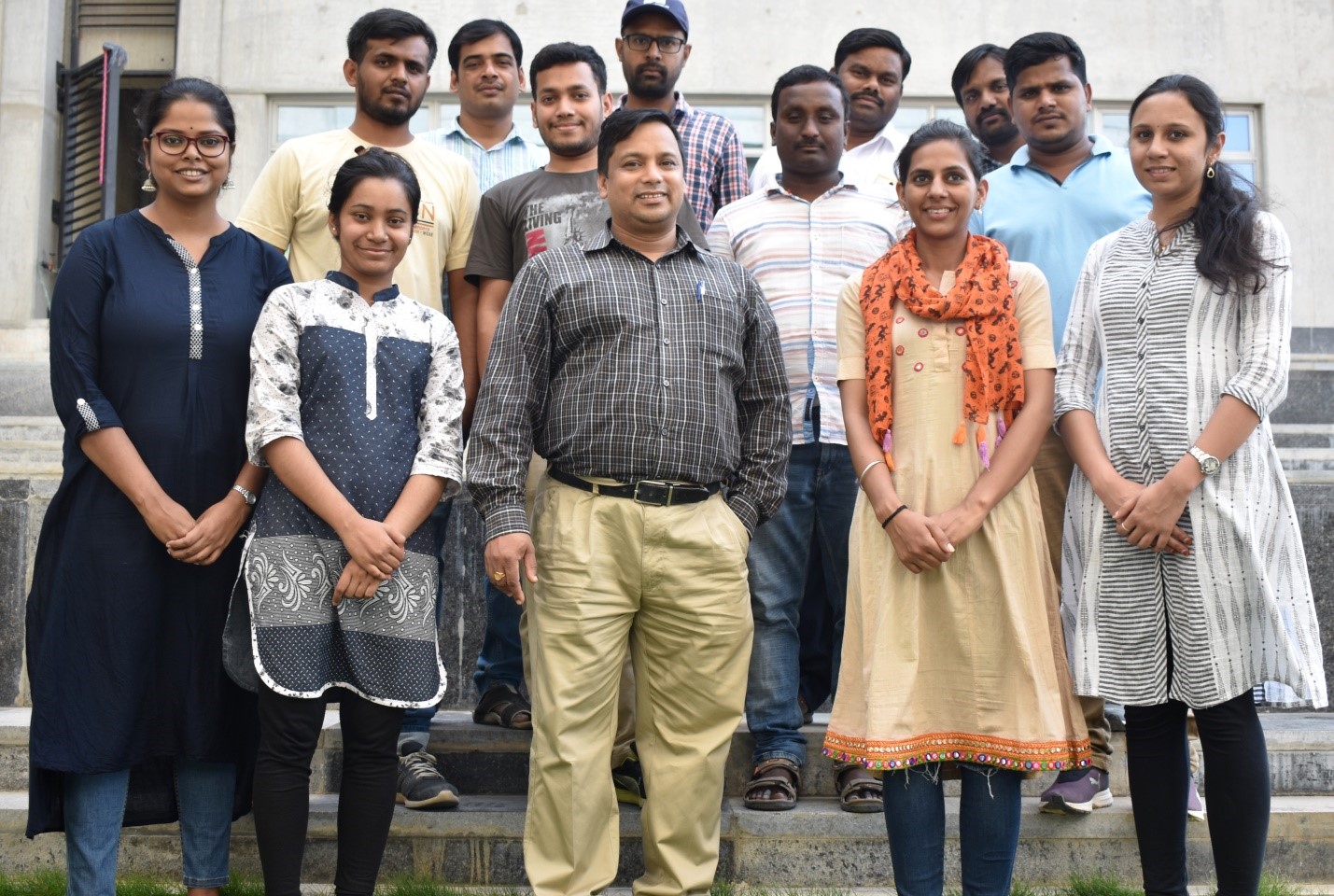
In addition to Thombare, the research team included Sumit Mishra, M. Z. Siddiqui, Usha Jha, Deodhari Singh and Gopal R Mahajan. The study has been published in the journal Carbohydrate Polymers. (India Science Wire)

By Manu Moudgil

Journal Article

Design and development of guar gum based novel, superabsorbent and moisture retaining hydrogels for agricultural applications.

For the latest Science, Tech news and conversations, follow Research Stash on TwitterFacebook, and subscribe to our YouTube channel 

Rate

Nandkishore Thombare

“The Guar gum-based hydrogel is biodegradable. Besides increasing moisture content, it adds organic content to the soil upon degradation,” explained Nandkishore Thombare, a scientist at Ranchi-based Indian Institute of Natural Resins and Gums and a member of the research team, while speaking to India Science Wire.

The Indian Agricultural Research Institute (IARI) had earlier developed and successfully commercialized a semi-synthetic hydrogel, popularly called Pusa Gel. It was found to save water-stressed crops.  “Our work is similar to previous research in principle but we have used a different starting material. Pusa gel uses cellulose and zeolites while we have relied on Guar gum,” Thombare said.

The hydrogel was found to absorb up to 800 ml water per gram and improved porosity, moisture absorption and retention capacity of the soil significantly. Water holding a capacity of soil increased up to 54 percent of its original and porosity also increased up to 9 percent of its original.

A microscopic analysis of the newly-synthesized hydrogel showed spongy surface and both macro and micropores which allowed direct penetration of the water resulting in the higher swelling capacity as compared to the non-porous and compact surface of guar gum. While the maximum water holding capacity of untreated soil was found to be 33.59 percent, an addition of 0.3 percent of powdered hydrogel improved the capacity by around 54 percent.

Addition of hydrogel also lowered bulk density of the soil signifying increased porosity by 9 per cent. Higher porosity improves soil aeration and microbial count thus improving the overall quality of the soil.

“Guar gum-based hydrogels have a good potential in agriculture because of their high water absorption capacity and biodegradability. But the study does not mention the degraded products and post-polymerization effects. The residual effect of grafters and crosslinkers on microorganisms is also not clear,” commented K S V Poorna Chandrika, a scientist with agricultural chemistry department of the Hyderabad-based Indian Institute of Oilseeds Research, who is not connected with the study.

The research team also wants to work further on the hydrogen it has developed. “We need increase shelf life of the product as its absorption capacity declines over time. Our next plan is to standardize the synthesis process of the product to address that issue. We also need to test its scalability,” Thombare said.

In addition to Thombare, the research team included Sumit Mishra, M. Z. Siddiqui, Usha Jha, Deodhari Singh and Gopal R Mahajan. The study has been published in the journal Carbohydrate Polymers. (India Science Wire)

By Manu Moudgil

Journal Article

Design and development of guar gum based novel, superabsorbent and moisture retaining hydrogels for agricultural applications.

For the latest Science, Tech news and conversations, follow Research Stash on TwitterFacebook, and subscribe to our YouTube channel 
" }
Harnessing Science, Technology and Innovation for Societal Benefits

Harnessing Science, Technology and Innovation for Societal Benefits

Director-General of Council of Scientific and Industrial Research, Dr. Shekhar C. Mande, has urged for greater collaboration between society, on one hand, and the scientific community on the other to ensure that there was proper promotion of scientific endeavors and effective utilization of the fruits of science, technology, and innovation for the welfare of the people

  • News
  • 1.7K
Read more
Dr. Krishnananda Chattopadhyay with some of his colleagues in their laboratory

Scientists Figure Out Molecular Mechanism Behind Latent TB

A team of researchers from Kolkata-based CSIR-Indian Institute of Chemical Biology, Bose Institute, and Jadavpur University has figured out how tuberculosis bacterium is released from its reservoir inside the human body

  • News
  • 3.6K
Read more
Better Lithium Ion Batteries on the Cards

Better Lithium Ion Batteries on the Cards

A team of scientists at India Institute of Technology Hyderabad has developed a set of new electrodes that promise to help produce lithium-ion batteries with higher energy densities

  • News
  • 2K
Read more

Internet is huge! Help us find great content

Newsletter

Never miss a thing! Sign up for our newsletter to stay updated.

About

Research Stash is a curated collection of tools and News for S.T.E.M researchers

Have any questions or want to partner with us? Reach us at [email protected]

Navigation

Submit