
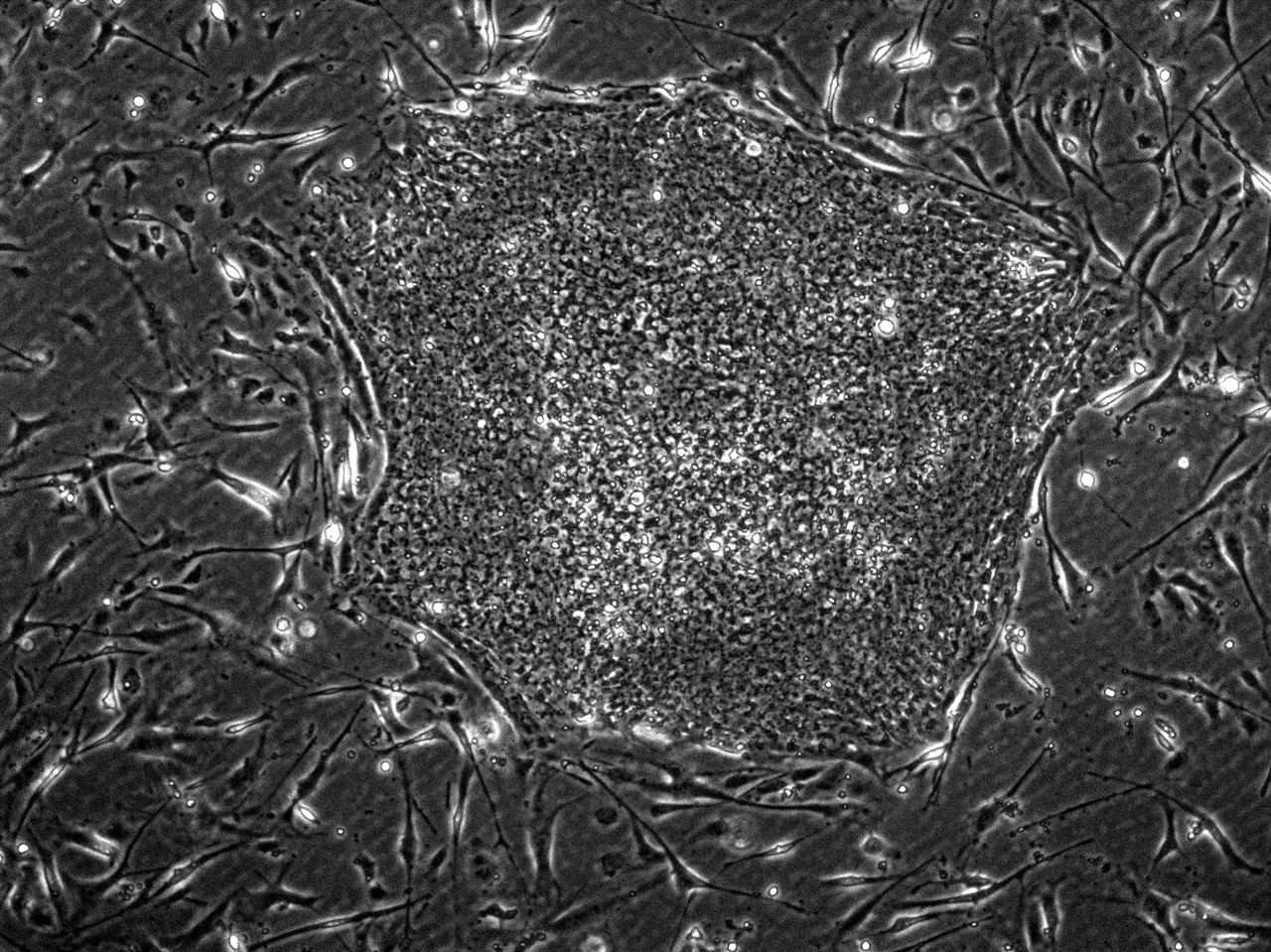
Scientists Find Genetic Switch That Decides Fate of Embryonic Stem Cells

  • Research Stash
  • News
  • 1.7K

For normal birth or physical development of animals, regulation of their size, shape, and number of organs is very critical when the embryo is developing. Researchers are trying to understand mechanisms that regulate this process.
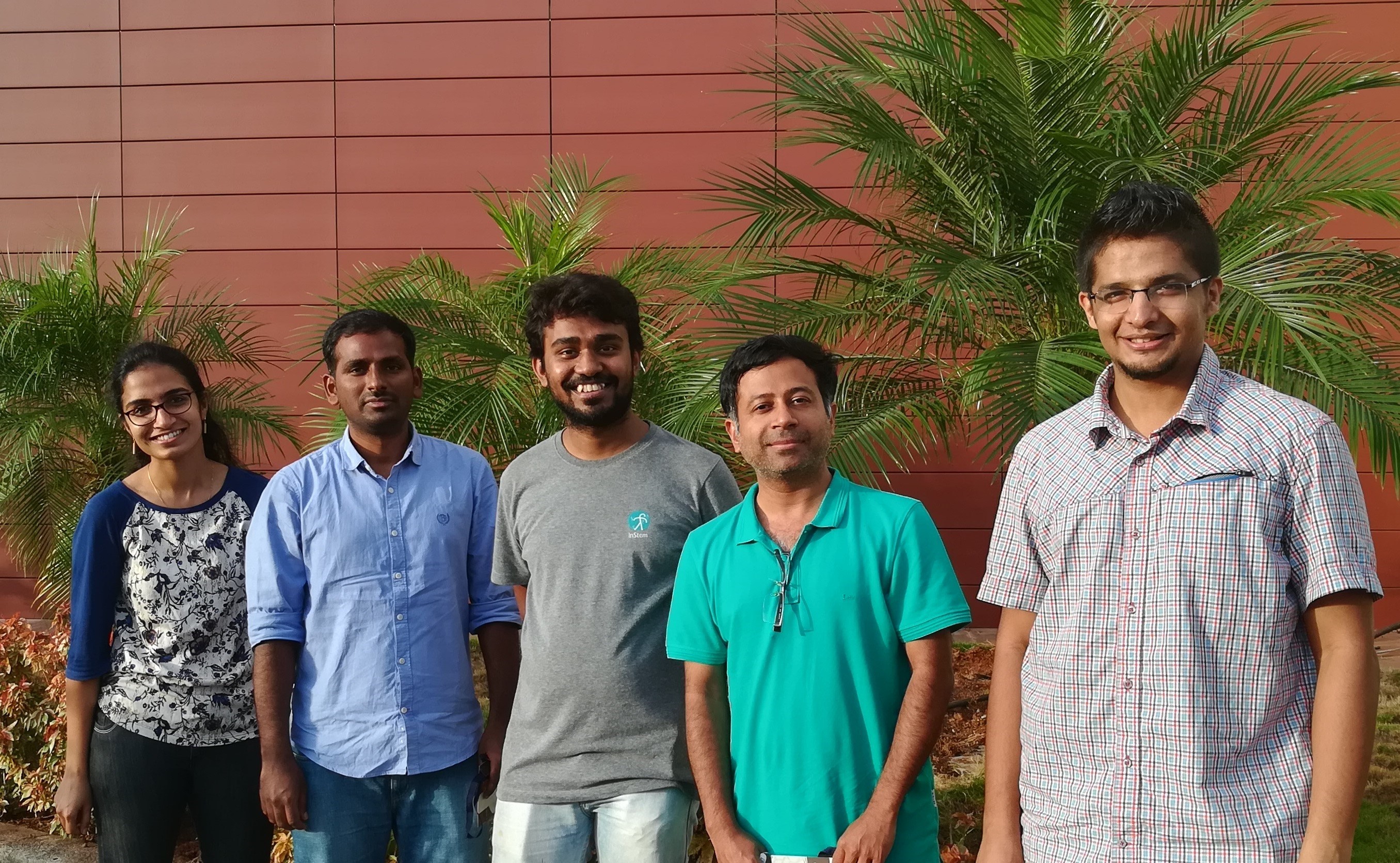
Dr. Ramkumar with members of the research team

A team of researchers led by Dr. Ramkumar Sambasivan at the Bangalore-based Institute of Stem Cell Biology and Regenerative Medicine (InStem) has shown how a genetic switch controls the development of organs and body plan of animals.

The team used mouse model for this study and has found that when a gene called Tbx6 was mutated in mouse embryos, it led to the development of five spinal cords instead of one seen in normal embryos. The extra spinal cords were formed at the expense of a tissue, which in normal course would have given rise to muscles and skeleton, according to results of the study published in journal Development.

“The novel observation in mutants highlighted the important role of Tbx6 and led us to investigate the connection between the spinal cord and muscle-skeleton development,” explained Alok Javali, a member of the research team.

Earlier studies had shown that during embryonic development of vertebrates, the axial growth is contributed by a small number of stem cells called neuro-mesoderm progenitors (NMPs). These cells generate spinal cord (neural tissue) as well as muscle-skeleton system (mesodermal tissue). However, it was not clear how NMPs with dual potential end up making a particular choice.

“We were trying to generate NMP-like cells in the dish from embryonic stem cells and made a surprising find that these cells express Tbx6. This led us to hunt for similar populations in developing embryos,” added Aritra Misra, another co-author of the paper.

Researchers observed Tbx6 expression in NMPs in mouse embryos. They found that the gene is specifically expressed in NMPs fated to become mesoderm, which goes on to make muscle and skeleton. When Tbx6 is absent (in the case of mutant embryos), instead of giving rise to both mesoderm and spinal cord, NMPs make only spinal cord, resulting in extra spinal cords. This means Tbx6 is critical in regulating ‘fate choice’ of NMP stem cells.

“Studying bizarre mutants with multiple limbs or heads or spinal cords is not driven by caprice, but is rather an important exercise in elucidating how nature generates tissues and organs during embryonic development. This knowledge could possibly be harnessed to design methods in the repair or regeneration of damaged tissues such as in spinal cord injuries in patients,” said Dr. Ramkumar, who is a recipient of the DBT-Ramalingaswami Fellowship.

The research team included Alok Javali, Aritra Misra, Karolis Leonavicius, Debalina Acharyya, Bhakti Vyas and Ramkumar Sambasivan. The study was funded by the Department of Biotechnology. (India Science Wire)

Journal Article

Co-expression of Tbx6 and Sox2 identifies a novel transient neuromesoderm progenitor cell state

For the latest tech news and conversations, follow Research Stash on TwitterFacebook, and subscribe to our YouTube channel.

Rate

The team used mouse model for this study and has found that when a gene called Tbx6 was mutated in mouse embryos, it led to the development of five spinal cords instead of one seen in normal embryos. The extra spinal cords were formed at the expense of a tissue, which in normal course would have given rise to muscles and skeleton, according to results of the study published in journal Development.

“The novel observation in mutants highlighted the important role of Tbx6 and led us to investigate the connection between the spinal cord and muscle-skeleton development,” explained Alok Javali, a member of the research team.

Earlier studies had shown that during embryonic development of vertebrates, the axial growth is contributed by a small number of stem cells called neuro-mesoderm progenitors (NMPs). These cells generate spinal cord (neural tissue) as well as muscle-skeleton system (mesodermal tissue). However, it was not clear how NMPs with dual potential end up making a particular choice.

“We were trying to generate NMP-like cells in the dish from embryonic stem cells and made a surprising find that these cells express Tbx6. This led us to hunt for similar populations in developing embryos,” added Aritra Misra, another co-author of the paper.

Researchers observed Tbx6 expression in NMPs in mouse embryos. They found that the gene is specifically expressed in NMPs fated to become mesoderm, which goes on to make muscle and skeleton. When Tbx6 is absent (in the case of mutant embryos), instead of giving rise to both mesoderm and spinal cord, NMPs make only spinal cord, resulting in extra spinal cords. This means Tbx6 is critical in regulating ‘fate choice’ of NMP stem cells.

“Studying bizarre mutants with multiple limbs or heads or spinal cords is not driven by caprice, but is rather an important exercise in elucidating how nature generates tissues and organs during embryonic development. This knowledge could possibly be harnessed to design methods in the repair or regeneration of damaged tissues such as in spinal cord injuries in patients,” said Dr. Ramkumar, who is a recipient of the DBT-Ramalingaswami Fellowship.

The research team included Alok Javali, Aritra Misra, Karolis Leonavicius, Debalina Acharyya, Bhakti Vyas and Ramkumar Sambasivan. The study was funded by the Department of Biotechnology. (India Science Wire)

Journal Article

Co-expression of Tbx6 and Sox2 identifies a novel transient neuromesoderm progenitor cell state

For the latest tech news and conversations, follow Research Stash on TwitterFacebook, and subscribe to our YouTube channel.

" }

Researchers have created Google Maps of Tissue

Researchers at Maastricht University (UM) recently succeeded in visualizing dynamic metabolic changes using mass spectrometry imaging (MSI) through amino acid conversion in the liver. This is the first time scientists have been able to identify the dynamics of biochemical processes in human tissue.

  • News
  • 1.9K
Read more
Genomic Study May Help Solve ‘Indian Enigma’ Relating To Gastric Bacteria

Genomic Study May Help Solve ‘Indian Enigma’ Relating To Gastric Bacteria

Indian researchers, working in collaboration with their Australian counterparts, have sequenced 42 strains of a disease-causing bacterium, Helicobacter pylori, to better understand genetic factors that play a role in disease development in Indian populations.

  • News
  • 2.1K
Read more
New Coordinated Effort for Malaria Research Unveiled

New Coordinated Effort for Malaria Research Unveiled

The Indian Council of Medical Research has put together a programme to bring the various stakeholders on a single platform to identify and prioritize research work needed to meet the target to eliminate the disease by 2030. Called Malaria Elimination Research Alliance India, the programme took off today with the first meeting of the stakeholders.

  • News
  • 1.8K
Read more

Internet is huge! Help us find great content

Newsletter

Never miss a thing! Sign up for our newsletter to stay updated.

About

Research Stash is a curated collection of tools and News for S.T.E.M researchers

Have any questions or want to partner with us? Reach us at hello@researchstash.com

Navigation

Submit