

New Drug Combos Using Pain Killers May Be Effective Against Cancer

  • Research Stash
  • News
  • 2.1K

Combining commonly used painkillers with a metal belonging to the platinum group may prove effective in the treatment of cancer, a new study by Indian scientists has indicated.
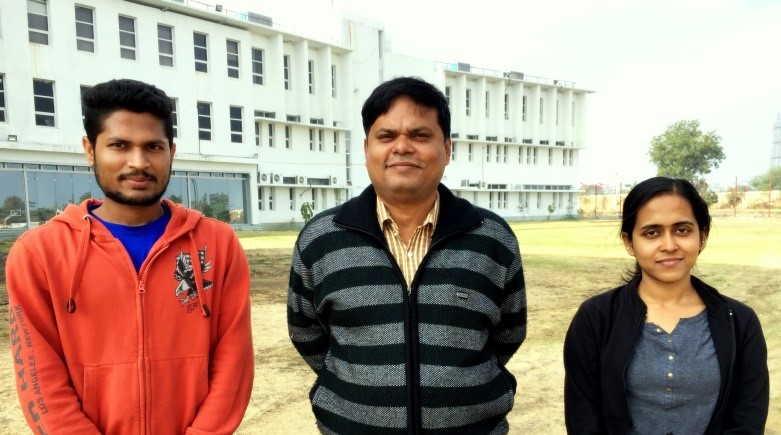
Research team at IIT Indore

Researchers have combined ruthenium, a metal which is part of the platinum group, with commonly used painkillers (categorized as non-steroidal anti-inflammatory drugs) to develop four new drug complexes. These have been found effective in the treatment of cancer. The two groups of drugs used in the study work against cancer cells in different ways thus creating a more effective and holistic way of treating the disease, researchers have claimed.

The use of metals such as platinum in anticancer drugs is not new but such drugs result in side effects which also need to be treated. Drug combinations using ruthenium are believed to be more effective and are better tolerated by patients. Drugs like ibuprofen, diclofenac, and aspirin are non-steroidal anti-inflammatory drugs and are commonly used for their pain-relieving effects. These drugs also have a role to play in cancer treatment by blocking the enzymes responsible for pain, swelling and causing changes to normal cells in the body.

In the new study, anticancer activities of four new combination drugs with ruthenium – complex 1 (with naproxen),  complex 2 (with diclofenac), complex 3 (with ibuprofen) and complex 4 (with aspirin) – were tested against lung, breast, and cervical cancer cell lines in the laboratory.

Results of the study, published in journal Dalton Transactions, have indicated that complexes 2 and 3 have shown remarkable effects in stopping the growth of cancer cells in the lung, breast, and cervical cancer. Though complex 1 has also shown a lesser but effective activity against the increase of cancer cells in lung and breast cancer, it is relatively ineffective active against cervical cancer. Complex 3 is more effective in preventing the enzyme causing pain and swelling, followed by complex 2 and complex 1.

“We find that if the action of a particular enzyme—cyclooxegenase— is prevented, cancer might be controlled. This is significant and throws open various possibilities for developing drugs which specifically target cyclooxygenase,” pointed out Dr. Suman Mukhopadhyay, a member of the research team at the Indian Institute of Technology, Indore.

However, other experts have sounded a note of caution. “Though the rationale and research methodology of this study is sound and academically interesting, it may still be regarded as indicative rather than conclusive. It is still preliminary to be adjudged as mainstay treatment,” noted Dr. Siddhartha Kundu, associate professor in Department of Biochemistry at Dr. Baba Saheb Ambedkar Medical College and Hospital, Delhi.

The researcher team included Poulami Mandal, Bidyut Kumar Kundu and Dr. Komal Vyas from Indian Institute of Technology, Indore; Vidya Sabu and Dr. A. Helen from University of Kerala, (Kariavattom Campus); Sandeep Singh Dhankhar and Dr. C. M. Nagaraja from Indian Institute of Technology Ropar; Debojit Bhattacharjee and Krishna Pada Bhabak from Indian Institute of Technology, Guwahati.  The study was funded by the Department of Science and Technology (DST).

By Monika Kundu Srivastava (ISW)

Journal Article

For the latest tech news and conversations, follow Research Stash on TwitterFacebook, and subscribe to our YouTube channel.
Rate

The use of metals such as platinum in anticancer drugs is not new but such drugs result in side effects which also need to be treated. Drug combinations using ruthenium are believed to be more effective and are better tolerated by patients. Drugs like ibuprofen, diclofenac, and aspirin are non-steroidal anti-inflammatory drugs and are commonly used for their pain-relieving effects. These drugs also have a role to play in cancer treatment by blocking the enzymes responsible for pain, swelling and causing changes to normal cells in the body.

In the new study, anticancer activities of four new combination drugs with ruthenium – complex 1 (with naproxen),  complex 2 (with diclofenac), complex 3 (with ibuprofen) and complex 4 (with aspirin) – were tested against lung, breast, and cervical cancer cell lines in the laboratory.

Results of the study, published in journal Dalton Transactions, have indicated that complexes 2 and 3 have shown remarkable effects in stopping the growth of cancer cells in the lung, breast, and cervical cancer. Though complex 1 has also shown a lesser but effective activity against the increase of cancer cells in lung and breast cancer, it is relatively ineffective active against cervical cancer. Complex 3 is more effective in preventing the enzyme causing pain and swelling, followed by complex 2 and complex 1.

“We find that if the action of a particular enzyme—cyclooxegenase— is prevented, cancer might be controlled. This is significant and throws open various possibilities for developing drugs which specifically target cyclooxygenase,” pointed out Dr. Suman Mukhopadhyay, a member of the research team at the Indian Institute of Technology, Indore.

However, other experts have sounded a note of caution. “Though the rationale and research methodology of this study is sound and academically interesting, it may still be regarded as indicative rather than conclusive. It is still preliminary to be adjudged as mainstay treatment,” noted Dr. Siddhartha Kundu, associate professor in Department of Biochemistry at Dr. Baba Saheb Ambedkar Medical College and Hospital, Delhi.

The researcher team included Poulami Mandal, Bidyut Kumar Kundu and Dr. Komal Vyas from Indian Institute of Technology, Indore; Vidya Sabu and Dr. A. Helen from University of Kerala, (Kariavattom Campus); Sandeep Singh Dhankhar and Dr. C. M. Nagaraja from Indian Institute of Technology Ropar; Debojit Bhattacharjee and Krishna Pada Bhabak from Indian Institute of Technology, Guwahati.  The study was funded by the Department of Science and Technology (DST).

By Monika Kundu Srivastava (ISW)

Journal Article

For the latest tech news and conversations, follow Research Stash on TwitterFacebook, and subscribe to our YouTube channel.
" }
Scientists Identify A Gene That Could Help Increase Rice Productivity

Scientists Identify A Gene That Could Help Increase Rice Productivity

Scientists at the Tata Institute of Fundamental Research’s Bengaluru-based National Centre for Biological Sciences has identified a protein that has a critical role in the holding of the grains in the panicles of rice crops

  • News
  • 2K
Read more
A Blueprint to Develop A Rapid qRT-PCR kit To Detect SARS-CoV-2

A Blueprint to Develop A Rapid qRT-PCR kit To Detect SARS-CoV-2

Researchers at the Advanced Centre for Treatment, Research, and Education in Cancer have published a report in the Cell Press journal ‘Heliyon’ in which they present a Rapid qRT-PCR kit To Detect SARS-CoV-2

  • News
  • 1.9K
Read more

Local winners of NASA hackathon announced in Taipei

The winners of the local edition of the NASA Space Apps Challenge, which this year is themed “Earth,” were announced April 30 in Taipei City, with two Taiwan teams nominated to vie against competitors from around the world in the finals of the largest international hackathon.

  • News
  • 2K
Read more

Internet is huge! Help us find great content

Newsletter

Never miss a thing! Sign up for our newsletter to stay updated.

About

Research Stash is a curated collection of tools and News for S.T.E.M researchers

Have any questions or want to partner with us? Reach us at hello@researchstash.com

Navigation

Submit