

CSIR-CFTRI To Provide Testing Equipment For COVID-19 Detection

CSIR-CFTRI To Provide Testing Equipment For COVID-19 Detection

  • Research Stash
  • News
  • 2.1K

The number of positive cases in Mysuru has touched 28 and seven cases have been reported within a span of 24 hours. This is as per the latest media bulletin released by the Karnataka Health Department. Mysuru-based CSIR-Central Food Technological Research Institute (CSIR-CFTRI) has joined hands with the district administration by making available equipment needed for testing of samples.

COVID-19 infection is at present detected by a very sophisticated and precise technique called Real-Time Polymerase Chain Reaction (PCR) method. This PCR method involves the extraction of the RNA of the virus from samples and amplification of the same using a PCR machine. A clear advantage of the PCR test is that it can detect the virus in a person at a very early stage, that is, even symptoms emerge.

Mysore district has been identified as one of the four hot spot districts with a large number of suspect infections.  The suspected persons quarantined need to be tested before and after the quarantine period for the presence of the virus in their bodies, irrespective of they show the disease symptoms or not.

CSIR-CFTRI is providing two PCR machines and one RNA extraction unit along with necessary chemicals to the district administration for coping with the large number of samples to be tested in the district.

“Precise and accurate testing is the need of the hour.  Since the test is very sophisticated and is being done in select centers approved for testing by the Indian Council of Medical Research (ICMR), we are supported by way of adding to the capacity,” says Dr. KSMS Raghavarao, Director, CSIR-CFTRI.  Along with the equipment, two skilled technicians will also be provided for the period required by the District Administration, he said.

The PCR machines were handed over today, 5th April 2020. Dr. Amrutha Kumari, Nodal Officer, Virus Research and Diagnostics Laboratory (VRDL) and In-Charge COVID Test Laboratory, Mysore Medical College and Research Institute, Mysuru received the equipment. This would help the center to triple the number of tests done per day, she said. The RNA extraction unit will be reached in a week’s time. (ISW)

Jyoti Singh

If you liked this article, then please subscribe to our YouTube Channel for the latest Science & Tech news. You can also find us on Twitter & Facebook.
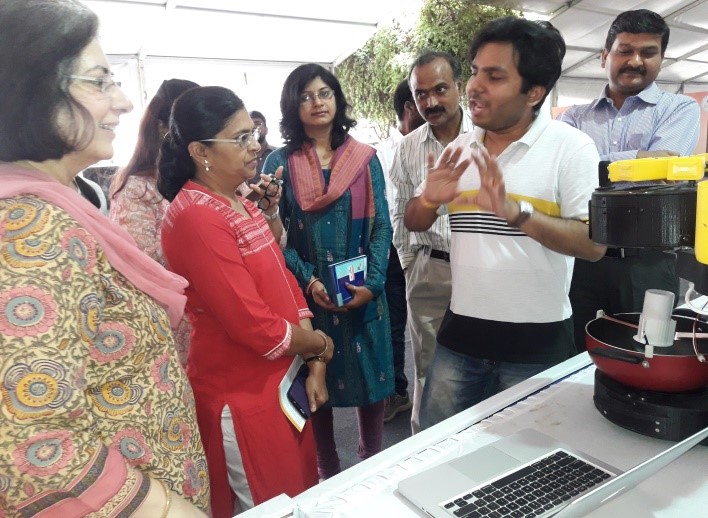
CSIR-CFTRI is providing two PCR machines and one RNA extraction unit along with necessary chemicals to the district administration for coping with the large number of samples to be tested in the district.

“Precise and accurate testing is the need of the hour.  Since the test is very sophisticated and is being done in select centers approved for testing by the Indian Council of Medical Research (ICMR), we are supported by way of adding to the capacity,” says Dr. KSMS Raghavarao, Director, CSIR-CFTRI.  Along with the equipment, two skilled technicians will also be provided for the period required by the District Administration, he said.

The PCR machines were handed over today, 5th April 2020. Dr. Amrutha Kumari, Nodal Officer, Virus Research and Diagnostics Laboratory (VRDL) and In-Charge COVID Test Laboratory, Mysore Medical College and Research Institute, Mysuru received the equipment. This would help the center to triple the number of tests done per day, she said. The RNA extraction unit will be reached in a week’s time. (ISW)

Jyoti Singh

If you liked this article, then please subscribe to our YouTube Channel for the latest Science & Tech news. You can also find us on Twitter & Facebook.
" }
Scientists Develop Database of Everyday Harmful Chemicals

Scientists Develop Database of Everyday Harmful Chemicals

Scientists have developed a comprehensive database of such chemicals belonging to a particular category known as endocrine-disrupting chemicals or EDCs

  • News
  • 1.8K
Read more
Shinier, Robust and Pinchpenny LEDs

Shinier, Robust and Pinchpenny LEDs

Researchers from the IIT Guwahati, and Imperial College London, UK, have developed a tailored ‘meta-grid’ of nanoparticles that could make light-emitting diodes even brighter, energy-efficient and durable.

  • News
  • 1.7K
Read more

Scientists to Culture Novel Coronavirus in Human Lung Epithelial Cell

Centre for Cellular and Molecular Biology (CCMB), Hyderabad has tied up with a Bengaluru-based company, Eyestem Research Private Limited, to take up research activities on COVID-19. Through this research collaboration, an attempt will be made to grow novel coronavirus in human cell lines, which will enable in vitro testing of potential drugs and vaccines against […]

  • News
  • 1.6K
Read more

Internet is huge! Help us find great content

Newsletter

Never miss a thing! Sign up for our newsletter to stay updated.

About

Research Stash is a curated collection of tools and News for S.T.E.M researchers

Have any questions or want to partner with us? Reach us at [email protected]

Navigation

Submit