Scientists Pave Way for Potential New Therapy for Tongue Cancer

Scientists Pave Way for Potential New Therapy for Tongue Cancer

  • Research Stash
  • News
  • 1.9K

A new therapy for tongue cancer could be in the offing, with a team of scientists at the Department of Biotechnology’s Hyderabad-based Centre for DNA Fingerprinting and Diagnostics coming out with a new insight into the mechanism by which an anti-cancer protein helps in the development of cancer when it mutates.

Human cells carry a protein called p53. It is very helpful as it controls several fundamental processes including cell division and repair of damaged DNA. It functions by binding directly to DNA leading to the production of proteins needed for regular cellular functions as well as effectively blocking cancer development.

However, its ability to prevent cancer is significantly compromised, if it mutates. More importantly, recent studies have reported that some specific and common mutated p53 forms even activate cancer growth.

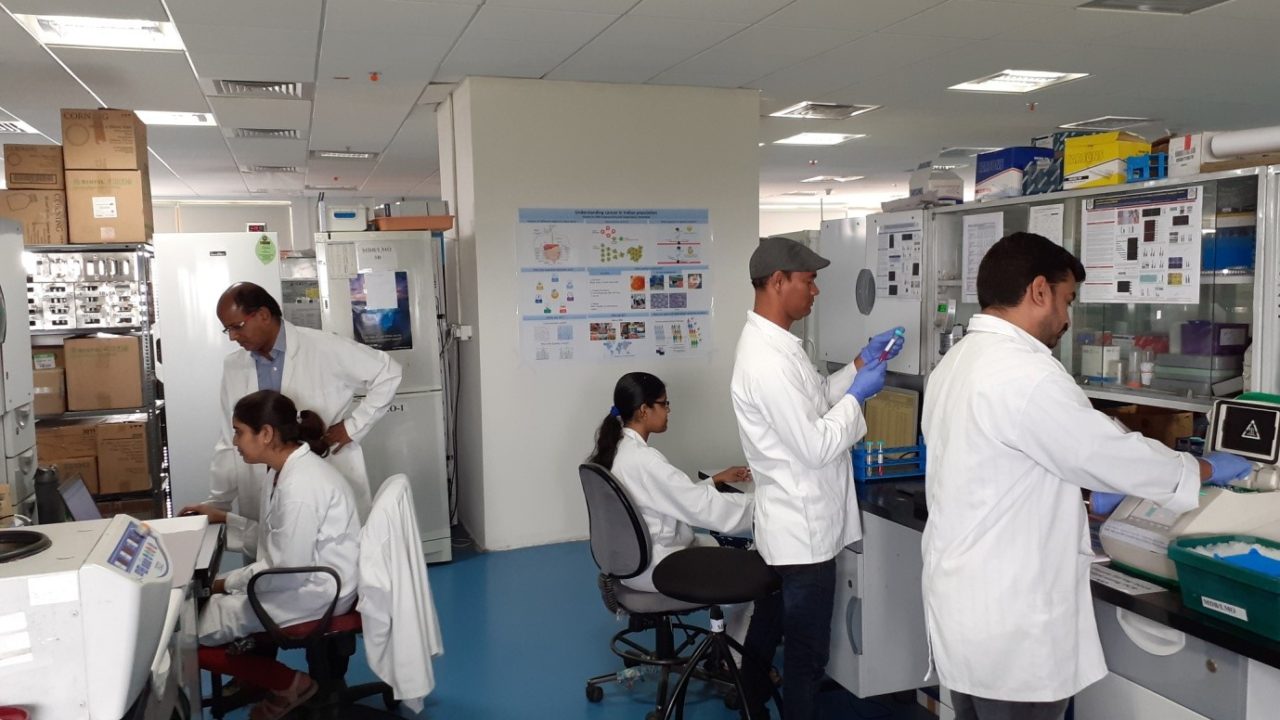
In a new study, scientists at CDFD have identified rare p53 mutant forms unique to Indian tongue cancer and the likely means by which these mutant p53 causes cancer. For this, they collected tongue cancer samples from post-surgery patients and screened them for modifications in a gene called TP53. The gene is a sequence of nucleotides (building blocks) in the DNA that code for the production of the p53 protein.

Further, by using state of the art technologies, they identified target genes of the mutant p53 protein. Of these, a gene called SMARCD1 was the most prominent. SMARCD1 encodes a protein that along with several other proteins constitutes a multi-protein complex involved in changing the structure of DNA enabling the production of proteins from genes. Surprisingly, the scientists found that SMARCD1 was an exclusive target of mutations observed in Indian tongue cancer patients. Further studies showed the ability of SMARCD1 to increase cancerous features in tongue cancer cells.

Notably, this is the first time that SMARCD1 has been shown to be a possible driver of any form of cancer. The leader of the study team, Dr. M.D. Bashyam of the Laboratory of Molecular Oncology at the Centre said, “The observations made in this study assume significance since they reveal a new and probable mechanism by which mutant p53 proteins encourage cancer development. The results of the study can be employed to develop therapies to treat tongue cancer, a common debilitating cancer in India”.

Sunderarajan Padmanabhan

If you liked this article, then please subscribe to our YouTube Channel for the latest Science & Tech news. You can also find us on Twitter & Facebook.

Rate

In a new study, scientists at CDFD have identified rare p53 mutant forms unique to Indian tongue cancer and the likely means by which these mutant p53 causes cancer. For this, they collected tongue cancer samples from post-surgery patients and screened them for modifications in a gene called TP53. The gene is a sequence of nucleotides (building blocks) in the DNA that code for the production of the p53 protein.

Further, by using state of the art technologies, they identified target genes of the mutant p53 protein. Of these, a gene called SMARCD1 was the most prominent. SMARCD1 encodes a protein that along with several other proteins constitutes a multi-protein complex involved in changing the structure of DNA enabling the production of proteins from genes. Surprisingly, the scientists found that SMARCD1 was an exclusive target of mutations observed in Indian tongue cancer patients. Further studies showed the ability of SMARCD1 to increase cancerous features in tongue cancer cells.

Notably, this is the first time that SMARCD1 has been shown to be a possible driver of any form of cancer. The leader of the study team, Dr. M.D. Bashyam of the Laboratory of Molecular Oncology at the Centre said, “The observations made in this study assume significance since they reveal a new and probable mechanism by which mutant p53 proteins encourage cancer development. The results of the study can be employed to develop therapies to treat tongue cancer, a common debilitating cancer in India”.

Sunderarajan Padmanabhan

If you liked this article, then please subscribe to our YouTube Channel for the latest Science & Tech news. You can also find us on Twitter & Facebook.
" }

USC Stem Cell scientists obtain “how to” guide for producing hair follicles

How does the skin develop follicles and eventually sprout hair? A USC-led study, published in the Proceedings of the National Academy of Sciences (PNAS), addresses this question using insights gleaned from organoids, 3D assemblies of cells possessing rudimentary skin structure and function--including the ability to grow hair.

  • News
  • 1.9K
Read more
Signatures of Past Climate Change Found On West Coast

Signatures of Past Climate Change Found On West Coast

A team of researchers have unraveled the imprints of the sea level fluctuations and climate change that may have occurred along the coastal river of Saurashtra region in India’s west coast over the past 1.5 lakh years

  • News
  • 2.2K
Read more
Antibiotic Resistant Bacteria Found in River Water

Antibiotic Resistant Bacteria Found in River Ganga

Antibiotic resistance appears to be spreading in the environment. A new study has found a large number of bacteria which are resistant to commonly used antibiotics in stretches of river Ganga

  • News
  • 3.8K
Read more

Internet is huge! Help us find great content

Newsletter

Never miss a thing! Sign up for our newsletter to stay updated.

About

Research Stash is a curated collection of tools and News for S.T.E.M researchers

Have any questions or want to partner with us? Reach us at hello@researchstash.com

Navigation

Submit