

Researchers Have Identified the Target for Antibiotic Drug Resistance

Researchers Have Identified the Target for Antibiotic Drug Resistance

  • Research Stash
  • News
  • 1.6K

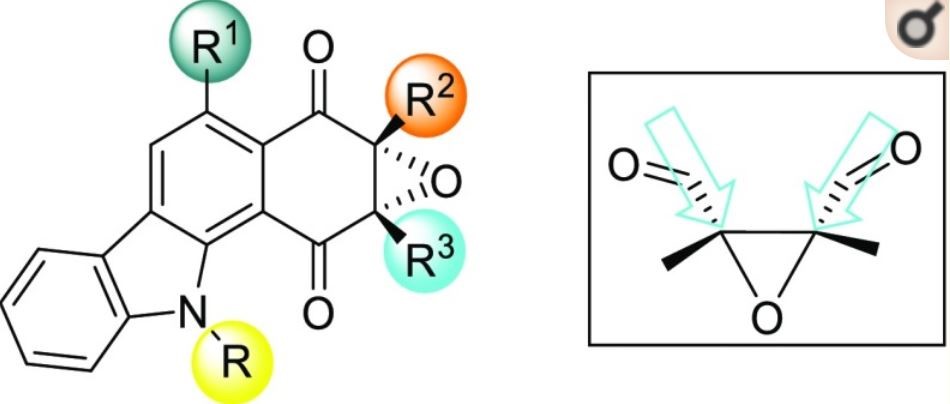
Researchers have identified a protein pathway in an antibiotic-resistant bacterial strain called Staphylococcus aureus (S. aureus) and also a new molecule that can target this pathway. This may help develop new antibacterial drugs in the future.
Researchers Have Identified the Target for Antibiotic Drug Resistance

The new molecule – indole based quinone epoxide (IND-QE) – has been developed by scientists at the CSIR-Central Drug Research Institute (CDRI), Lucknow and Indian Institute of Science Education and Research (IISER), Pune. This molecule can cross the bacterial cell barriers and disrupt the functioning of MarR proteins which are essential for the growth and survival of S. aureus bacteria.

The development of new antibiotics is a major challenge, given the increasing bacterial resistance. New antibiotics are usually based on natural products such as fungal or plant extracts, or from large chemical libraries, which are a series of stored chemicals. The researchers have selected a relatively less-explored process of antibiotic discovery.

“A novel set of proteins (MarR) has been identified in S. aureus that could be targeted by antibacterial agents in order to tackle severe infections. This has led to the inhibition of extremely drug-resistant VRSA bacteria.”, said Dr. Harinath Chakrapani, a researcher at IISER, Pune.

The study results have been published in the Journal of Medicinal Chemistry. IND-QE were synthesized at IISER Pune, while researchers at CSIR-CDRI screened the compounds against a panel of pathogens. It was again followed by the experiments at IISER Pune to identify and validate the protein targets of these compounds.

S. aureus is commonly found on human skin and mucosal membranes. if allowed to enter the bloodstream or internal tissues, it can cause serious infections such as endocarditis (heart valve infection leading to heart failure or stroke), osteomyelitis (bone infection) or pneumonia, etc. It is an infection-causing bacteria which can readily become resistant to antibiotics. The MarR protein found in bacteria is essential for its growth and survival which can be destroyed by the IND-QE molecule.

Apart from Dr. Harinath Chakrapani, the researchers included Dr. Sidharth Chopra from CSIR-CDRI, Lucknow and Dr. Isha Soni, Dr. Siddhesh S. Kamat, Amogh Kulkarni, Dr. Dhanashree S. Kelkar, Dr. Allimuthu T. Dharmaraja, Rathinam K. Sankar, Gaurav Beniwal, Abinaya Rajendran and Sharvari from IISER Pune. (ISW)

Umashankar Mishra

If you liked this article, then please subscribe to our YouTube Channel for the latest Science & Tech news. You can also find us on Twitter & Facebook.
Rate

“A novel set of proteins (MarR) has been identified in S. aureus that could be targeted by antibacterial agents in order to tackle severe infections. This has led to the inhibition of extremely drug-resistant VRSA bacteria.”, said Dr. Harinath Chakrapani, a researcher at IISER, Pune.

The study results have been published in the Journal of Medicinal Chemistry. IND-QE were synthesized at IISER Pune, while researchers at CSIR-CDRI screened the compounds against a panel of pathogens. It was again followed by the experiments at IISER Pune to identify and validate the protein targets of these compounds.

S. aureus is commonly found on human skin and mucosal membranes. if allowed to enter the bloodstream or internal tissues, it can cause serious infections such as endocarditis (heart valve infection leading to heart failure or stroke), osteomyelitis (bone infection) or pneumonia, etc. It is an infection-causing bacteria which can readily become resistant to antibiotics. The MarR protein found in bacteria is essential for its growth and survival which can be destroyed by the IND-QE molecule.

Apart from Dr. Harinath Chakrapani, the researchers included Dr. Sidharth Chopra from CSIR-CDRI, Lucknow and Dr. Isha Soni, Dr. Siddhesh S. Kamat, Amogh Kulkarni, Dr. Dhanashree S. Kelkar, Dr. Allimuthu T. Dharmaraja, Rathinam K. Sankar, Gaurav Beniwal, Abinaya Rajendran and Sharvari from IISER Pune. (ISW)

Umashankar Mishra

If you liked this article, then please subscribe to our YouTube Channel for the latest Science & Tech news. You can also find us on Twitter & Facebook.

" }
Study Finds New Method to Deliver Nano-Based Drugs

Study Finds New Method to Deliver Nano-Based Drugs

Scientists have found that nano-based drugs could be effectively delivered by hitchhiking on the same transport mechanism that is used to carry iron in the body, without disrupting the natural process

  • News
  • 1.9K
Read more
Here Is a Solution for Crop Residue Burning Problem

Here Is a Solution for Crop Residue Burning Problem

A new study has found that farmers in north India can not only help reduce air pollution but also improve the productivity of their soil and earn more profits if they stop burning their crop residue and instead adopted the concept of no-till farming

  • News
  • 1.9K
Read more
Science Centers in Villages Can Help Spread Science Literacy

Science Centers in Villages Can Help Spread Science Literacy

Science and technology communication can help spread the scientific way of thinking among people and make science accessible to them.

  • News
  • 2.1K
Read more

Internet is huge! Help us find great content

Newsletter

Never miss a thing! Sign up for our newsletter to stay updated.

About

Research Stash is a curated collection of tools and News for S.T.E.M researchers

Have any questions or want to partner with us? Reach us at hello@researchstash.com

Navigation

Submit