
These Herbal Candles May Protect You from Mosquito Bites

These Herbal Candles May Protect You from Mosquito Bites

  • Research Stash
  • News
  • 1.8K

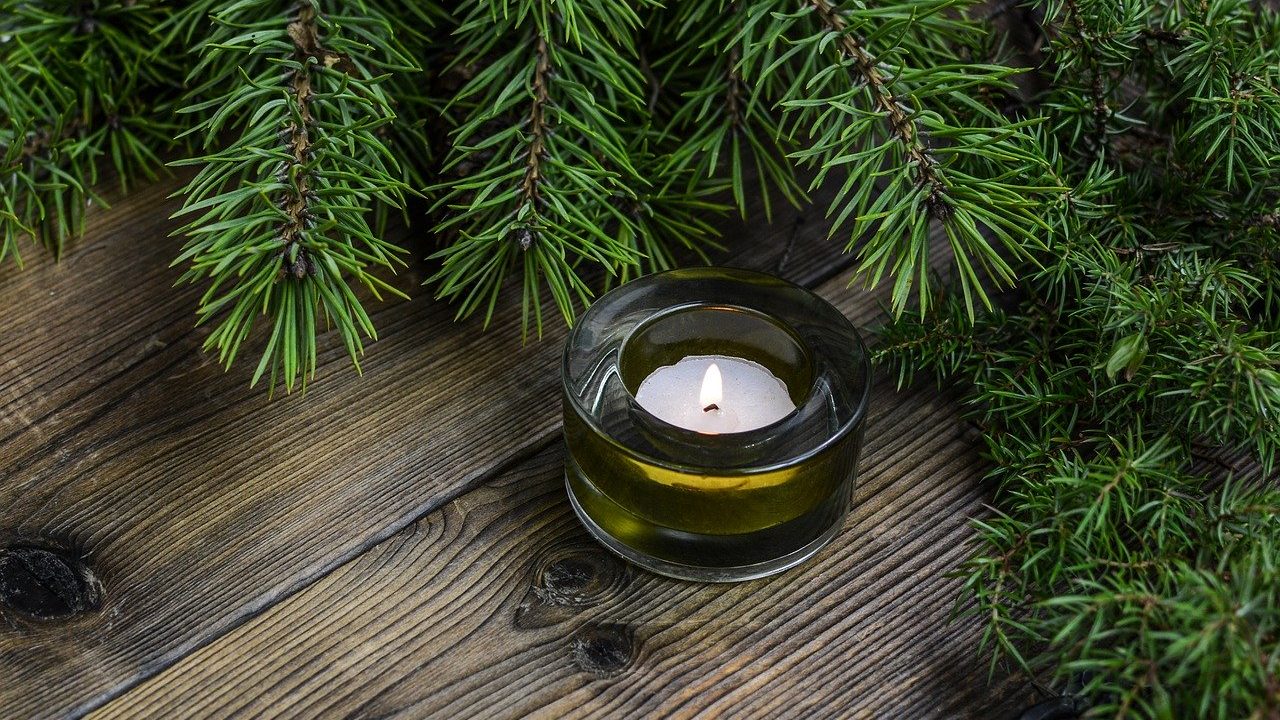
We all have heard about birthday candles, candle night dinners and candlelight marches but how about mosquito repellent candles? Scientists from the Council of Scientific and Industrial Research- North East Institute of Science & Technology, Jorhat (CSIR-NEIST) have developed candles with extracts of herbal plant that possess mosquito repellent properties.

Mosquito repellents currently used for domestic purposes are mainly synthetic products and are not considered for sustained use.

Dr. Jatin Kalita, research planning and business development head, CSIR-NEIST, said, “currently used mosquito repellants mostly synthetic pyrethroids which are less harmful than general insecticides but still are not totally safe for prolonged use.  Therefore, efforts have been made to prepare safer mosquito repellent in different forms.”

The new product may be useful for rural areas as wax candles are commonly used by rural populations as alternate light sources. Therefore, an attempt was made to prepare wax candles having mosquito repellent properties. Easily available non-toxic herbal sources have been used as ingredients of mosquito repellent.

On burning, the candle emits pleasant fragrance along with the light and the fragrance keeps mosquito out from the room and provides considerable protection from mosquitoes. It is an economical and environment-friendly product as no chemical or synthetic constituents are used, researchers said.

Mosquito repellent candle may be used for a room of 10 feet by 15 feet size during evening hours to drive away mosquitoes from houses. It can also be used at any time of the night when mosquitoes are present indoors. The candle can also be used as an air freshener, as it gives pleasant fragrance during burning.

Earlier CSIR-NEIST had developed herbal incense sticks or agarbatti having mosquito repellent properties from indigenous plant materials. For making such sticks, initial input cost is lower as no special frames, etc. are needed to prepare the stick as compared to mosquito repellent coils used for a similar purpose. The incense sticks are already there in the market and available for usage.

Recently the technology for mosquito repellent candles has been transferred to industry. There are four firms that have shown interest and bought the technology from CSIR-NEIST. These are DSP Agri-foods & Chemical Industries, Hyderabad, Medtronic Biolead Systems, Telangana, Kudos Laboratories India, New Delhi and Sewali Home Enterprise, Jorhat. “As the product is in commercialization phase soon we can have these candles in the market and they will be available for public use,” said Dr. Kalita. (ISW)

Jyoti Singh

If you liked this article, then please subscribe to our YouTube Channel for the latest Science & Tech news. You can also find us on Twitter & Facebook.

Rate

The new product may be useful for rural areas as wax candles are commonly used by rural populations as alternate light sources. Therefore, an attempt was made to prepare wax candles having mosquito repellent properties. Easily available non-toxic herbal sources have been used as ingredients of mosquito repellent.

On burning, the candle emits pleasant fragrance along with the light and the fragrance keeps mosquito out from the room and provides considerable protection from mosquitoes. It is an economical and environment-friendly product as no chemical or synthetic constituents are used, researchers said.

Mosquito repellent candle may be used for a room of 10 feet by 15 feet size during evening hours to drive away mosquitoes from houses. It can also be used at any time of the night when mosquitoes are present indoors. The candle can also be used as an air freshener, as it gives pleasant fragrance during burning.

Earlier CSIR-NEIST had developed herbal incense sticks or agarbatti having mosquito repellent properties from indigenous plant materials. For making such sticks, initial input cost is lower as no special frames, etc. are needed to prepare the stick as compared to mosquito repellent coils used for a similar purpose. The incense sticks are already there in the market and available for usage.

Recently the technology for mosquito repellent candles has been transferred to industry. There are four firms that have shown interest and bought the technology from CSIR-NEIST. These are DSP Agri-foods & Chemical Industries, Hyderabad, Medtronic Biolead Systems, Telangana, Kudos Laboratories India, New Delhi and Sewali Home Enterprise, Jorhat. “As the product is in commercialization phase soon we can have these candles in the market and they will be available for public use,” said Dr. Kalita. (ISW)

Jyoti Singh

If you liked this article, then please subscribe to our YouTube Channel for the latest Science & Tech news. You can also find us on Twitter & Facebook.
" }

Tools for Successful Collaboration

Collaboration tools on researchstash.com

  • News
  • 2.8K
Read more
Plant Virus-Like Particles as Vehicles for Therapeutic Antibodies

Plant Virus-Like Particles as Vehicles for Therapeutic Antibodies

Researchers at the Institute have developed a VLP of a plant virus called the Pepper vein banding virus to use as a possible vehicle to deliver antibodies into a cell. These VLPs can enter mammalian cells as well, despite being of plant origin.

  • News
  • 2.7K
Read more
No More Slaughtering of Animals for Meat

No More Slaughtering of Animals for Meat

The traditional way of producing meat by slaughtering animals may be a matter of past in a few years as Indian scientists begin work on ‘cultured meat’ - meat made by cells extracted from animals

  • News
  • 2.2K
Read more

Internet is huge! Help us find great content

Newsletter

Never miss a thing! Sign up for our newsletter to stay updated.

About

Research Stash is a curated collection of tools and News for S.T.E.M researchers

Have any questions or want to partner with us? Reach us at [email protected]

Navigation

Submit