
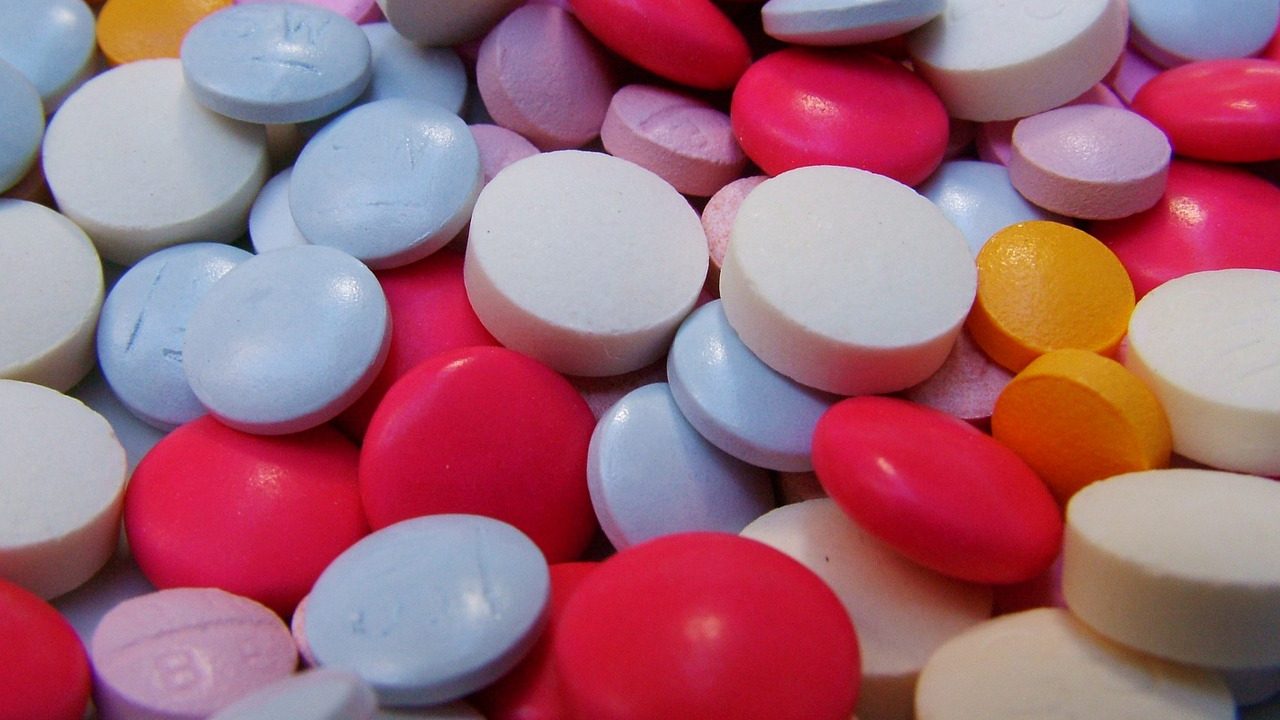
A Controlled-Release Oral Pill for Kala Azar and Fungal Infections

A Controlled-Release Oral Pill for Kala Azar and Fungal Infections

  • Research Stash
  • News
  • 1.9K

Researchers at Indian Institute of Technology Hyderabad have developed a method to produce controlled-release oral pills for treating fungal infections and kala-azar. The tablets were found to release the drug Amphotericin B in a sustained and controlled manner over a period of 10 days.
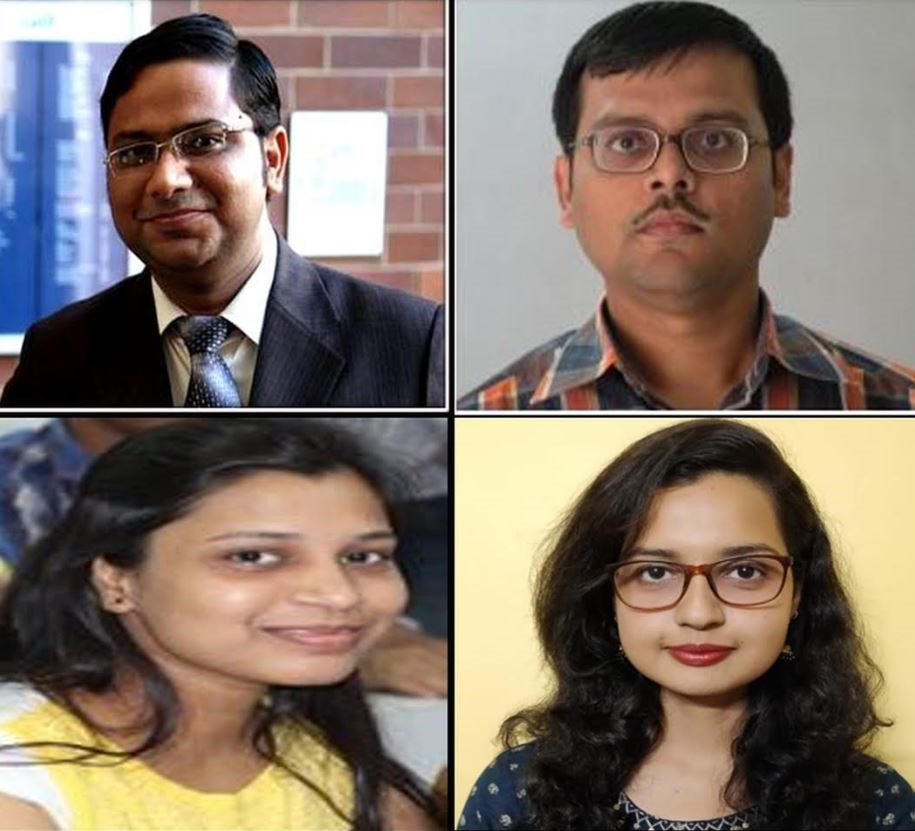
Dr. Chandra Shekhar Sharma, Dr. Saptarshi Majumdar, Mrunalini Gaydhane and Dr. Anindita Laha

Amphotericin B is the drug of choice for fungal infections of the abdomen and heart valves, fungal pneumonia, and kala-azar. However, it is costly, causes toxicity and its bioavailability is poor. The drug is administered through injection, which results in the uncontrolled release into the bloodstream.

The researchers have developed the oral tablet by loading the drug on to gelatin nano-fabric. They chose gelatin since it is non-toxic and biocompatible, besides being biodegradable. It is used in the food and medical industries.

The drug was loaded on to gelatin and was then drawn out in the form of nanofibers through the process of electrospinning. It involves the use of electric force to draw out charged threads of polymers into fibers with diameters in the order of some hundred nanometers. In order to improve structural consistency in aqueous conditions, saturated vapors of a chemical called glutaraldehyde were used.
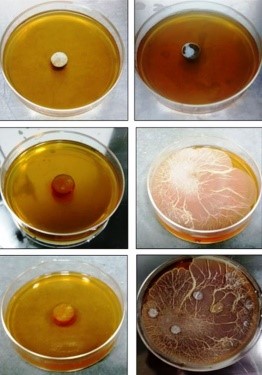
Antifungal activity after 1, 3 and 7 days

The team has also found that the nano-fibrous oral tablet was stable over a wide range of pH, which means that it would not be destroyed in the gastrointestinal tract before drug absorption into the bloodstream.

Explaining the rationale for using nanofibres to produce the oral tablets, researchers said, “nanofibers – fibers that are a hundred thousand times thinner than the human hair – are increasingly being considered as a medium for controlled release of drug molecules because of their large surface area and porosity”.

The research was led by Prof. Saptarshi Majumdar and Dr. Chandra Shekhar Sharma. The study results have been published in journal Nano-Structures and Nano-Objects. The paper has been co-authored by Dr. Anindita Laha, Ms. Mrunalini Gaydhane. (ISW)

Sunderarajan Padmanabhan

If you liked this article, then please subscribe to our YouTube Channel for the latest Science & Tech news. You can also find us on Twitter & Facebook.

Rate

The drug was loaded on to gelatin and was then drawn out in the form of nanofibers through the process of electrospinning. It involves the use of electric force to draw out charged threads of polymers into fibers with diameters in the order of some hundred nanometers. In order to improve structural consistency in aqueous conditions, saturated vapors of a chemical called glutaraldehyde were used.

Antifungal activity after 1, 3 and 7 days

The team has also found that the nano-fibrous oral tablet was stable over a wide range of pH, which means that it would not be destroyed in the gastrointestinal tract before drug absorption into the bloodstream.

Explaining the rationale for using nanofibres to produce the oral tablets, researchers said, “nanofibers – fibers that are a hundred thousand times thinner than the human hair – are increasingly being considered as a medium for controlled release of drug molecules because of their large surface area and porosity”.

The research was led by Prof. Saptarshi Majumdar and Dr. Chandra Shekhar Sharma. The study results have been published in journal Nano-Structures and Nano-Objects. The paper has been co-authored by Dr. Anindita Laha, Ms. Mrunalini Gaydhane. (ISW)

Sunderarajan Padmanabhan

If you liked this article, then please subscribe to our YouTube Channel for the latest Science & Tech news. You can also find us on Twitter & Facebook.

" }
Green Technique Can Convert Plaster Of Paris Waste into Useful Products

Green Technique Can Convert Plaster Of Paris Waste into Useful Products

A team of scientists has developed a technique that promises to help recycle Plaster of Paris waste from hospitals and other medical centers in a simple, eco-friendly and economical way

  • News
  • 3.7K
Read more
New Initiatives to Boost Technology Incubators in India

New Initiatives to Boost Technology Incubators in India

The government has decided to set up 15 new biotechnology incubators and another 15 new technology business incubators during the coming financial year.

  • News
  • 1.8K
Read more
No Evidence of Rift Between Einstein and Bose

No Evidence of Rift Between Einstein and Bose

Satyendra Nath Bose is the only Indian physicist whose name is tagged with Albert Einstein in the hall of modern physics for what is known as the Bose-Einstein Statistics

  • News
  • 2.7K
Read more

Internet is huge! Help us find great content

Newsletter

Never miss a thing! Sign up for our newsletter to stay updated.

About

Research Stash is a curated collection of tools and News for S.T.E.M researchers

Have any questions or want to partner with us? Reach us at hello@researchstash.com

Navigation

Submit