
Research Stash Weekly Review #46

Research Stash Weekly Review #46

Weekly Review #46 – Summary of the latest news In science and technology research across the world, carefully handpicked by team Research Stash

Researchers teleport information within a diamond

Researchers from the Yokohama National University have teleported quantum information securely within the confines of a diamond. The study has big implications for quantum information technology – the future of how sensitive information is shared and stored. Read More

Buried Genes Could Help Explain Why Humans Are The ‘Fat Primate’

It’s no secret that we humans tend to carry a little more padding on our bones compared to our closest living primate relatives. Even without a diet of doughnuts and Netflix, evolution has left us with bodies that hoard fat. Read More

Researchers Have Built a Plasma Jet That Can Touch Stuff, Like a Tiny Lightsaber

Nothing says welcome to the future like having your wound fixed by a tiny lightsaber. It might sound wild at first, but that’s basically what a new plasma technology advance is now promising. Read More

Scientists discover how plants breathe—and how humans shaped their ‘lungs’

Scientists have discovered how plants create networks of air channels—the lungs of the leaf—to transport carbon dioxide (CO2) to their cells. Read More

Physicists Discover Entirely New Quantum States When Graphene Meets Itself

The super-thin ‘wonder material’ graphene has been shaking up science for years with its amazing properties, but things get really interesting when you stack this 2D nanomaterial up against itself. Read More

Ancient DNA reveals new twists in Neanderthal migration

In 1856, some curious remains turned up at a limestone quarry in the Neander Valley in Germany. While the skull fragment and bones vaguely resembled those of modern humans, the brow was too robust, and the bones were too hefty. Read More

Astronomers Have Decoded a Weird Signal Coming from a Strange, 3-Body Star System

Once or twice a day, a strange object in the Milky Way blinks at us. Now, astronomers think they know why. Read More

New AI programming language goes beyond deep learning

A team of MIT researchers is making it easier for novices to get their feet wet with artificial intelligence, while also helping experts advance the field. Read More

Physicists develop a new method to prove quantum entanglement

One of the essential features required for the realization of a quantum computer is quantum entanglement. Read More

Capuchin Monkeys May Have Been in Their Own Unique ‘Stone Age’ For at Least 3,000 Years

Tucked away in a remote valley of Brazil’s Serra da Capivara National Park, a group of bearded capuchin monkeys uses round quartz stones to crack open cashew nuts on tree roots or other rocks. Beneath their feet, archaeologists have found at least 3,000-years-worth of discarded tools. Read More

Did you miss our previous weekly review videos? Check them out here

If you liked this article, then please subscribe to our YouTube Channel for the latest Science & Tech news. You can also find us on Twitter & Facebook.
Rate

It’s no secret that we humans tend to carry a little more padding on our bones compared to our closest living primate relatives. Even without a diet of doughnuts and Netflix, evolution has left us with bodies that hoard fat. Read More

Researchers Have Built a Plasma Jet That Can Touch Stuff, Like a Tiny Lightsaber

Nothing says welcome to the future like having your wound fixed by a tiny lightsaber. It might sound wild at first, but that’s basically what a new plasma technology advance is now promising. Read More

Scientists discover how plants breathe—and how humans shaped their ‘lungs’

Scientists have discovered how plants create networks of air channels—the lungs of the leaf—to transport carbon dioxide (CO2) to their cells. Read More

Physicists Discover Entirely New Quantum States When Graphene Meets Itself

The super-thin ‘wonder material’ graphene has been shaking up science for years with its amazing properties, but things get really interesting when you stack this 2D nanomaterial up against itself. Read More

Ancient DNA reveals new twists in Neanderthal migration

In 1856, some curious remains turned up at a limestone quarry in the Neander Valley in Germany. While the skull fragment and bones vaguely resembled those of modern humans, the brow was too robust, and the bones were too hefty. Read More

Astronomers Have Decoded a Weird Signal Coming from a Strange, 3-Body Star System

Once or twice a day, a strange object in the Milky Way blinks at us. Now, astronomers think they know why. Read More

New AI programming language goes beyond deep learning

A team of MIT researchers is making it easier for novices to get their feet wet with artificial intelligence, while also helping experts advance the field. Read More

Physicists develop a new method to prove quantum entanglement

One of the essential features required for the realization of a quantum computer is quantum entanglement. Read More

Capuchin Monkeys May Have Been in Their Own Unique ‘Stone Age’ For at Least 3,000 Years

Tucked away in a remote valley of Brazil’s Serra da Capivara National Park, a group of bearded capuchin monkeys uses round quartz stones to crack open cashew nuts on tree roots or other rocks. Beneath their feet, archaeologists have found at least 3,000-years-worth of discarded tools. Read More

Did you miss our previous weekly review videos? Check them out here

If you liked this article, then please subscribe to our YouTube Channel for the latest Science & Tech news. You can also find us on Twitter & Facebook.

" }

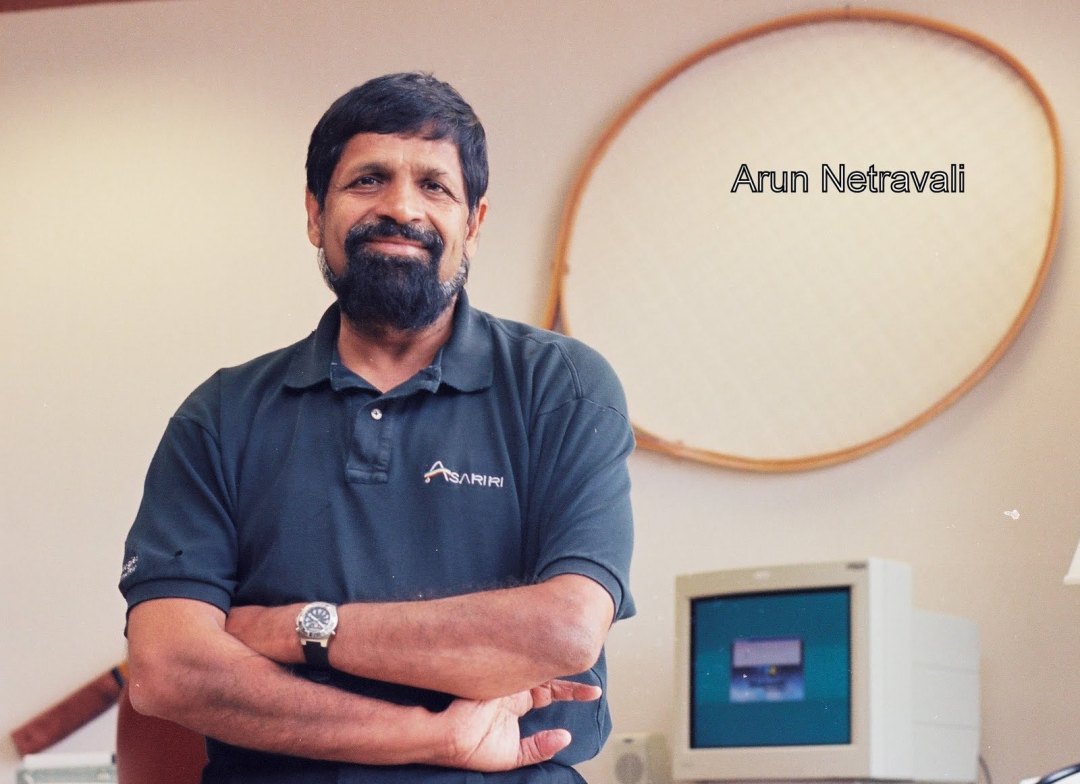
Dr. Arun Netravali, HDTV tech pioneer, wins Prestigious Marconi Award

Dr. Arun Netravali, former president of Bell Labs (now Nokia Bell Labs) and leader of key base technology for MPEG 1, 2 and 4 that ushered in digital video revolution in TV and mobile and streaming video has been awarded the prestigious Marconi Prize for 2017.

  • News
  • 5.9K
Read more
Research Stash Weekly Review #24

Research Stash Weekly Review #24

Weekly Review #24 – Summary of the latest news in science and technology research across the world, carefully handpicked by team Research Stash

Read more

This Seoul Based Nonprofit Wants to Make Scholarly Communication Transparent Using Blockchain Technology

According to National Science Foundation, 4000 new papers are published within the scientific community every day and the number of annual publications has increased from 1 million in 2000 to more than 2 million in 2013.

Read more

Internet is huge! Help us find great content

Newsletter

Never miss a thing! Sign up for our newsletter to stay updated.

About

Research Stash is a curated collection of tools and News for S.T.E.M researchers

Have any questions or want to partner with us? Reach us at [email protected]

Navigation

Submit