
“Gut feelings” of worms might help in understanding sickness behavior in humans

“Gut Feelings” of Worms Might Help Understand Sickness Behavior

  • Research Stash
  • News
  • 2.6K

“Gut Feelings” of Worms Might Help Understand Sickness Behavior in Humans

Humans are not the only ones who hate germs, even the tiny worms try to run away once they recognize harmful microbes. While it could be the psychological issues for humans but running away from pathogenic bacteria is a matter of life and death for tiny worms like Caenorhabditis elegans. Therefore to improve the chances of survival, organisms need to recognize potential pathogens and defend themselves.

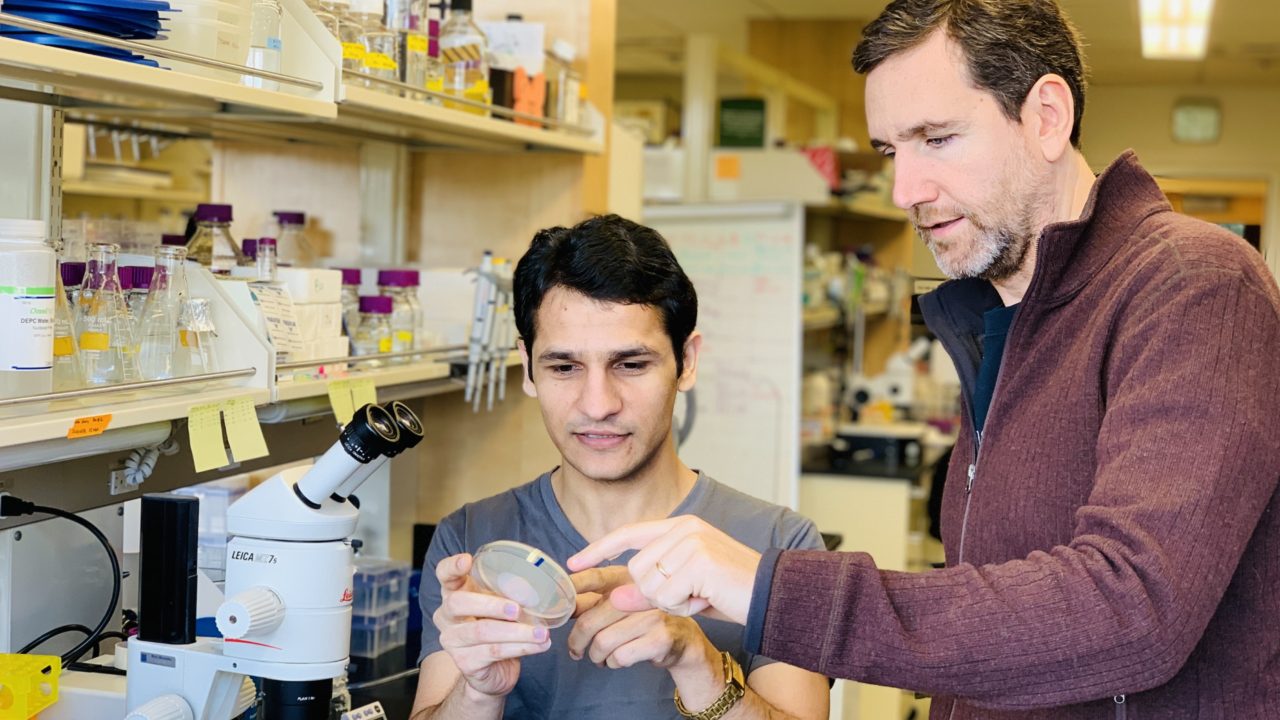
Now researchers Dr. Jogender Singh and Prof. Alejandro Aballay from Oregon Health and Science University, USA have shown that in worms bloating of the gut caused by pathogen infection helps both in recognition of pathogenic bacteria and activation of defence mechanisms. The results of this study were published in the journal Development Cell.

Scientists have known that worms like Caenorhabditis elegans use bacteria that are non-pathogenic or beneficial, as its food source, but also encounter pathogenic bacteria. After feeding on pathogenic bacteria for a few hours, the animals learn to avoid the pathogen.

“We asked why the animals require a few hours to learn that what they are eating is harmful. Surprisingly, our initial results suggested that gut bloating caused by infection led to pathogen avoidance behaviour. However, it was difficult to understand how gut bloating was affecting behaviour—a response that is normally controlled by brain or the nervous system,” says Dr Jogender Singh, co-author in this study.

To understand this puzzle, researchers monitored changes in the nervous system as the gut of animals bloated. “It all made sense when we found that bloating of the gut was sending signals to the nervous system”, said Dr. Singh.

According to the study bloating of the gut happens on pathogenic, but not on non-pathogenic bacteria, these defence mechanisms are induced only upon feeding on pathogenic bacteria. Therefore the state of the gut (happy vs unhappy) could modulate defence mechanisms and induce behavioural changes.

It is known that pathogen infections in humans lead to behavioural changes called sickness behaviour syndrome that includes symptoms such as lethargy, depression, anxiety, loss of appetite and sleepiness. However, it is not understood how pathogen infection evokes sickness behaviour syndrome.

In an organism, the message from different tissues is received and read by different receptors in the nervous system. Interestingly, similar forms of the receptor, that receives a message from bloating of the gut in worms, are also found in humans and other animals. These receptors are involved in the control of a diverse set of behavioural processes, including appetite, biological clock, and anxiety.

Prof. Alejandro Aballay says, “Understanding of the message from the gut to the nervous system may provide broad insights into the modulation of behaviours such as appetite and anxiety that are also linked with the sickness behaviour syndrome.”

The study was supported by grants from the National Institutes of Health, USA.

By Ratneshwar Thakur

If you liked this article, then please subscribe to our YouTube Channel for the latest Science & Tech news. You can also find us on Twitter & Facebook.

Rate

Scientists have known that worms like Caenorhabditis elegans use bacteria that are non-pathogenic or beneficial, as its food source, but also encounter pathogenic bacteria. After feeding on pathogenic bacteria for a few hours, the animals learn to avoid the pathogen.

“We asked why the animals require a few hours to learn that what they are eating is harmful. Surprisingly, our initial results suggested that gut bloating caused by infection led to pathogen avoidance behaviour. However, it was difficult to understand how gut bloating was affecting behaviour—a response that is normally controlled by brain or the nervous system,” says Dr Jogender Singh, co-author in this study.

To understand this puzzle, researchers monitored changes in the nervous system as the gut of animals bloated. “It all made sense when we found that bloating of the gut was sending signals to the nervous system”, said Dr. Singh.

According to the study bloating of the gut happens on pathogenic, but not on non-pathogenic bacteria, these defence mechanisms are induced only upon feeding on pathogenic bacteria. Therefore the state of the gut (happy vs unhappy) could modulate defence mechanisms and induce behavioural changes.

It is known that pathogen infections in humans lead to behavioural changes called sickness behaviour syndrome that includes symptoms such as lethargy, depression, anxiety, loss of appetite and sleepiness. However, it is not understood how pathogen infection evokes sickness behaviour syndrome.

In an organism, the message from different tissues is received and read by different receptors in the nervous system. Interestingly, similar forms of the receptor, that receives a message from bloating of the gut in worms, are also found in humans and other animals. These receptors are involved in the control of a diverse set of behavioural processes, including appetite, biological clock, and anxiety.

Prof. Alejandro Aballay says, “Understanding of the message from the gut to the nervous system may provide broad insights into the modulation of behaviours such as appetite and anxiety that are also linked with the sickness behaviour syndrome.”

The study was supported by grants from the National Institutes of Health, USA.

By Ratneshwar Thakur

If you liked this article, then please subscribe to our YouTube Channel for the latest Science & Tech news. You can also find us on Twitter & Facebook.

" }

Study Disproves Hawking, Shows Tiny Black Holes May Not Account for Dark Matter

An international research team including Dr. Surhud More and Dr. Anupreeta More from Inter-University Centre for Astronomy and Astrophysics, Pune has ruled out the possibility of primordial black holes being a major constituent of Dark matter. This finding disproves a theoretical claim of Prof Stephen Hawking

  • News
  • 2.2K
Read more

This Nanomaterial May Help Forensics Go High Tech

A new nanomaterial developed by a group of Indian scientists promises to overcome such difficulties and also make the process of reading latent fingerprints faster.

  • News
  • 2.5K
Read more
Researchers Find Way to Cheaper Solar Energy

Researchers Find Way to Cheaper Solar Energy

Indian Institute of Technology Madras researchers have discovered a new material to effectively split water into Hydrogen and Oxygen using solar power

  • News
  • 1.7K
Read more

Internet is huge! Help us find great content

Newsletter

Never miss a thing! Sign up for our newsletter to stay updated.

About

Research Stash is a curated collection of tools and News for S.T.E.M researchers

Have any questions or want to partner with us? Reach us at hello@researchstash.com

Navigation

Submit