Water Towers of Asia Contain Less Water Than Estimated

Water Towers of Asia Contain Less Water Than Estimated

  • Research Stash
  • News
  • 2.1K

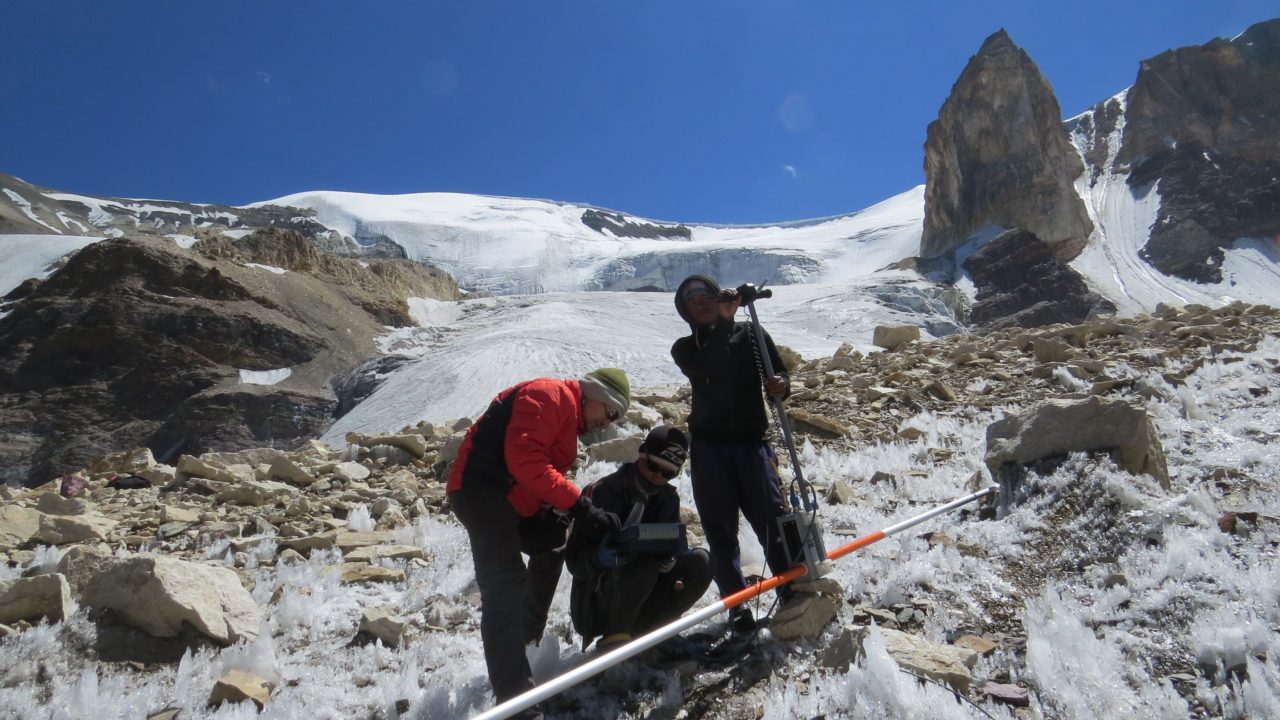
The Himalayas are often called the water towers of Asia because of the vast amount of water locked in the form of ice in thousands of glaciers there. But concerns relating to climate change have often put a question mark on future water availability from these glaciers. Now a new study on ice thickness of glaciers has estimated that glaciers in the Hindu Kush Himalayas might contain 27% less ice than previously suggested.

Not just this, the region is expected to lose half of its present-day glacier area by 2060 and not 2070 when calculations are made based on the new thickness estimates. The warning comes in an international study on the world’s glaciers published in journal Nature Geoscience.

While previous studies focused on the shrinking of total glacier area, estimating ice thickness and its distribution is critical for projecting future changes and freshwater water availability from glaciers. In the new study, researchers used a combination of five thickness estimation models to provide an estimate for the ice thickness distribution of 215,000 glaciers outside of the Greenland and Antarctic ice sheets.

“Our results indicate that High Mountain Asia hosts about 27% less glacier ice than previously suggested, and imply that the timing by which the region is expected to lose half of its present-day glacier area has to be moved forward by about one decade,” the study has concluded.

For High Mountain Asia, the study used the Global Glacier Evolution Model to provide projections for the glacier evolution until 2100. Earlier simulations had suggested that the region’s glacier area (97,000 square kilometers) is likely to have shrunk by 50% by the late 2070s. When simulations were repeated with ice thickness distribution of 96,000 glaciers in the region in the present study, it showed the area will shrink by mid-2060s. There will be accompanying changes in the projected future glacier water discharge as well.

“We used existing models that predict ice thickness from satellite imagery on the basis of the topography of glaciers, using Digital Elevation Models, and also ice dynamics. By applying different models to each glacier, we could reduce reducing uncertainties in estimating thickness,” explained Dr. Ankur Pandit (Welingkar Institute of Management, Development, and Research, Mumbai), a member of the research team, while speaking to India Science Wire.

The research team included Daniel Farinotti, Matthias Huss, Johannes Landmann (ETH Zurich), Johannes J. Fürst (University Erlangen-Nuremberg),  Horst Machguth (University of Fribourg, Switzerland),  Fabien Maussion (University of Innsbruck, Austria), Ankur Pandit (Welingkar Institute of Management, Development, and Research, Mumbai). (India Science Wire)

By Dinesh C Sharma

If you liked this article, then please subscribe to our YouTube Channel for the latest Science & Tech news. You can also find us on Twitter & Facebook.

Rate

“Our results indicate that High Mountain Asia hosts about 27% less glacier ice than previously suggested, and imply that the timing by which the region is expected to lose half of its present-day glacier area has to be moved forward by about one decade,” the study has concluded.

For High Mountain Asia, the study used the Global Glacier Evolution Model to provide projections for the glacier evolution until 2100. Earlier simulations had suggested that the region’s glacier area (97,000 square kilometers) is likely to have shrunk by 50% by the late 2070s. When simulations were repeated with ice thickness distribution of 96,000 glaciers in the region in the present study, it showed the area will shrink by mid-2060s. There will be accompanying changes in the projected future glacier water discharge as well.

“We used existing models that predict ice thickness from satellite imagery on the basis of the topography of glaciers, using Digital Elevation Models, and also ice dynamics. By applying different models to each glacier, we could reduce reducing uncertainties in estimating thickness,” explained Dr. Ankur Pandit (Welingkar Institute of Management, Development, and Research, Mumbai), a member of the research team, while speaking to India Science Wire.

The research team included Daniel Farinotti, Matthias Huss, Johannes Landmann (ETH Zurich), Johannes J. Fürst (University Erlangen-Nuremberg),  Horst Machguth (University of Fribourg, Switzerland),  Fabien Maussion (University of Innsbruck, Austria), Ankur Pandit (Welingkar Institute of Management, Development, and Research, Mumbai). (India Science Wire)

By Dinesh C Sharma

If you liked this article, then please subscribe to our YouTube Channel for the latest Science & Tech news. You can also find us on Twitter & Facebook.
" }
Scientists Provide New Insight into Basophils Activation

Scientists Provide New Insight into Basophils Activation

Dr. Jagadeesh Bayry’s  team at Institut National de la Santé et de la Recherche Médicale (French National Institute of Health and Medical Research, INSERM), Paris, France- have discovered that Tregs instead of suppressing the activities of basophils, they trigger these cells to express  activation markers, to secrete cytokines and support their allergic responses.

  • News
  • 3.5K
Read more
New Algorithm for Safer Data

New Algorithm for Safer Data

A team of researchers from the Indian Institute of Technology, Guwahati in collaboration with scientists from the University of Pardubice, Czech Republic, is working towards developing indigenous algorithms that can protect the Nation's digital data from cyber-attacks by advanced computers

  • News
  • 1.4K
Read more
Researchers Develop ‘Hyperelastic Model’ To Understand Brain Injuries

Researchers Develop ‘Hyperelastic Model’ To Understand Brain Injuries

Indian Institute of Technology Madras researchers developed an analysis-driven ‘hyperelastic’ model in calculating the stress and strain experienced by the brain due to blunt force injury and lesion growth

  • News
  • 2.1K
Read more

Internet is huge! Help us find great content

Newsletter

Never miss a thing! Sign up for our newsletter to stay updated.

About

Research Stash is a curated collection of tools and News for S.T.E.M researchers

Have any questions or want to partner with us? Reach us at hello@researchstash.com

Navigation

Submit