
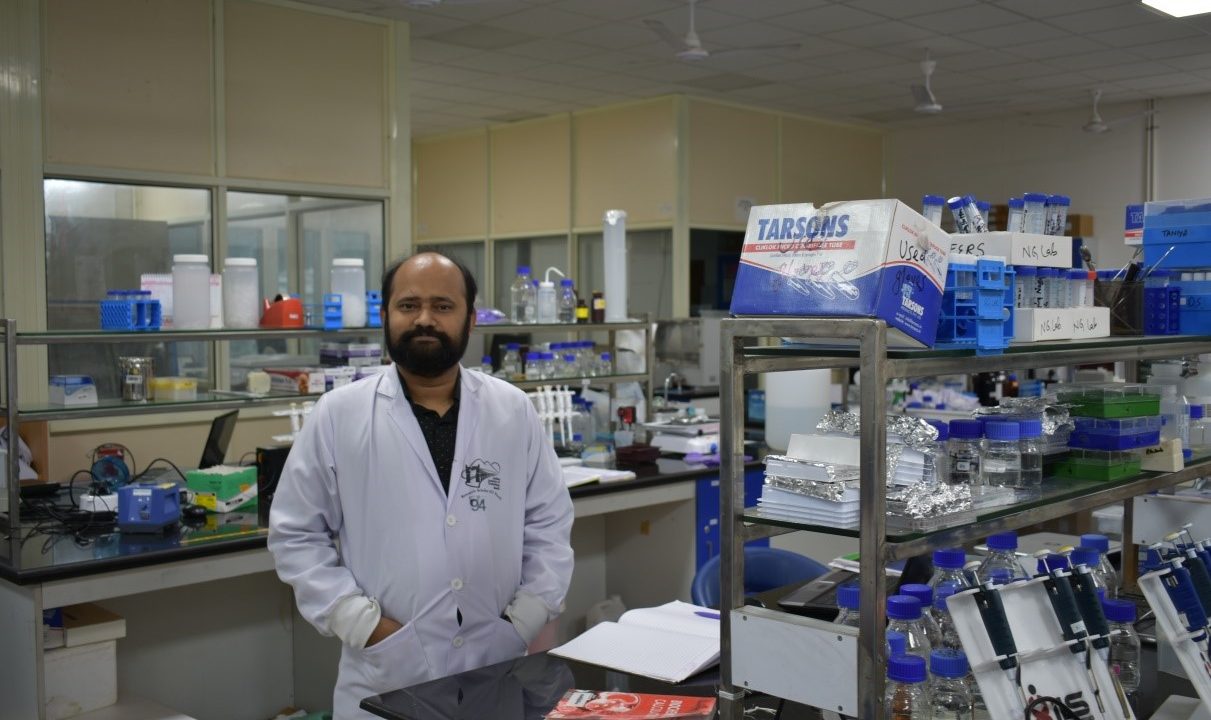
Dr Rajanish Giri in his lab at IIT-Mandi

Scientists Find Antimalarial Drug May Be Repurposed to Treat Zika

  • Research Stash
  • News
  • 3.1K

In their search for a possible treatment for Zika virus infection, a team of Indian researchers has identified a viral protein that can be targeted by an already available antimalarial drug, hydroxychloroquine (HCQ).
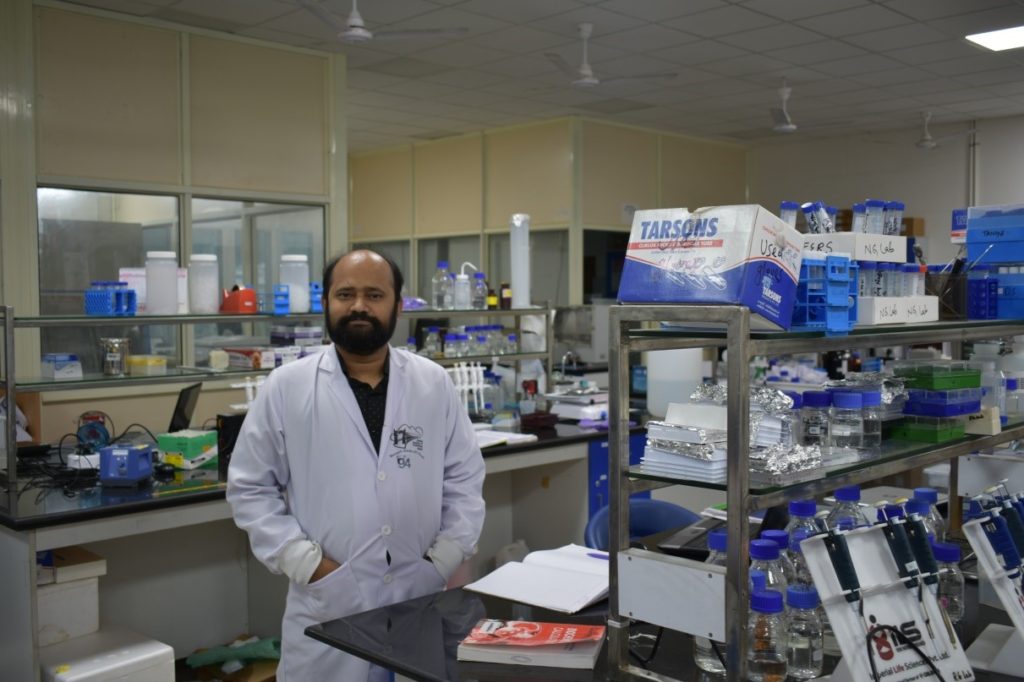
Dr Rajanish Giri in his lab at IIT-Mandi

Researchers hit upon the protein when they conducted a high throughput virtual screening of a library of drugs approved by America’s Food and Drugs Authority. Out of 1861 compounds in the library, five including HCQ appeared to be possible candidates for the treatment of Zika virus. It has also been found that HCQ limits the Zika virus transmission from mother to foetus.

The study was conducted by researchers at the Indian Institute of Technology, Mandi, Alagappa University in Karaikudi, Tamil Nadu and Washington University at St. Louis.

“Hopefully we are close to finding a potential drug against Zika. We have successfully identified the target protein on which HCQ acts. Since it is an FDA approved drug our journey for validation may be less tedious and we can go for preclinical trials faster,” said Dr Rajanish Giri, a researcher at IIT Mandi, while speaking with India Science Wire.

“Repurposing approved drugs can be an efficient method to identify drug compounds, which may be capable of activating or inhibiting new targets. This approach has some advantageous features, including reduced development time and expense and improved safety” he added.

Zika gets transmitted by the bite of an infected mosquito from the Aedes genus, mainly Aedes aegypti. This is the same mosquito that transmits dengue, chikungunya and yellow fever.

This virus infection during pregnancy is a cause of microcephaly (reduced head size) and other congenital abnormalities in developing foetus and newborns. Zika infection in pregnancy also results in pregnancy like foetal loss, stillbirth and preterm birth.

Further, it is known to be associated with certain neurological disorders like Guillain-Barré syndrome in adults and cause problems like neuropathy and myelitis, particularly in older children and adults. The rapid spread of this virus in recent years has led to a surge in efforts to find an effective therapeutic intervention.

The team of researchers include Dr.Rajanish Giri from IIT Mandi, Prof. Indira U. Mysorekar from Washington University and Prof. Sanjeev Kumar Singh from Alagappa University. A paper on the work has been recently been published in journal ACS Omega. (India Science Wire)

By Jyoti Singh

Journal Article

Hydroxychloroquine Inhibits Zika Virus NS2B-NS3 Protease

If you liked this article, then please subscribe to our YouTube Channel for the latest Science & Tech news. You can also find us on Twitter & Facebook.

Rate

“Hopefully we are close to finding a potential drug against Zika. We have successfully identified the target protein on which HCQ acts. Since it is an FDA approved drug our journey for validation may be less tedious and we can go for preclinical trials faster,” said Dr Rajanish Giri, a researcher at IIT Mandi, while speaking with India Science Wire.

“Repurposing approved drugs can be an efficient method to identify drug compounds, which may be capable of activating or inhibiting new targets. This approach has some advantageous features, including reduced development time and expense and improved safety” he added.

Zika gets transmitted by the bite of an infected mosquito from the Aedes genus, mainly Aedes aegypti. This is the same mosquito that transmits dengue, chikungunya and yellow fever.

This virus infection during pregnancy is a cause of microcephaly (reduced head size) and other congenital abnormalities in developing foetus and newborns. Zika infection in pregnancy also results in pregnancy like foetal loss, stillbirth and preterm birth.

Further, it is known to be associated with certain neurological disorders like Guillain-Barré syndrome in adults and cause problems like neuropathy and myelitis, particularly in older children and adults. The rapid spread of this virus in recent years has led to a surge in efforts to find an effective therapeutic intervention.

The team of researchers include Dr.Rajanish Giri from IIT Mandi, Prof. Indira U. Mysorekar from Washington University and Prof. Sanjeev Kumar Singh from Alagappa University. A paper on the work has been recently been published in journal ACS Omega. (India Science Wire)

By Jyoti Singh

Journal Article

Hydroxychloroquine Inhibits Zika Virus NS2B-NS3 Protease

If you liked this article, then please subscribe to our YouTube Channel for the latest Science & Tech news. You can also find us on Twitter & Facebook.

" }
Saras aircraft during its second rest flight in Bengaluru

NAL Working On Mark 2 Version of Light Transport Aircraft: CSIR

India’s indigenously developed light transport aircraft Saras was successfully test flown for a second time today, less than a month after the first flight on January 24.

  • News
  • 2.2K
Read more

Local winners of NASA hackathon announced in Taipei

The winners of the local edition of the NASA Space Apps Challenge, which this year is themed “Earth,” were announced April 30 in Taipei City, with two Taiwan teams nominated to vie against competitors from around the world in the finals of the largest international hackathon.

  • News
  • 2.2K
Read more

Taiwan shines at International Junior Science Olympiad 2017

Taiwan was the best performer at the International Junior Science Olympiad Dec. 3-12 in Arnhem-Nijmegen, the Netherlands, with all six members of the national team winning golds.

  • News
  • 3.3K
Read more

Internet is huge! Help us find great content

Newsletter

Never miss a thing! Sign up for our newsletter to stay updated.

About

Research Stash is a curated collection of tools and News for S.T.E.M researchers

Have any questions or want to partner with us? Reach us at [email protected]

Navigation

Submit