Genetic Study Reveals Presence of Rare Sub-Species of Hog Deer

Genetic Study Reveals the Presence of Rare Sub-Species of Hog Deer

  • Research Stash
  • News
  • 6.5K

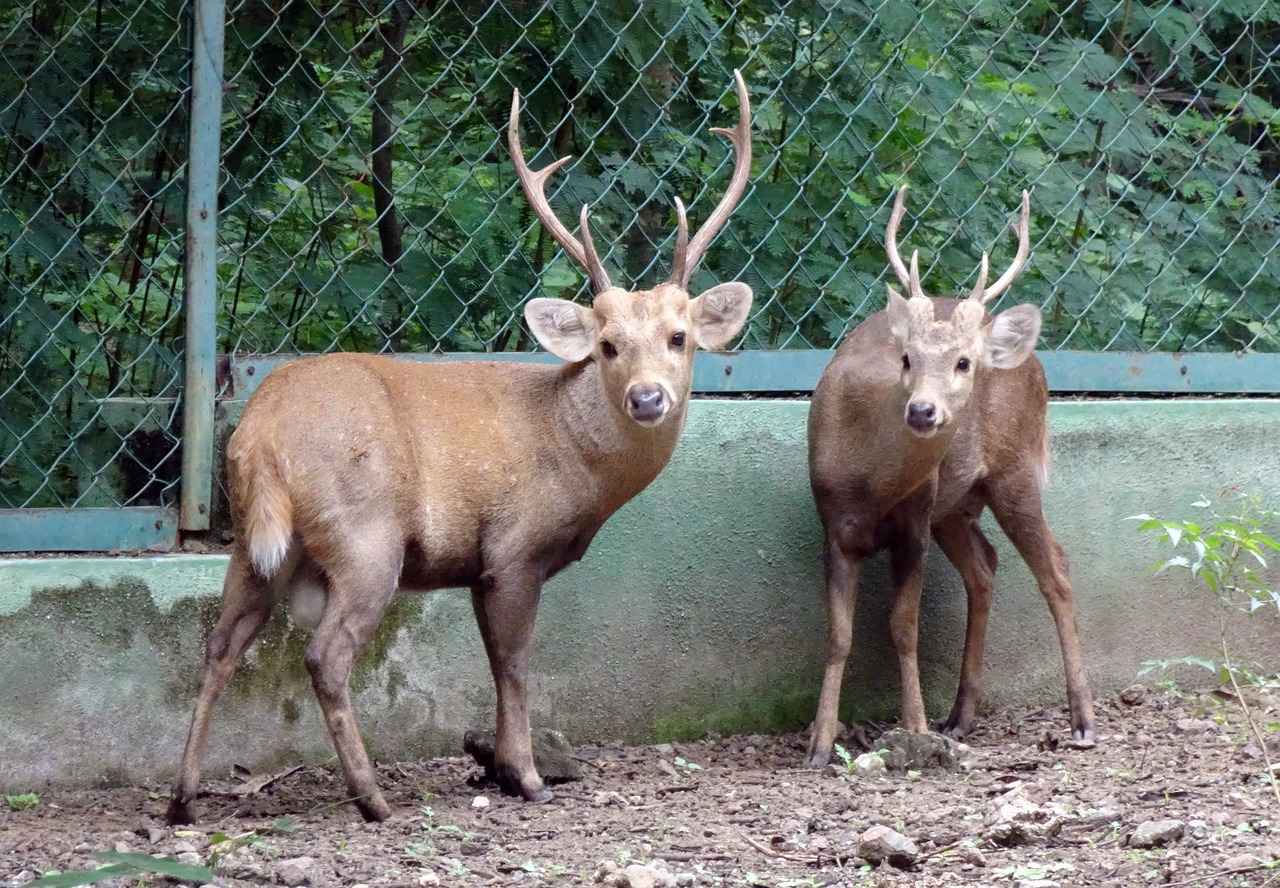
Indian scientists have discovered the presence of a sub-species of hog deer (Axis porcinus annamiticus) in India. This endangered sub-species was earlier believed to be confined to the eastern part of central Thailand.

Researchers at Wildlife Institute of India (WII), Dehradun have reported the presence of a small population of hog deer in Keibul Lamjao National Park (KLNP) in Manipur. The population genetically resembles A. p. annamiticus.

The Keibul Lamjao National is considered as a biodiversity hotspot on India-Myanmar border. This study indicates that the western limit of hog deer is Manipur and not central Thailand as believed so far. Since hog deer is losing its habitat in other countries, the genetically distinct and evolutionarily significant population found in KLNP is significant for the conservation of the species.

“The isolated and low population of wildlife species is always a matter of concern as it affects genetic diversity. Reduced genetic diversity decreases adaptability of various species in changing the environment, “explained Dr. S.K. Gupta, lead researcher, while speaking to India Science Wire.

Two sub-species of hog deer have been reported from its range. The western race is distributed from Pakistan and the Terai grasslands (along with the Himalayan foothills, from Punjab to Arunachal Pradesh), while the eastern race of hog deer is found in Thailand, Indo-China, Laos, Cambodia, and Vietnam.

The hog deer or Pada is an endangered species in the IUCN Red List and is protected under Schedule I of the Indian Wild Life (Protection) Act, 1972. Hog deer have lost ground in most of its distribution range. Presently, its small and fragmented population is known to be found in Cambodia. A small and isolated population of under 250 was reported from Cambodia. However, it was widely distributed throughout the Southeast Asian countries at the beginning of the 20th century.

Apart from Dr. Gupta, Ajit Kumar, Sangeeta Angom, Bhim Singh, Mirza Ghazanfar Ullah Ghazi, Chongpi Tuboi and Syed Ainul Hussain was also involved in the study. This study has been published in research journal Scientific Reports.

This study was based on the grant provided by the Science and Engineering Research Board, Wildlife Institute of India and Ministry of Environment, Forest and Climate Change.  (India Science Wire)

Umashankar Mishra

Journal Article

Genetic analysis of endangered hog deer (Axis porcinus) reveals two distinct lineages from the Indian subcontinent

If you liked this article, then please subscribe to our YouTube Channel for the latest Science & Tech news. You can also find us on Twitter & Facebook.

Rate

“The isolated and low population of wildlife species is always a matter of concern as it affects genetic diversity. Reduced genetic diversity decreases adaptability of various species in changing the environment, “explained Dr. S.K. Gupta, lead researcher, while speaking to India Science Wire.

Two sub-species of hog deer have been reported from its range. The western race is distributed from Pakistan and the Terai grasslands (along with the Himalayan foothills, from Punjab to Arunachal Pradesh), while the eastern race of hog deer is found in Thailand, Indo-China, Laos, Cambodia, and Vietnam.

The hog deer or Pada is an endangered species in the IUCN Red List and is protected under Schedule I of the Indian Wild Life (Protection) Act, 1972. Hog deer have lost ground in most of its distribution range. Presently, its small and fragmented population is known to be found in Cambodia. A small and isolated population of under 250 was reported from Cambodia. However, it was widely distributed throughout the Southeast Asian countries at the beginning of the 20th century.

Apart from Dr. Gupta, Ajit Kumar, Sangeeta Angom, Bhim Singh, Mirza Ghazanfar Ullah Ghazi, Chongpi Tuboi and Syed Ainul Hussain was also involved in the study. This study has been published in research journal Scientific Reports.

This study was based on the grant provided by the Science and Engineering Research Board, Wildlife Institute of India and Ministry of Environment, Forest and Climate Change.  (India Science Wire)

Umashankar Mishra

Journal Article

Genetic analysis of endangered hog deer (Axis porcinus) reveals two distinct lineages from the Indian subcontinent

If you liked this article, then please subscribe to our YouTube Channel for the latest Science & Tech news. You can also find us on Twitter & Facebook.

" }
New Center to Help Farmers Become Climate Resilient

New Center to Help Farmers Become Climate Resilient

The Department of Science and Technology has established a center of excellence on climate change research for plant protection at the Hyderabad-based International Crop Research Institute for the Semi-Arid Tropics. Its objective will be to help make agriculture more resilient to vagaries of climate change.

  • News
  • 1.9K
Read more

Scientific Protocol in The Offing for Cloud Seeding

Scientists at the Indian Institute of Tropical Meteorology (IITM) here are preparing to launch a study during the coming monsoon season to understand physical properties of clouds and particulate matter in the atmosphere and also their interaction, as part of an exercise to formulate a scientific protocol for cloud seeding operations to produce artificial rains.

  • News
  • 1.6K
Read more
UK to Support Nitrogen Research in India

UK to Support Nitrogen Research in India

Nitrogen pollution is an emerging environmental problem linked with air pollution, biodiversity loss, pollution of rivers and seas and ozone depletion. The British government has announced a research project to study nitrogen pollution in India and South Asia

  • News
  • 2.1K
Read more

Internet is huge! Help us find great content

Newsletter

Never miss a thing! Sign up for our newsletter to stay updated.

About

Research Stash is a curated collection of tools and News for S.T.E.M researchers

Have any questions or want to partner with us? Reach us at hello@researchstash.com

Navigation

Submit