Modifications in School Bag Can Reduce Load for Children

Modifications in School Bag Can Reduce Load for Children

  • Research Stash
  • News
  • 3.1K

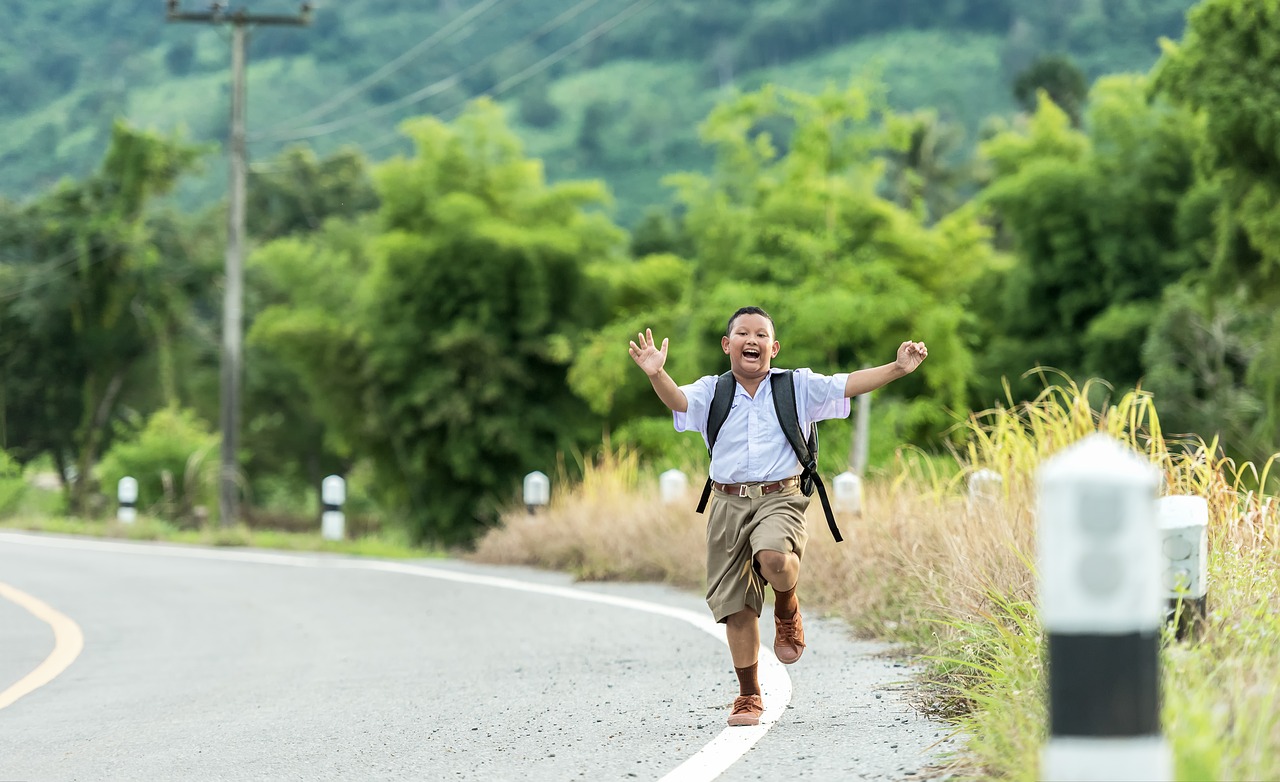
Heavy school bags are always a problem for school children. A group of Indian researchers has now redesigned school bag pack so that it can reduce the load on spine and shoulders of children.

In the modified design, heavier books can be placed closer to the spine and lighter one away from it. Shoulder straps of the bag pack have been adjusted to the extent where the tip of the backpack is positioned at two centimeters above the waistline of the bag holder.

“We have incorporated an internal frame to reduce the load from spine and shoulders and distribute it to the pelvic region. The new design will also distribute the load evenly to the torso,” said Ishant Gupta, lead researcher from the Center of Excellence in Industrial and Product Design at the PEC University of Technology, while speaking with India Science Wire.

Earlier studies have proved that there is a direct relationship between energy expenditure and trunk forward lean. Traditional school bags place the backpack load closer to the body’s center of mass, resulting in changes in gait as well as energy expenditure.

While carrying such backpacks the body leans in the anterior forward direction where it has to balance upper body, head, skull and weight of the bag. In the new design, the spine doesn’t have to balance upper body weight which means less energy is needed.

The new study examined gait parameters, posture, trunk angle and energy expenditure differences between modified backpack and existing backpacks in school children aged between 11 and 13 years. The new and existing backpacks were tested in 26 children under three loading conditions of 10%, 20% and 30% of their body weight.

The gain in energy expenditure was the highest when children carried loads of 30 percent of their body weight. Students carrying modified backpacks with 30 percent bodyweight loads were found to have reduced energy expenditure that was 6.7 calories per minute whereas it was 8.4 calories per minute with the existing bags.

The trunk angle was also found to reduce from 8.7 degrees with existing backpacks with 30 percent bodyweight loads to 6.2 degrees with the modified backpacks.

“The researchers have considered several parameters while studying the backpack weight. It is important to ensure that users know how to pack their bags in a correct manner. Normally the bag weight should never exceed 15% of body weight in children. Heavier bags can lead to postural problems,” commented Dr. Davinder Singh, professor of orthopedics at Safdargunj Hospital, New Delhi.

The erect posture, natural gait patterns and reduction in energy consumption supported by the modified backpacks may thus reduce the causes of back pain and fatigue among school children, researchers said.

The study has been published in journal Current Science. The research team included Ishant Gupta and Parveen Kalra (PEC University of Technology) and Rauf Iqbal (National Institute of Industrial Engineering, Mumbai). (India Science Wire)

By Jyoti Singh

If you liked this article, then please subscribe to our YouTube Channel for the latest Science & Tech news. You can also find us on Twitter & Facebook.
Earlier studies have proved that there is a direct relationship between energy expenditure and trunk forward lean. Traditional school bags place the backpack load closer to the body’s center of mass, resulting in changes in gait as well as energy expenditure.

While carrying such backpacks the body leans in the anterior forward direction where it has to balance upper body, head, skull and weight of the bag. In the new design, the spine doesn’t have to balance upper body weight which means less energy is needed.

The new study examined gait parameters, posture, trunk angle and energy expenditure differences between modified backpack and existing backpacks in school children aged between 11 and 13 years. The new and existing backpacks were tested in 26 children under three loading conditions of 10%, 20% and 30% of their body weight.

The gain in energy expenditure was the highest when children carried loads of 30 percent of their body weight. Students carrying modified backpacks with 30 percent bodyweight loads were found to have reduced energy expenditure that was 6.7 calories per minute whereas it was 8.4 calories per minute with the existing bags.

The trunk angle was also found to reduce from 8.7 degrees with existing backpacks with 30 percent bodyweight loads to 6.2 degrees with the modified backpacks.

“The researchers have considered several parameters while studying the backpack weight. It is important to ensure that users know how to pack their bags in a correct manner. Normally the bag weight should never exceed 15% of body weight in children. Heavier bags can lead to postural problems,” commented Dr. Davinder Singh, professor of orthopedics at Safdargunj Hospital, New Delhi.

The erect posture, natural gait patterns and reduction in energy consumption supported by the modified backpacks may thus reduce the causes of back pain and fatigue among school children, researchers said.

The study has been published in journal Current Science. The research team included Ishant Gupta and Parveen Kalra (PEC University of Technology) and Rauf Iqbal (National Institute of Industrial Engineering, Mumbai). (India Science Wire)

By Jyoti Singh

If you liked this article, then please subscribe to our YouTube Channel for the latest Science & Tech news. You can also find us on Twitter & Facebook.
" }
Technique Developed to Produce Graphene from Discarded Dry Cell Batteries

Technique Developed to Produce Graphene from Discarded Dry Cell Batteries

A group of researchers at Nagpur-based Visvesvaraya National Institute of Technology have developed a new technique which promises to help produce high-value graphene from discarded dry cells batteries.

  • News
  • 3.2K
Read more

USC Stem Cell scientists obtain “how to” guide for producing hair follicles

How does the skin develop follicles and eventually sprout hair? A USC-led study, published in the Proceedings of the National Academy of Sciences (PNAS), addresses this question using insights gleaned from organoids, 3D assemblies of cells possessing rudimentary skin structure and function--including the ability to grow hair.

  • News
  • 2K
Read more
Probiotic Yeast Strain Identified for Boosting Mineral Bioavailability

Probiotic Yeast Strain Identified for Boosting Mineral Bio-availability

Phosphorus deficiency can lead to several health complications. Many a time we face this deficiency despite consuming phosphorus-rich food.

  • News
  • 3.4K
Read more

Internet is huge! Help us find great content

Newsletter

Never miss a thing! Sign up for our newsletter to stay updated.

About

Research Stash is a curated collection of tools and News for S.T.E.M researchers

Have any questions or want to partner with us? Reach us at [email protected]

Navigation

Submit