Gut Bacteria Are a Reservoir of Drug Resistance Genes

Gut Bacteria Are a Reservoir of Drug Resistance Genes

  • Research Stash
  • News
  • 2K

Antibiotic resistance is emerging as a major health challenge. Scientists at the Translational Health Science and Technology Institute (THSTI) here have found that friendly gut bacteria are a reservoir of drug resistance genes which when transferred to disease-causing bacteria may make them untreatable.
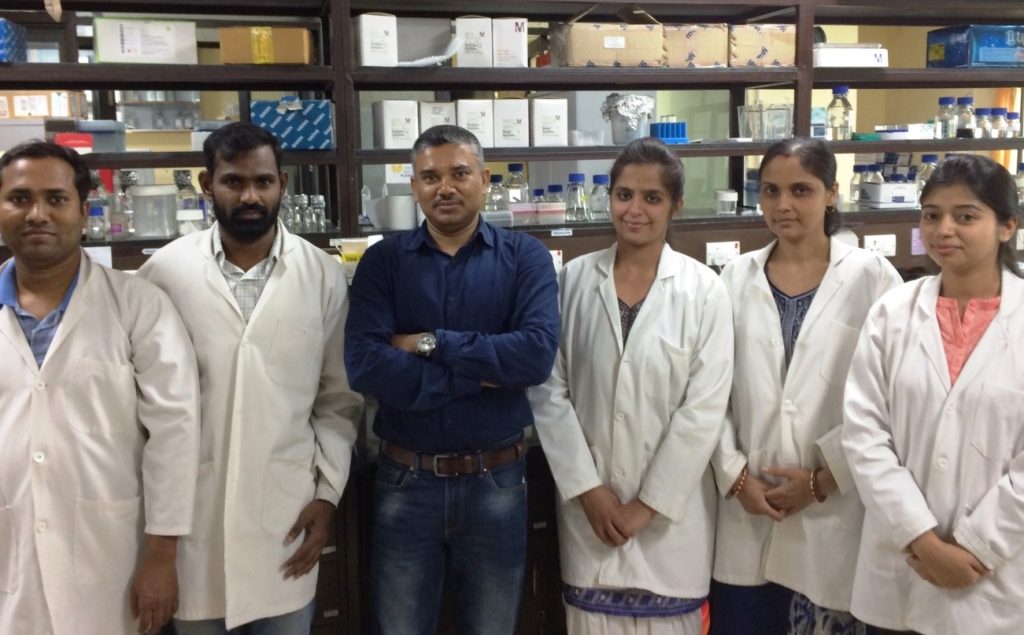
Members of research team (L to R) Satyabrata Bag, Anbumani Desigamani, Bhabatosh Das, Ojasvi Mehta, Bipasa Saha, Jyoti Verma

Members of the research team (L to R) Satyabrata Bag, Anbumani Desigamani, Bhabatosh Das, Ojasvi Mehta, Bipasa Saha, Jyoti Verma

Antibiotic resistance is posing a threat to the treatment of infectious diseases, organ transplantation, cancer chemotherapy, and major surgeries. Although a natural process involving changes at the genetic level, antibiotic resistance is accelerated due to indiscriminate use of antibiotics for disease treatment as well as in agriculture and veterinary sectors.

Researchers studied antibiotic resistance traits present in dominant gut bacteria isolated from human fecal samples. Six healthy individuals who had not consumed antibiotics for the past six months were selected for the study. It was found that friendly gut bacteria from these individuals harbored resistance against multiple antimicrobials attributed to the presence of a vast number of antimicrobial genes.

In all cases, the most abundant resistant genes were the ones associated with tetracycline resistance which is an antibiotic used to cure cholera, malaria and other infections. It was followed by the beta-lactamase genes which function to negate the effect of medicines used to fight a broad spectrum of bacteria.

In-depth analysis revealed the presence of several resistance genes for each class of antimicrobials. “Isolation of commensal gut bacteria and their culture in the laboratory was challenging. The significance of molecular studies to combat antibiotic resistance and guide treatment regimens cannot be underrepresented,” explained Dr. Bhabatosh Das, who led the research team.

The researchers found that the antimicrobial genes are physically connected to genetic elements that could aid their transfer to their progeny and surrounding bacteria. It is disturbing because friendly gut bacteria can transfer resistance traits to pathogens, supported by the observation that the cholera-causing bacteria were found capable of uptaking DNA from their surroundings.

With a high burden of infectious diseases like TB, HIV, and diarrheal diseases, India’s fight against antibiotic resistance has been escalated by poor sanitation and malnutrition. The resistance patterns among organisms are also found to vary with their geographical location.

“It was surprising to see that friendly gut bacteria fostered resistance traits. This unexplored arm acts as a huge potential source of antibiotic resistance dissemination. We are currently working to resensitize these bacteria and make them antibiotic-sensitive,” said Dr. Das, while speaking to India Science Wire.  “There is a pressing need to pursue active research to overcome antimicrobial resistance crisis in India. Strategic use of antibiotics would be a crucial step in the process,” adds Dr. Das.

The research team included Satyabrata Bag, Tarini Shankar Ghosh, Sayantan Banerjee, Ojasvi Mehta, Jyoti Verma, Mayanka Dayal, Anbumani Desigamani, Pawan Kumar, Bipasa Saha, Saurabh Kedia, Vineet Ahuja, Thandavarayan Ramamurthy, and Bhabatosh Das.

The research results have been published recently in the journal Microbial Ecology. The study was funded by the Department of Biotechnology. (India Science Wire)

By Dr. Divya Khatter

Journal Reference

Molecular Insights into Antimicrobial Resistance Traits of Commensal Human Gut Microbiota.

If you liked this article, then please subscribe to our YouTube Channel for the latest Science and Tech news. You can also find us on Twitter and Facebook

Rate

Antibiotic resistance is posing a threat to the treatment of infectious diseases, organ transplantation, cancer chemotherapy, and major surgeries. Although a natural process involving changes at the genetic level, antibiotic resistance is accelerated due to indiscriminate use of antibiotics for disease treatment as well as in agriculture and veterinary sectors.

Researchers studied antibiotic resistance traits present in dominant gut bacteria isolated from human fecal samples. Six healthy individuals who had not consumed antibiotics for the past six months were selected for the study. It was found that friendly gut bacteria from these individuals harbored resistance against multiple antimicrobials attributed to the presence of a vast number of antimicrobial genes.

In all cases, the most abundant resistant genes were the ones associated with tetracycline resistance which is an antibiotic used to cure cholera, malaria and other infections. It was followed by the beta-lactamase genes which function to negate the effect of medicines used to fight a broad spectrum of bacteria.

In-depth analysis revealed the presence of several resistance genes for each class of antimicrobials. “Isolation of commensal gut bacteria and their culture in the laboratory was challenging. The significance of molecular studies to combat antibiotic resistance and guide treatment regimens cannot be underrepresented,” explained Dr. Bhabatosh Das, who led the research team.

The researchers found that the antimicrobial genes are physically connected to genetic elements that could aid their transfer to their progeny and surrounding bacteria. It is disturbing because friendly gut bacteria can transfer resistance traits to pathogens, supported by the observation that the cholera-causing bacteria were found capable of uptaking DNA from their surroundings.

With a high burden of infectious diseases like TB, HIV, and diarrheal diseases, India’s fight against antibiotic resistance has been escalated by poor sanitation and malnutrition. The resistance patterns among organisms are also found to vary with their geographical location.

“It was surprising to see that friendly gut bacteria fostered resistance traits. This unexplored arm acts as a huge potential source of antibiotic resistance dissemination. We are currently working to resensitize these bacteria and make them antibiotic-sensitive,” said Dr. Das, while speaking to India Science Wire.  “There is a pressing need to pursue active research to overcome antimicrobial resistance crisis in India. Strategic use of antibiotics would be a crucial step in the process,” adds Dr. Das.

The research team included Satyabrata Bag, Tarini Shankar Ghosh, Sayantan Banerjee, Ojasvi Mehta, Jyoti Verma, Mayanka Dayal, Anbumani Desigamani, Pawan Kumar, Bipasa Saha, Saurabh Kedia, Vineet Ahuja, Thandavarayan Ramamurthy, and Bhabatosh Das.

The research results have been published recently in the journal Microbial Ecology. The study was funded by the Department of Biotechnology. (India Science Wire)

By Dr. Divya Khatter

Journal Reference

Molecular Insights into Antimicrobial Resistance Traits of Commensal Human Gut Microbiota.

If you liked this article, then please subscribe to our YouTube Channel for the latest Science and Tech news. You can also find us on Twitter and Facebook

" }
New Graphene Supercapacitor Will Boost Energy in Defence Applications

New Graphene Supercapacitor Will Boost Energy in Defence Applications

Indian researchers are now developing a cost-effective Graphene-based supercapacitor that can be used to provide energy to various applications, including state-of-the-art defense applications, mobile devices, and smart vehicles

  • News
  • 2.3K
Read more
Accuracy of Non-Invasive Blood Tests Depends On Skin Type

Accuracy of Non-Invasive Blood Tests Depends On Skin Type

Testing of blood parameters like glucose and hemoglobin levels using non-invasive devices based on light sensors is becoming popular. A new study by Indian researchers, however, has found that accuracy of such techniques depends on skin factors like roughness

  • News
  • 3K
Read more
CSIR-CFTRI’s Protein-Enriched Biscuits Reach COVID-19 Patients

CSIR-CFTRI’s Protein-Enriched Biscuits Reach COVID-19 Patients

The Mysuru-based CSIR-Central Food Technological Research Institute has supplied high-protein biscuits to the COVID-19 patients undergoing treatment in the All India Institute of Medical Science

  • News
  • 1.8K
Read more

Internet is huge! Help us find great content

Newsletter

Never miss a thing! Sign up for our newsletter to stay updated.

About

Research Stash is a curated collection of tools and News for S.T.E.M researchers

Have any questions or want to partner with us? Reach us at hello@researchstash.com

Navigation

Submit