
Experts Call For Global Initiative to Tackle Nitrogen Pollution

Experts Call For Global Initiative to Tackle Nitrogen Pollution

  • Research Stash
  • News
  • 2K

Experts participating in the World Environment Day summit here have called upon governments, industries, and farmers to come together to tackle the unsolved challenge of nitrogen pollution.

Prof. Mark Sutton, environmental physicist and Director of International Nitrogen Management System (INMS) which is an UN-backed global coalition promoting better management of the nitrogen cycle, regretted that there was little global action to tackle nitrogen pollution despite wide knowledge over its impact on human health and environment in the form of poor air and water quality and its contribution to climate change.

Prof. Mark Sutton

Prof. Mark Sutton

Besides the reduced use of nitrogen-based fertilizers across the world, he suggested, there should be a more effective recycling of existing nitrogen sources such as excrement and improvement in methods to recapture nitrogen oxides and turn them into nitrates, which could be used by the chemical industry for applications like production of fertilizer.

“Addressing nitrogen challenge requires pooling technical expertise. Given the trans-boundary nature of nitrogen pollution, international co-operation is also essential if we are to make substantial progress. We must build on joint endeavors, such as INMS while learning from the international experience of others,” Sutton said.

Prof. N.Raghuram, President of the Indian Nitrogen Group, noted, “as fertilizer, nitrogen is one of the main inputs to agriculture. But inefficiencies along the food chain resulting in wastage of about 80% of nitrogen, contributing to air and water pollution as well as greenhouse gas emissions. Timely scaling up of the recent initiatives of the Indian government towards improving nitrogen fertilizer use efficiency, rural toilets, sustainable fuels etc can moderate India’s nitrogen footprint on a scale that few countries can match.”
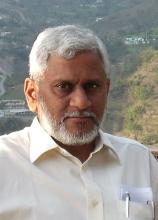
Prof. N.Raghuram

Prof. N.Raghuram

The session, “Nitrogen: Joining up for a Cleaner Environment”, was held as part of a World Environment Day dialogue series at Vigyan Bhavan here.

INMS was launched in December 2016 as a USD 60 million initiative, spearheaded by UN Environment, to support the development of international policy to improve global nitrogen management. In India, underpinning primary science to improved nitrogen use efficiency is being undertaken through an India-UK Virtual Joint Centre, funded by the Department of Biotechnology and UK’s Biotechnology and Biological Sciences Research Council.

The India Nitrogen Group recently came out with the first-ever assessment of various aspects of the issue within the country. Co-led by Prof. Raghunath, the report, among other things, showed chemical fertilizers accounted for over 77 percent of all agricultural Nitrous Oxide emissions in the country and most of the fertilizers (over 70%) went into the production of cereals, particularly rice and wheat.

Some significant developments are expected next year as members of the South Asia Co-operative Environment Programme, with the support of INMS, have developed a draft Nitrogen Resolution for submission to the fourth session of the UN Environment Assembly in Nairobi in March 2019. It calls on UN Environment to develop a coherent framework for better management of the global nitrogen cycle.  (India Science Wire)

By Sunderarajan Padmanabhan

For the latest Science, Tech news and conversations, follow Research Stash on TwitterFacebook, and subscribe to our YouTube channel 

Rate

Prof. Mark Sutton

Besides the reduced use of nitrogen-based fertilizers across the world, he suggested, there should be a more effective recycling of existing nitrogen sources such as excrement and improvement in methods to recapture nitrogen oxides and turn them into nitrates, which could be used by the chemical industry for applications like production of fertilizer.

“Addressing nitrogen challenge requires pooling technical expertise. Given the trans-boundary nature of nitrogen pollution, international co-operation is also essential if we are to make substantial progress. We must build on joint endeavors, such as INMS while learning from the international experience of others,” Sutton said.

Prof. N.Raghuram, President of the Indian Nitrogen Group, noted, “as fertilizer, nitrogen is one of the main inputs to agriculture. But inefficiencies along the food chain resulting in wastage of about 80% of nitrogen, contributing to air and water pollution as well as greenhouse gas emissions. Timely scaling up of the recent initiatives of the Indian government towards improving nitrogen fertilizer use efficiency, rural toilets, sustainable fuels etc can moderate India’s nitrogen footprint on a scale that few countries can match.”

Prof. N.Raghuram

Prof. N.Raghuram

The session, “Nitrogen: Joining up for a Cleaner Environment”, was held as part of a World Environment Day dialogue series at Vigyan Bhavan here.

INMS was launched in December 2016 as a USD 60 million initiative, spearheaded by UN Environment, to support the development of international policy to improve global nitrogen management. In India, underpinning primary science to improved nitrogen use efficiency is being undertaken through an India-UK Virtual Joint Centre, funded by the Department of Biotechnology and UK’s Biotechnology and Biological Sciences Research Council.

The India Nitrogen Group recently came out with the first-ever assessment of various aspects of the issue within the country. Co-led by Prof. Raghunath, the report, among other things, showed chemical fertilizers accounted for over 77 percent of all agricultural Nitrous Oxide emissions in the country and most of the fertilizers (over 70%) went into the production of cereals, particularly rice and wheat.

Some significant developments are expected next year as members of the South Asia Co-operative Environment Programme, with the support of INMS, have developed a draft Nitrogen Resolution for submission to the fourth session of the UN Environment Assembly in Nairobi in March 2019. It calls on UN Environment to develop a coherent framework for better management of the global nitrogen cycle.  (India Science Wire)

By Sunderarajan Padmanabhan

For the latest Science, Tech news and conversations, follow Research Stash on TwitterFacebook, and subscribe to our YouTube channel 

" }
How Ramanujan Became a Fellow of Royal Society On This Day a Century Ago

How Ramanujan Became a Fellow of Royal Society On This Day a Century Ago

Today marks the centenary of Ramanujan’s election as a Fellow of Royal Society, the world’s oldest and most respected scientific society. 

  • News
  • 6.8K
Read more
Integrating Technologies to Design Better Healthcare Interventions

Integrating Technologies to Design Better Healthcare Interventions

Researchers from the All India Institute of Medical Sciences and Indian Institute of Technology Delhi have developed a biosensor for detecting glucose in saliva samples for diabetes detection

  • News
  • 2.4K
Read more
New Analysis Says Puga Has Highest Geothermal Potential

New Analysis Says Puga Has Highest Geothermal Potential

A team of researchers from Birla Institute of Technology and Science, Pilani have used nine parameters to analyse data relating to Puga in Ladakh, Chhumathang in Jammu and Kashmir, Manikaran in Himachal Pradesh, Tattapani in Chhattisgarh, Unhavre Khed in Maharashtra and Tapoban in Uttarakhand. Based on this analysis, they have concluded that Puga has the most potential.

  • News
  • 4K
Read more

Internet is huge! Help us find great content

Newsletter

Never miss a thing! Sign up for our newsletter to stay updated.

About

Research Stash is a curated collection of tools and News for S.T.E.M researchers

Have any questions or want to partner with us? Reach us at [email protected]

Navigation

Submit