
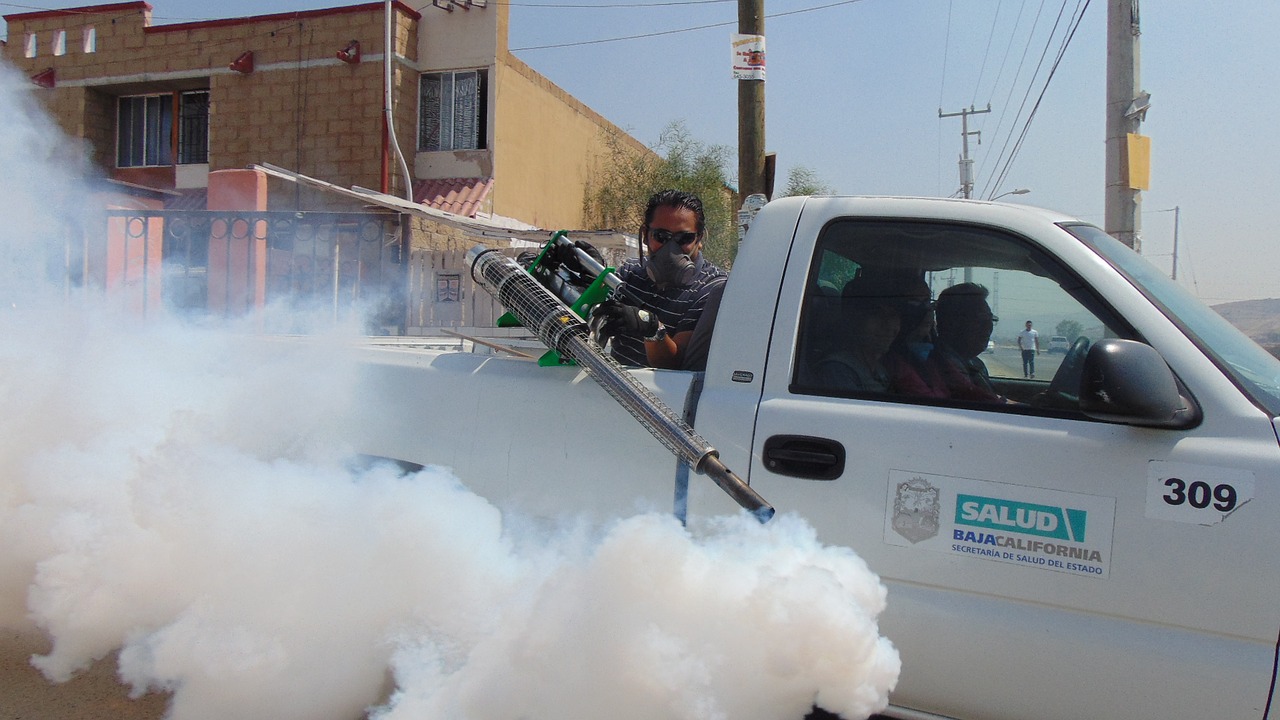
Judicious Use of Bio Insecticide May Help Control Filariasis Vector

Judicious Use of Bio Insecticide May Help Control Filariasis Vector

  • Research Stash
  • News
  • 2.3K

Filariasis is a public health problem in some parts of India. It is caused by parasitic worms which get deposited on the skin and penetrate on their own or through openings created by mosquito bites to reach the lymphatic system. Effective mosquito control can help control filariasis.

Researchers have now found that using a commercially available bioinsecticide – spinosad – in right doses can help control Culex quinquefasciatus mosquitoes that spread filariasis. Spinosad is a bio larvicide that is naturally produced and acts by killing the larvae of insects. It works by overexciting the nervous system of target insect or their larvae.

Two preparations of spinosad were selected and used in various breeding areas of the Culex mosquito such as cesspits, drains and abandoned wells in Cuddalore in Tamil Nadu where filariasis is widespread. The 20 percent emulsified concentrate preparation was found to be more effective than 12 percent suspension concentrate in providing protection.

The emulsified concentrate caused 90 to 100 percent reduction of mosquito larvae in 7-14 days in cesspits, 10-17 days in drains and 14-30 days in abandoned wells, according to results published recently in Indian Journal of Medical Research. Spinosad was also more effective than chemical insecticides.

The study was conducted by researchers at the Vector Control Research Centre of Indian Council of Medical Research (ICMR) in Puducherry, as part of WHO Pesticide Evaluation Scheme (WHOPES).

Though the cost of spinosad-based preparations is higher compared to chemical insecticides, they remain effective for a longer time, thereby reducing the frequency of application. This compensates the higher cost by minimizing operational cost. “Due to their unique action, spinosads can be used in rotation for various insect resistant management programmes and also as a part of integrated vector management wherein resources have to be utilized optimally,” the research paper said.

“These findings are important because there are far too many preparations of spinosad available in the market but there is no data on their effectiveness. Even though there are other good chemical insecticides and bio larvicides, most of them do not have a long-term effect.

Spinosad is effective and no insect has yet developed a resistance to it,” observed Dr Kamaraju Raghavendra from National Institute of Malaria Research, New Delhi, who was not connected with the study.

Monika Kundu Srivastava

For the latest Science, Tech news and conversations, follow Research Stash on TwitterFacebook, and subscribe to our YouTube channel 

The emulsified concentrate caused 90 to 100 percent reduction of mosquito larvae in 7-14 days in cesspits, 10-17 days in drains and 14-30 days in abandoned wells, according to results published recently in Indian Journal of Medical Research. Spinosad was also more effective than chemical insecticides.

The study was conducted by researchers at the Vector Control Research Centre of Indian Council of Medical Research (ICMR) in Puducherry, as part of WHO Pesticide Evaluation Scheme (WHOPES).

Though the cost of spinosad-based preparations is higher compared to chemical insecticides, they remain effective for a longer time, thereby reducing the frequency of application. This compensates the higher cost by minimizing operational cost. “Due to their unique action, spinosads can be used in rotation for various insect resistant management programmes and also as a part of integrated vector management wherein resources have to be utilized optimally,” the research paper said.

“These findings are important because there are far too many preparations of spinosad available in the market but there is no data on their effectiveness. Even though there are other good chemical insecticides and bio larvicides, most of them do not have a long-term effect.

Spinosad is effective and no insect has yet developed a resistance to it,” observed Dr Kamaraju Raghavendra from National Institute of Malaria Research, New Delhi, who was not connected with the study.

Monika Kundu Srivastava

For the latest Science, Tech news and conversations, follow Research Stash on TwitterFacebook, and subscribe to our YouTube channel 

" }

WCIT 2017 ICT Award Winners Shared their Dreams of Future Digital Economy Revolution

The three-day event WCIT 2017 was successfully concluded yesterday and the main highlight of the event was the WCIT 2017 ITC award ceremony.  The 21st World Congress on Information Technology kick-started in Taipei on September 11th. The 3-day event was aimed at bringing in the latest trends of digital economy development to the island nation.

  • News
  • 2.3K
Read more

Luxturna Approved By FDA To Treat Inherited Form Of Blindness : Shots – Health News : NPR

The Food and Drug Administration approved Luxturna, a genetically modified virus that restores by ferrying a healthy gene into the eyes of patients born with a genetic disease that impairs sight.

  • News
  • 1.9K
Read more
Thar Desert Was Once Ever Tropical Forest, New Fossil Discovery Reveals

Thar Desert Was Once Ever Tropical Forest, New Fossil Discovery Reveals

Western Rajasthan in the present age is well known for the Thar Desert. But this was not the case in the past. Indian researchers have discovered a set of rare wood boring trace fossils in Barmer region which reveal that this area was under tropical forest and even had vast river network 55 million years ago.

  • News
  • 2.4K
Read more

Internet is huge! Help us find great content

Newsletter

Never miss a thing! Sign up for our newsletter to stay updated.

About

Research Stash is a curated collection of tools and News for S.T.E.M researchers

Have any questions or want to partner with us? Reach us at [email protected]

Navigation

Submit