
Enzyme from Yak Cheese Can Boost Nutritional Value of Cereals

Enzyme from Yak Cheese Can Boost Nutritional Value of Cereals

  • Research Stash
  • News
  • 2.7K

Researchers at the Indian Institute of Technology, Roorkee, have identified a new enzyme from yak cheese which promises to help improve the nutritional value of cereals by improving the bioavailability of vital minerals.
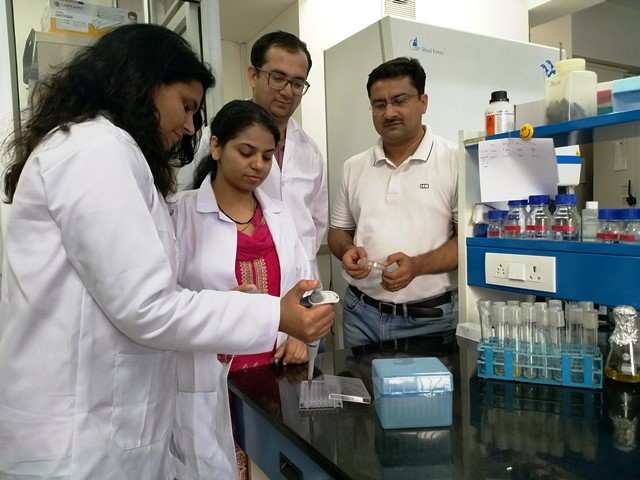
Members of research team at IIT Roorkee.

Members of research team at IIT Roorkee

Deficiency of micronutrients like phosphorous, iron, calcium and zinc is a major health issue, particularly for vegetarians. In plants, phosphorus is stored mainly as organic phosphorous called phytate, which is an anti-nutritional factor (ANF).

Nuts, seeds, beans and whole grains are rich in phosphorous, while vegetables and fruits have lesser quantity. Despite this, people dependent on vegetarian diets not only exhibit the deficiency of phosphorous as well as other minerals. This is because humans lack an enzyme called phytase needed to convert phytate into free phosphorous for absorption by the body.

The newly identified enzyme promises to address this problem. It has been found to effectively dephytinize the phytate and generate free phosphorous. Researchers have also shown that it also helps to increase the bioavailability of iron, zinc, magnesium, and calcium.

Speaking to India Science Wire, Dr. Naveen Kumar Navani, who led the research at IIT Roorkee, said the enzyme was identified, cloned and characterized from a probiotic bacterium called Lactobacillus fermentum NKN51. The bacterium was isolated from ethnic cheese (called churpee) made from the milk of Himalayan yak from Khardong village in Nubra valley, Leh. The enzyme has been named `phyLf’.

“Dephytinisation of durum wheat and finger millet flour with the purified enzyme, followed by an in-vitro model of gastric digestion showed increased levels of bio-accessibility and dialyzability of iron, zinc, magnesium and calcium contents”, he said.

Asked how he got around working on ethnic fermented food churpee, Dr. Navani said he thought of studying milk products from yak as he had a friend who hailed from Nubra valley.

Conventionally, phytase enzymes are derived from fungi and are considered fit for use to improve nutritive values of poultry and other livestock feeds. “We were looking for a source that could be used to improve food items consumed by humans – a food grade bacterium.

We tried samples of milk and other dairy products of the cow, buffalo, sheep, and goat from different parts of the country. We could isolate some enzymes but they were not giving satisfactory activity. It was then we tapped a friend who from Nubra valley and requested him to get samples of yak milk and its derivatives,” recalled Dr. Navani.

The research was funded by the National Agricultural Science Fund of Indian Council of Agriculture Research (ICAR) and Uttarakhand Council of Science and Technology. The researchers have published results of their work in a recent issue of journal Bioresource Technology. Besides, Dr. Navani, the team included Rekha Sharma, Piyush Kumar and Vandana Kaushal of IIT, Roorkee, and Rahul Das of Indian Institute of Science Education and Research, Kolkata.

As for the next step, Dr. Navani said he and his team were now working in collaboration with Dr. Ajit Yadav of ICAR’s Central Avian Research Institute at Izzatnagar to apply this purified phytase enzyme along with other plant-derived antimicrobials to see their efficacy on reducing the load of pathogenic bacteria like Salmonella and improving the growth performance of poultry.

In the long term, this enzyme could be used in enhancing the micronutrient availability to infants, pregnant women and the elderly. (India Science Wire)

By Sunderarajan Padmanabhan

Journal article

A novel protein tyrosine phosphatase-like phytase from Lactobacillus fermentum NKN51: Cloning, characterization, and application in mineral release for food technology applications

For the latest Science, Tech news and conversations, follow Research Stash on TwitterFacebook, and subscribe to our YouTube channel 

Rate

Deficiency of micronutrients like phosphorous, iron, calcium and zinc is a major health issue, particularly for vegetarians. In plants, phosphorus is stored mainly as organic phosphorous called phytate, which is an anti-nutritional factor (ANF).

Nuts, seeds, beans and whole grains are rich in phosphorous, while vegetables and fruits have lesser quantity. Despite this, people dependent on vegetarian diets not only exhibit the deficiency of phosphorous as well as other minerals. This is because humans lack an enzyme called phytase needed to convert phytate into free phosphorous for absorption by the body.

The newly identified enzyme promises to address this problem. It has been found to effectively dephytinize the phytate and generate free phosphorous. Researchers have also shown that it also helps to increase the bioavailability of iron, zinc, magnesium, and calcium.

Speaking to India Science Wire, Dr. Naveen Kumar Navani, who led the research at IIT Roorkee, said the enzyme was identified, cloned and characterized from a probiotic bacterium called Lactobacillus fermentum NKN51. The bacterium was isolated from ethnic cheese (called churpee) made from the milk of Himalayan yak from Khardong village in Nubra valley, Leh. The enzyme has been named `phyLf’.

“Dephytinisation of durum wheat and finger millet flour with the purified enzyme, followed by an in-vitro model of gastric digestion showed increased levels of bio-accessibility and dialyzability of iron, zinc, magnesium and calcium contents”, he said.

Asked how he got around working on ethnic fermented food churpee, Dr. Navani said he thought of studying milk products from yak as he had a friend who hailed from Nubra valley.

Conventionally, phytase enzymes are derived from fungi and are considered fit for use to improve nutritive values of poultry and other livestock feeds. “We were looking for a source that could be used to improve food items consumed by humans – a food grade bacterium.

We tried samples of milk and other dairy products of the cow, buffalo, sheep, and goat from different parts of the country. We could isolate some enzymes but they were not giving satisfactory activity. It was then we tapped a friend who from Nubra valley and requested him to get samples of yak milk and its derivatives,” recalled Dr. Navani.

The research was funded by the National Agricultural Science Fund of Indian Council of Agriculture Research (ICAR) and Uttarakhand Council of Science and Technology. The researchers have published results of their work in a recent issue of journal Bioresource Technology. Besides, Dr. Navani, the team included Rekha Sharma, Piyush Kumar and Vandana Kaushal of IIT, Roorkee, and Rahul Das of Indian Institute of Science Education and Research, Kolkata.

As for the next step, Dr. Navani said he and his team were now working in collaboration with Dr. Ajit Yadav of ICAR’s Central Avian Research Institute at Izzatnagar to apply this purified phytase enzyme along with other plant-derived antimicrobials to see their efficacy on reducing the load of pathogenic bacteria like Salmonella and improving the growth performance of poultry.

In the long term, this enzyme could be used in enhancing the micronutrient availability to infants, pregnant women and the elderly. (India Science Wire)

By Sunderarajan Padmanabhan

Journal article

A novel protein tyrosine phosphatase-like phytase from Lactobacillus fermentum NKN51: Cloning, characterization, and application in mineral release for food technology applications

For the latest Science, Tech news and conversations, follow Research Stash on TwitterFacebook, and subscribe to our YouTube channel 
" }
How Dust Storms Are Adding to Pollution Woes of North India

How Dust Storms Are Adding to Pollution Woes of North India

During May 2018, the national capital region and parts of North India were lashed by three strong dust storms in quick succession. In addition to widespread damage they caused to property and human life, these storms affected changes in air quality and atmospheric chemistry which may be harmful to human health, a new study has reported.

  • News
  • 2K
Read more
Dr Rajanish Giri in his lab at IIT-Mandi

Scientists Find Antimalarial Drug May Be Repurposed to Treat Zika

In their search for a possible treatment for Zika virus infection, a team of Indian researchers has identified a viral protein that can be targeted by an already available antimalarial drug, hydroxychloroquine

  • News
  • 2.9K
Read more
Monsoon Modeling Is Not Like the ‘Blind Men and Elephant’ Story

Monsoon Modeling Is Not Like the ‘Blind Men and Elephant’ Story

In a few weeks from now, monsoon forecasts will begin. These forecasts are based on calculations made by computer modeling.

  • News
  • 1.6K
Read more

Internet is huge! Help us find great content

Newsletter

Never miss a thing! Sign up for our newsletter to stay updated.

About

Research Stash is a curated collection of tools and News for S.T.E.M researchers

Have any questions or want to partner with us? Reach us at hello@researchstash.com

Navigation

Submit