
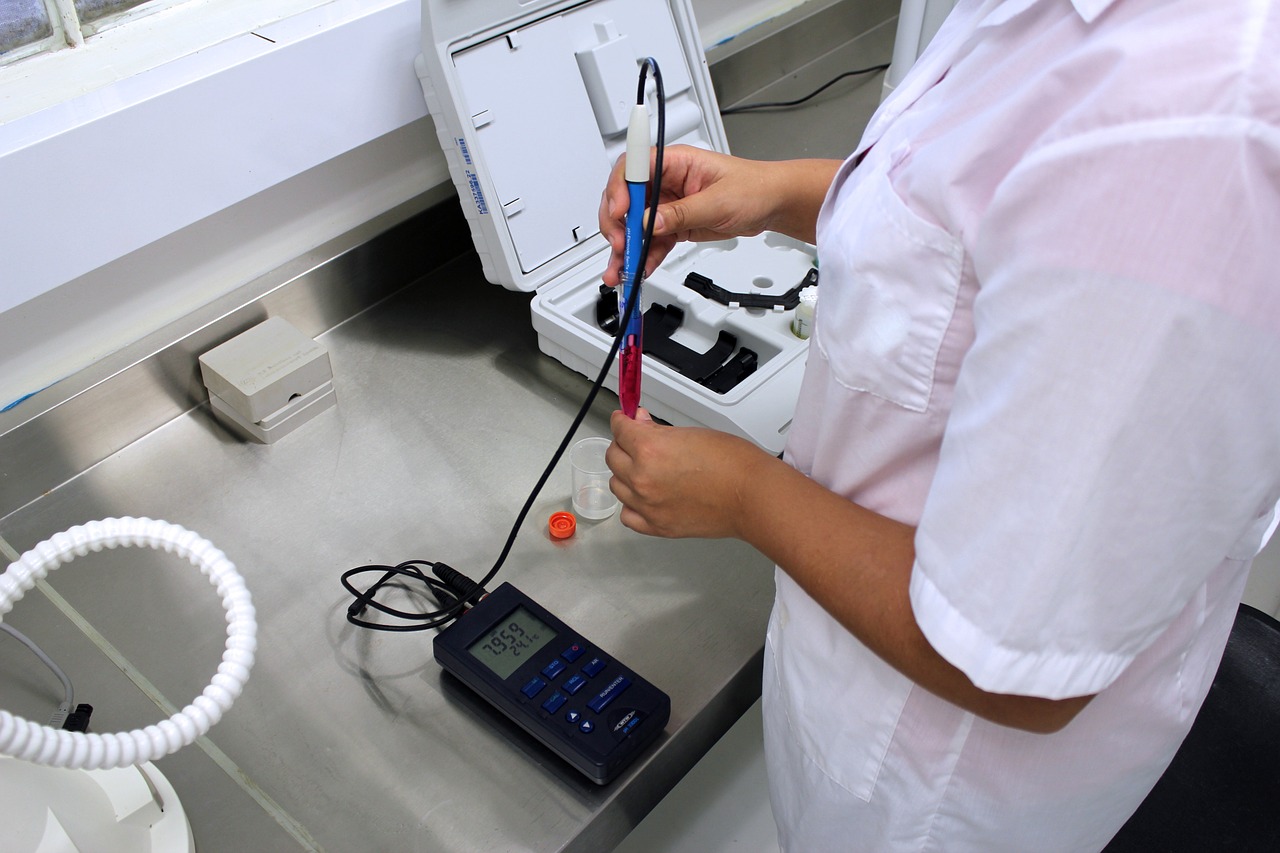
New Method Developed For Faster Typhoid Diagnosis

New Method Developed For Faster Typhoid Diagnosis

  • Research Stash
  • News
  • 4K

Indian scientists have developed a rapid and accurate method for diagnosis of Salmonella typhi bacteria which causes enteric fever and typhoid.

The new test, developed by scientists at the Indian Institute of Technology, Delhi, requires minimal blood quantity, besides being accurate and potentially cost-effective. Blood-culture based diagnosis of enteric fever, used at present, is time-consuming and requires skilled practitioners and costly instruments. Besides, these methods sometimes even fail to detect and identify the bacteria correctly.

Subscribe to our YouTube Channel

In blood culture tests for diagnosis of enteric fever, once the bacteria are separated, identification depends on various biochemical and serological tests. Most serological methods, which look for antibodies in the body, are unable to pick up an infection in the early stages as the numbers are low. The lack of specific, rapid and affordable diagnostic tests leads to inappropriate use of antibiotics in all fevers cases.

The new method uses magnetic nanoparticles coupled with antibodies. In tests, it was found that over 65 percent bacteria cells got bound to nanoparticles within 30 minutes. The bacteria were separated from nanoparticles using magnets by heating it at 65°C for 45 minutes. The cells were reheated at 100°C for 5 minutes to break down the covering of bacteria to recover the genetic material. Then the liquid was collected and put through the loop-mediated isothermal amplification (LAMP) process to increase in availability of genetic material required for identification of the bacteria.

This method is quick as there is no need for multiple cycles of rapid heating and cooling as required in traditional methods. The minimum time taken for conventional methods to confirm the presence of disease-causing bacteria is 72 hours while the new method confirmed it in 6 hours, according to results of the study published in journal PLOS One.

The method, according to the study, has the potential for clinical use due to its high detection levels and ability to identify cells which can cause disease in a quicker turnaround time. In future, it can be developed into a handheld and portable device.

The research team included Dinesh Kalyanasundaram, Avinash Kaur and Ravikrishnan Elangovan (IIT, Delhi); Arti Kapil and Sandeep Jha (AIIMS, New Delhi). The study was funded by the Naval Research Board, Department of Science and Technology (DST) and Indo-German Science and Technology. (India Science Wire)

By Monika Kundu Srivastava

Journal Article

Highly-sensitive detection of Salmonella typhi in clinical blood samples by magnetic nanoparticle-based enrichment and in-situ measurement of isothermal amplification of nucleic acids

For the latest Science, Tech news and conversations, follow Research Stash on TwitterFacebook, and subscribe to our YouTube channel 
Rate

The new method uses magnetic nanoparticles coupled with antibodies. In tests, it was found that over 65 percent bacteria cells got bound to nanoparticles within 30 minutes. The bacteria were separated from nanoparticles using magnets by heating it at 65°C for 45 minutes. The cells were reheated at 100°C for 5 minutes to break down the covering of bacteria to recover the genetic material. Then the liquid was collected and put through the loop-mediated isothermal amplification (LAMP) process to increase in availability of genetic material required for identification of the bacteria.

This method is quick as there is no need for multiple cycles of rapid heating and cooling as required in traditional methods. The minimum time taken for conventional methods to confirm the presence of disease-causing bacteria is 72 hours while the new method confirmed it in 6 hours, according to results of the study published in journal PLOS One.

The method, according to the study, has the potential for clinical use due to its high detection levels and ability to identify cells which can cause disease in a quicker turnaround time. In future, it can be developed into a handheld and portable device.

The research team included Dinesh Kalyanasundaram, Avinash Kaur and Ravikrishnan Elangovan (IIT, Delhi); Arti Kapil and Sandeep Jha (AIIMS, New Delhi). The study was funded by the Naval Research Board, Department of Science and Technology (DST) and Indo-German Science and Technology. (India Science Wire)

By Monika Kundu Srivastava

Journal Article

Highly-sensitive detection of Salmonella typhi in clinical blood samples by magnetic nanoparticle-based enrichment and in-situ measurement of isothermal amplification of nucleic acids

For the latest Science, Tech news and conversations, follow Research Stash on TwitterFacebook, and subscribe to our YouTube channel 
" }
New Technique Developed to Monitor Coastal Landforms

New Technique Developed to Monitor Coastal Landforms

Indian Scientists have developed a remote sensing technique that uses satellite data to delineate between various coastal landforms like beaches, mangroves, and marshes.

  • News
  • 1.9K
Read more
Study Gains New Insights into A Cosmic Puzzle

Study Gains New Insights into A Cosmic Puzzle

Scientists studied the 2nd brightest flare observed in X-ray in April-May 2020 and detected very interesting behavior of the X-ray spectrum during its flaring and non-flaring states

  • News
  • 1.5K
Read more
Astronomers witness galaxy megamerger

Astronomers Have Witnessed the Beginnings of A Gargantuan Cosmic Pileup

Peering deep into space -- an astounding 90 percent of the way across the observable universe -- astronomers have witnessed the beginnings of a gargantuan cosmic pileup, the impending collision of 14 young, starbursting galaxies.

  • News
  • 2.2K
Read more

Internet is huge! Help us find great content

Newsletter

Never miss a thing! Sign up for our newsletter to stay updated.

About

Research Stash is a curated collection of tools and News for S.T.E.M researchers

Have any questions or want to partner with us? Reach us at hello@researchstash.com

Navigation

Submit