Indian Capital to Start Monitoring Pollen Pollution

Indian Capital to Start Monitoring Pollen Pollution

  • Research Stash
  • News
  • 2.8K

Delhi is constantly struggling with the threat of air pollution containing harmful gases and particulate matter. In addition, pollen grains of different plant species spread in the air during early winter and spring affecting people suffering from respiratory diseases.
Indian Capital to Start Monitoring Pollen Pollution

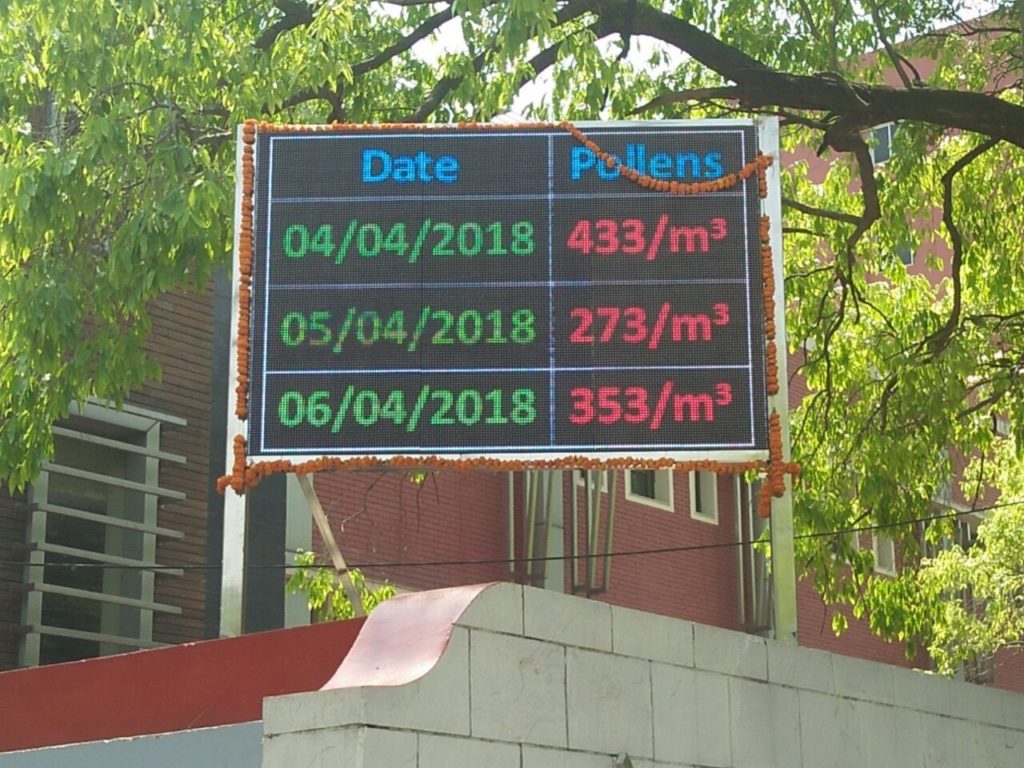
A digital pollen count monitor for the public has been set up at Vallabhbhai Patel Chest Institute (VPCI) at Delhi University. The monitor was inaugurated by Union Minister of Health J.P. Nadda on the occasion of 69th Foundation Day of VPCI.

Now pollen count would be displayed at the hospital and the institute website so that people who are predisposed to allergy caused by pollens can take preventive measures.

“While much effort is being made towards raising awareness on the impact of pollution on health, effects of pollen on patients with respiratory problems is not being given much importance even though it affects a significant number of patients. Apart from vehicular and industrial emissions, increased pollen level in the atmosphere also triggers asthma and allergic reactions. Pollen grains, fungal spores, insect debris, dust mites and animal epithelial are also responsible agents of pollution.” Says, Prof. Rajkumar, acting director of VPCI.

According to Prof. Kumar, “The pollen concentration starts increasing in the months of September, October, and November and starts declining in December. Pollen level again aggravates during the spring season. Increase in pollen count leads to increase in the number of patients suffering from respiratory problems.

The digital display board at the institute will enable people with chronic allergies to be better prepared for a dusty or pollen day on the road. It will also help create awareness about pollen concentration in the air, which is one of the major reasons for repeated attacks in asthma patients.”

“Now people can check the pollen count display and take preventive measures, such as taking anti-histamines or staying indoors and minimize health risk, said Prof. Rajkumar, who is also Head of the Pulmonary Medicine Department and National Center of Allergy Asthma and Immunology at VPCI.

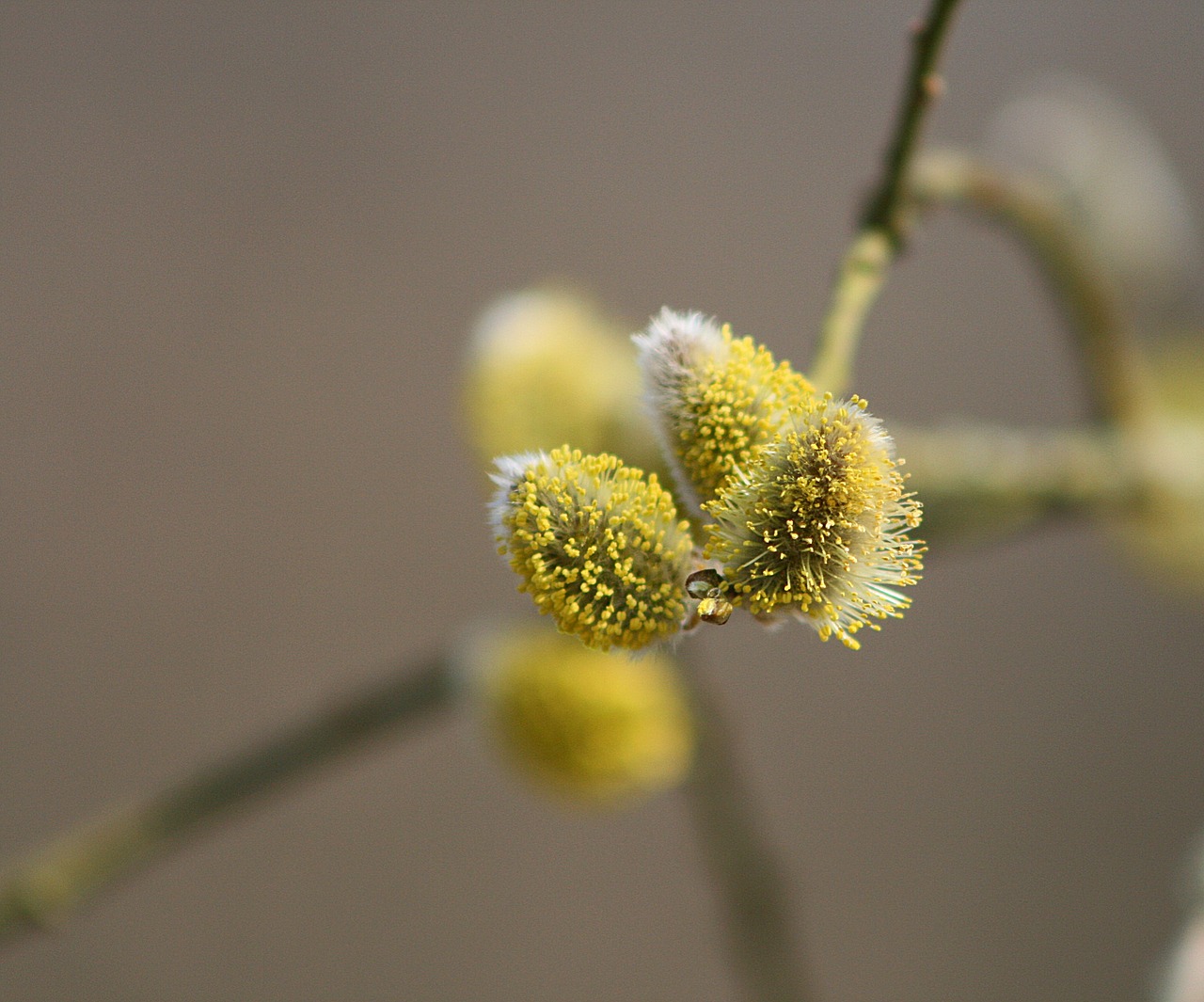
Pollens are the fine powder that comes from the stamen of flowering plants. They can trigger allergic reactions, such as a runny nose, sore throat, coughing, headaches, and asthma. Pollen count can be an indispensable resource to manage symptoms related to respiratory diseases and protect lungs in such patients, experts say.

During his visit to the institute, Mr. Nadda also stressed that the VPCI should help develop innovative policies to curb tuberculosis and to develop public awareness programs for prevention and treatment of chest diseases. Institute should have research work in collaboration with other institutes of reputes, added Nadda. (India Science Wire)

Umashankar Mishra

For the latest Science, Tech news and conversations, follow Research Stash on TwitterFacebook, and subscribe to our YouTube channel 

Rate

Now pollen count would be displayed at the hospital and the institute website so that people who are predisposed to allergy caused by pollens can take preventive measures.

“While much effort is being made towards raising awareness on the impact of pollution on health, effects of pollen on patients with respiratory problems is not being given much importance even though it affects a significant number of patients. Apart from vehicular and industrial emissions, increased pollen level in the atmosphere also triggers asthma and allergic reactions. Pollen grains, fungal spores, insect debris, dust mites and animal epithelial are also responsible agents of pollution.” Says, Prof. Rajkumar, acting director of VPCI.

According to Prof. Kumar, “The pollen concentration starts increasing in the months of September, October, and November and starts declining in December. Pollen level again aggravates during the spring season. Increase in pollen count leads to increase in the number of patients suffering from respiratory problems.

The digital display board at the institute will enable people with chronic allergies to be better prepared for a dusty or pollen day on the road. It will also help create awareness about pollen concentration in the air, which is one of the major reasons for repeated attacks in asthma patients.”

“Now people can check the pollen count display and take preventive measures, such as taking anti-histamines or staying indoors and minimize health risk, said Prof. Rajkumar, who is also Head of the Pulmonary Medicine Department and National Center of Allergy Asthma and Immunology at VPCI.

Pollens are the fine powder that comes from the stamen of flowering plants. They can trigger allergic reactions, such as a runny nose, sore throat, coughing, headaches, and asthma. Pollen count can be an indispensable resource to manage symptoms related to respiratory diseases and protect lungs in such patients, experts say.

During his visit to the institute, Mr. Nadda also stressed that the VPCI should help develop innovative policies to curb tuberculosis and to develop public awareness programs for prevention and treatment of chest diseases. Institute should have research work in collaboration with other institutes of reputes, added Nadda. (India Science Wire)

Umashankar Mishra

For the latest Science, Tech news and conversations, follow Research Stash on TwitterFacebook, and subscribe to our YouTube channel 
" }
This Amino Acid Can Help Mung Bean Plants Withstand Heat Stress

This Amino Acid Can Help Mung Bean Plants Withstand Heat Stress

Researchers have found that the reproductive functions of mung bean plants were reduced upon heat stress and that this damage could be reversed by application of GABA, a naturally occurring amino acid, to roots and leaves

  • News
  • 2.2K
Read more
Children participating in quiz during Sci-Connect in Gangtok this week

Making Science Education Fun for Schools Kids in NE India

In order to promote scientific temper and original thinking in school kids, a programme is underway in remote areas of the Northeast. Children are shown a series of short films on a range of subjects, and then a quiz competition is held along with hands-on activities

  • News
  • 2.1K
Read more
Eggshell-Derived Nano Particles Can Be Used For Drug Delivery

Eggshell-Derived Nano Particles Can Be Used For Drug Delivery

Eggshells are among the most commonly discarded kitchen waste. Now scientists are putting eggshells to some novel use – drug delivery – by deriving nanoparticles out of them.

  • News
  • 2.8K
Read more

Internet is huge! Help us find great content

Newsletter

Never miss a thing! Sign up for our newsletter to stay updated.

About

Research Stash is a curated collection of tools and News for S.T.E.M researchers

Have any questions or want to partner with us? Reach us at hello@researchstash.com

Navigation

Submit