Creative ideas and innov¬ations on display at Rashtrapati Bhawan

Creative Ideas and Innovations on Display at Rashtrapati Bhawan

  • Research Stash
  • News
  • 2.3K

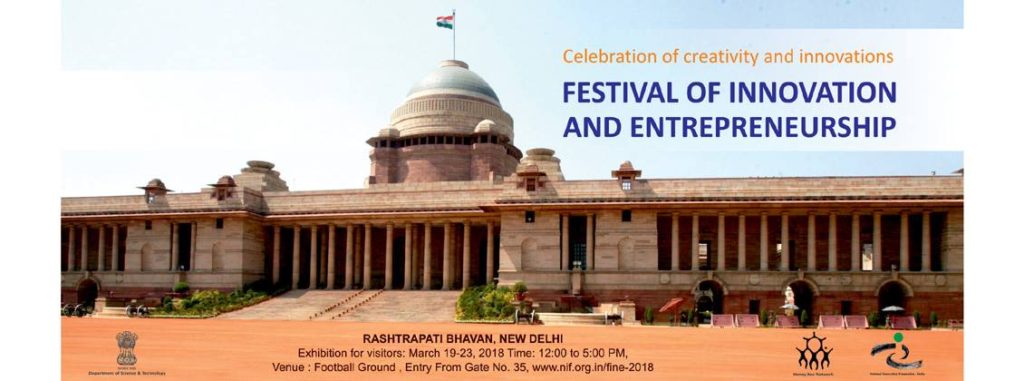
Rashtrapati Bhawan, the presidential palace in the heart of the national capital, usually attracts a large number of visitors when flowers bloom in its famous Mughal Gardens. This week creative ideas and innovations are blooming in the Rashtrapati Bhawan which is hosting the Festival of Innovation and Entrepreneurship (FINE).
Festival of Innovation and Entrepreneurship 2018

The festival is an initiative to recognize, showcase and reward innovations and to promote a supportive ecosystem for innovators from all over the country. It is being organized by the President’s office in association with the Department of Science and Technology (DST) and the National Innovation Foundation (NIF).

“It is part of an effort to inculcate a culture of innovation in every aspect of Indian society,” President Ram Nath Kovind observed while inaugurating the festival. At the same time, he said “innovations by themselves are not enough. We must also build an ecosystem for converting innovations into enterprises. This requires support for start-ups and for incubating young innovators.” The festival this year has been designed to bring all stakeholders in the innovation chain together.

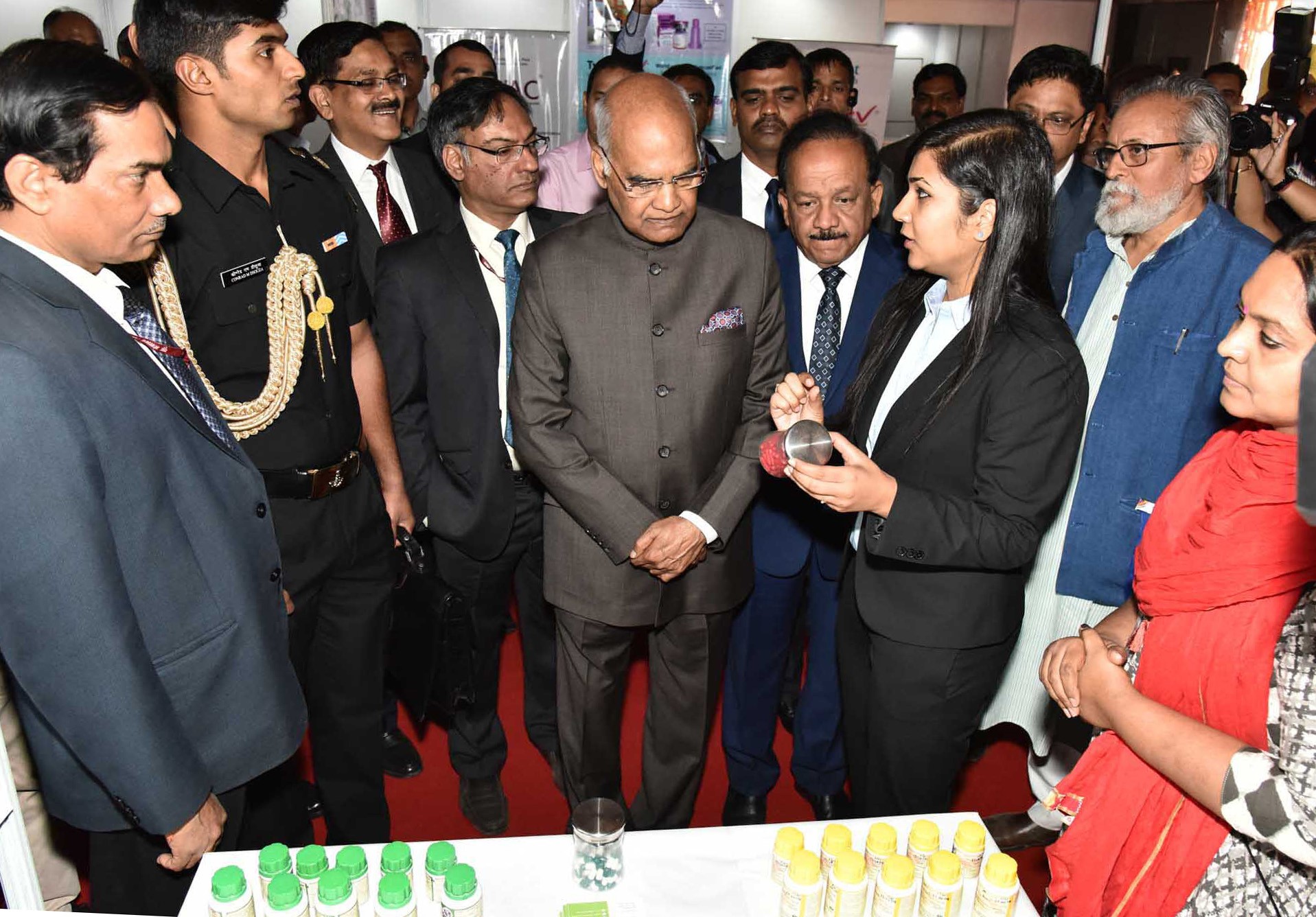
The President inaugurated an exhibition of innovations and also presented the Gandhian Young Technological Innovation (GYTI) Awards to innovators.

Dr. Ashutosh Sharma, secretary, DST, pointed out that the festival this year had undergone a qualitative transformation, by bringing together all participants in the innovation chain – from children and grassroots innovators to angel investors and startups. The roundtable discussions have been specifically designed to brainstorm different aspects and come up with actionable suggestions. Sanjay Kothari, the secretary to the President, added that entrepreneurs, members of innovation clubs and research scholars have also been invited to join the discussions.

Prof Anil K Gupta, executive vice chairperson of NIF, said “for the first time, the usual number of exhibits which used to be around 70-80 has been more than doubled. The office of the President has decided to give visibility, voice, and velocity to the much larger number of innovations from and for grassroots, besides some on the technological edge by young tech students.” In addition, he said, there is a special stress on the creativity of communities and agencies working with bamboo, medicinal and aromatic plants and associated enterprises.

Dr. Raghunath Mashelkar, the chairperson of NIF, said innovations which had been conferred the GYTI awards were examples of ‘affordable excellence’. The awards recognize technological excellence with social relevance among students. Over 2900 entries in 54 technological domains were received from over 300 universities and institutions. (India Science Wire)

By Dinesh C Sharma

For the latest Science, Tech news and conversations, follow Research Stash on TwitterFacebook, and subscribe to our YouTube channel 
Rate

“It is part of an effort to inculcate a culture of innovation in every aspect of Indian society,” President Ram Nath Kovind observed while inaugurating the festival. At the same time, he said “innovations by themselves are not enough. We must also build an ecosystem for converting innovations into enterprises. This requires support for start-ups and for incubating young innovators.” The festival this year has been designed to bring all stakeholders in the innovation chain together.

The President inaugurated an exhibition of innovations and also presented the Gandhian Young Technological Innovation (GYTI) Awards to innovators.

Dr. Ashutosh Sharma, secretary, DST, pointed out that the festival this year had undergone a qualitative transformation, by bringing together all participants in the innovation chain – from children and grassroots innovators to angel investors and startups. The roundtable discussions have been specifically designed to brainstorm different aspects and come up with actionable suggestions. Sanjay Kothari, the secretary to the President, added that entrepreneurs, members of innovation clubs and research scholars have also been invited to join the discussions.

Prof Anil K Gupta, executive vice chairperson of NIF, said “for the first time, the usual number of exhibits which used to be around 70-80 has been more than doubled. The office of the President has decided to give visibility, voice, and velocity to the much larger number of innovations from and for grassroots, besides some on the technological edge by young tech students.” In addition, he said, there is a special stress on the creativity of communities and agencies working with bamboo, medicinal and aromatic plants and associated enterprises.

Dr. Raghunath Mashelkar, the chairperson of NIF, said innovations which had been conferred the GYTI awards were examples of ‘affordable excellence’. The awards recognize technological excellence with social relevance among students. Over 2900 entries in 54 technological domains were received from over 300 universities and institutions. (India Science Wire)

By Dinesh C Sharma

For the latest Science, Tech news and conversations, follow Research Stash on TwitterFacebook, and subscribe to our YouTube channel 

" }
Eminent Theoretical Physicist E.C.G.Sudarshan Passes Away

Eminent Theoretical Physicist E.C.G.Sudarshan Passes Away

The world of science has lost an eminent physicist with the passing away of Prof. E.C.G.Sudershan, who was nominated for Nobel Prize several times but missed the coveted honor every time.

  • News
  • 5.7K
Read more
Ten Things You Must Know About the Total Lunar Eclipse on 27th July 2018

Ten Things You Must know about the upcoming Total Lunar Eclipse

The Total Lunar eclipse on the intervening night of July 27 and 28 will last about 103 minutes and be the longest for the 21st century. The longest total lunar eclipse of the last century happened in its last year on July 16, 2000.

  • News
  • 3.7K
Read more
Researchers Have Designed New Technology to Detect Chikungunya Virus

Researchers Have Designed New Technology to Detect Chikungunya Virus

Indian scientists have developed a biosensor technique which can potentially help in detecting Chikungunya virus. According to the scientists, the technique can be used to develop a point of care device for rapid identification of the dreaded disease.

  • News
  • 3K
Read more

Internet is huge! Help us find great content

Newsletter

Never miss a thing! Sign up for our newsletter to stay updated.

About

Research Stash is a curated collection of tools and News for S.T.E.M researchers

Have any questions or want to partner with us? Reach us at [email protected]

Navigation

Submit