Squirrels Are Using Plastic to Build Their Nests

Squirrels Are Using Plastic to Build Their Nests

  • Research Stash
  • News
  • 4.1K

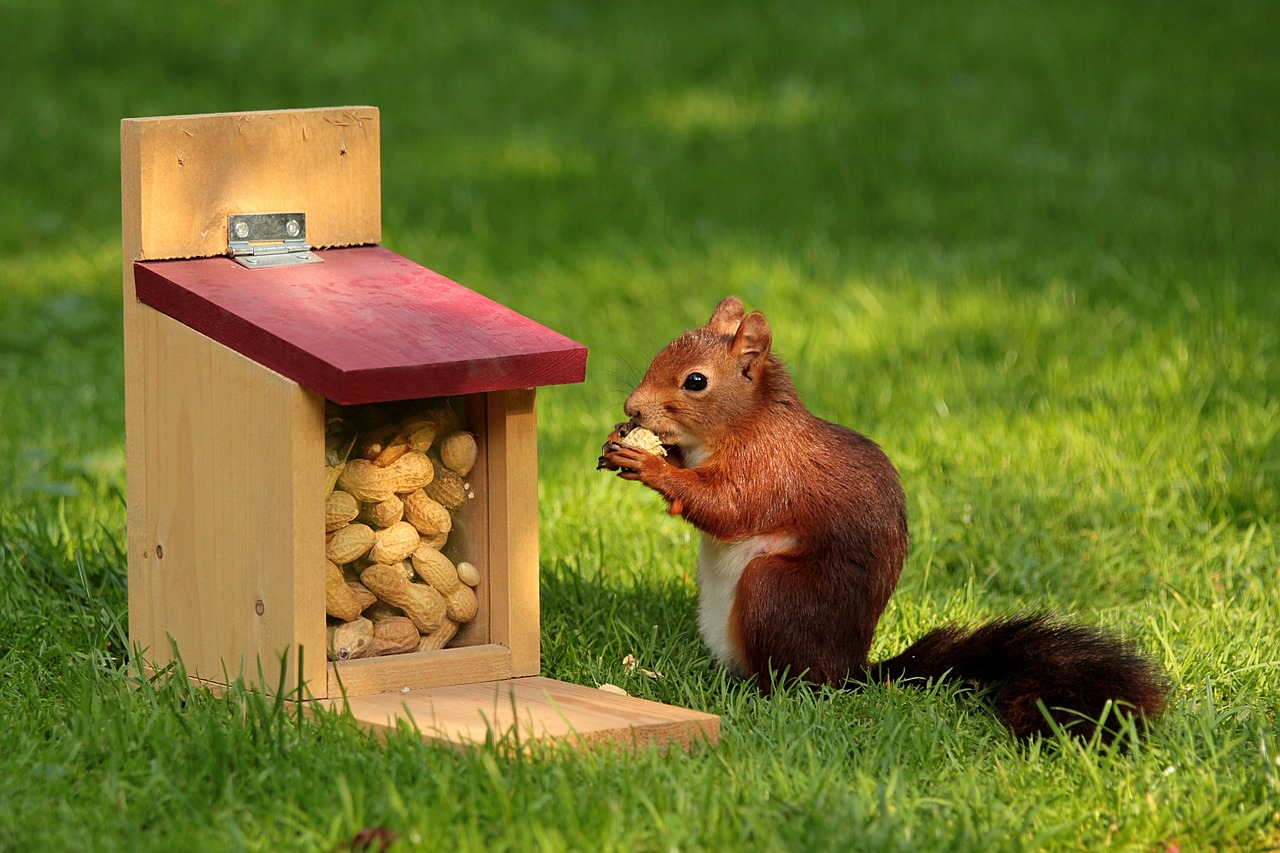
Plastics have invaded our environment like never before. Now scientists have discovered that squirrels in urban areas are using plastic waste as a building material for their nests.

Indian palm squirrels (Funambulus palmarum) are using plastic bags, plastic threads and cigar butts along with natural materials in urban areas as nesting materials instead of leaves, twigs, shredded bark, mosses and other soft materials.

Dr. Mewa Singh

Dr. Mewa Singh

Dr. Mewa Singh and K Mohan at the Bio-psychology Laboratory and Institute of Excellence, University of Mysore, have made this observation in female palm squirrels in Mysuru, and have reported their findings in the latest issue of journal Current Science.

Researchers observed that squirrels collected a long plastic sheet from a small dump yard, carefully checked it and tore it into the appropriate size and shape. Thereafter, the female squirrel rolled the entire plastic material into her mouth and carried it to the nesting site where she spread the snipped pieces of plastic and built her nest.

Two more nests which were built using similar plastic material at the same location were also found. In another place, which was also located near a dump area, it was discovered that only one of the four nests on the tree was built completely with natural materials.

All shelters, whether they are houses made by humans or nests by birds or squirrels are mainly for the protection. Nests, like houses, differ in shape, size, and materials used to build them. The type of nest, the materials used and the architectural design provide important insights into the life of a species and upbringing of young ones. Just as humans make houses using the locally available material, the Indian palm squirrel too is doing so in urban areas where trees are scarce but plastic material is not.

“The proportion of anthropogenic (artificial) material used in nest building is directly related to the extent of urbanization. Although Indian palm squirrels usually build nests using natural materials, these squirrels appear to be adapting themselves to changes in habitat by using a plastic material to survive. The use of plastic for nest building by the palm squirrel is a typical example of the struggle for existence in altered habitats,” the research study has explained.

Dr. Mewa Singh has been a recipient of J C Bose Fellowship awarded by Science and Engineering Research Board (SERB), Department of Science and Technology (DST). (India Science Wire)

By Monika Kundu Srivastava

For the latest Science, Tech news and conversations, follow Research Stash on TwitterFacebook, and subscribe to our YouTube channel 

 

Rate

Dr. Mewa Singh

Dr. Mewa Singh and K Mohan at the Bio-psychology Laboratory and Institute of Excellence, University of Mysore, have made this observation in female palm squirrels in Mysuru, and have reported their findings in the latest issue of journal Current Science.

Researchers observed that squirrels collected a long plastic sheet from a small dump yard, carefully checked it and tore it into the appropriate size and shape. Thereafter, the female squirrel rolled the entire plastic material into her mouth and carried it to the nesting site where she spread the snipped pieces of plastic and built her nest.

Two more nests which were built using similar plastic material at the same location were also found. In another place, which was also located near a dump area, it was discovered that only one of the four nests on the tree was built completely with natural materials.

All shelters, whether they are houses made by humans or nests by birds or squirrels are mainly for the protection. Nests, like houses, differ in shape, size, and materials used to build them. The type of nest, the materials used and the architectural design provide important insights into the life of a species and upbringing of young ones. Just as humans make houses using the locally available material, the Indian palm squirrel too is doing so in urban areas where trees are scarce but plastic material is not.

“The proportion of anthropogenic (artificial) material used in nest building is directly related to the extent of urbanization. Although Indian palm squirrels usually build nests using natural materials, these squirrels appear to be adapting themselves to changes in habitat by using a plastic material to survive. The use of plastic for nest building by the palm squirrel is a typical example of the struggle for existence in altered habitats,” the research study has explained.

Dr. Mewa Singh has been a recipient of J C Bose Fellowship awarded by Science and Engineering Research Board (SERB), Department of Science and Technology (DST). (India Science Wire)

By Monika Kundu Srivastava

For the latest Science, Tech news and conversations, follow Research Stash on TwitterFacebook, and subscribe to our YouTube channel 
 

" }
New Data Processing Technique to Accurately Measure Soot

New Data Processing Technique to Accurately Measure Soot

Researchers from the IIT, Bombay, have demonstrated a new technique to effectively reduce measurement errors when soot is present in low amounts.

  • News
  • 1.7K
Read more
Punjab – Cradle of Science Popularisation in India

Punjab – Cradle of Science Popularisation in India

As Punjab hosts India’s largest science outreach event this week – annual session of the Indian Science Congress at Phagwara – it is time to recall how the state played a pioneering role in connecting science with people a century ago

  • News
  • 2.8K
Read more

Luxturna Approved By FDA To Treat Inherited Form Of Blindness : Shots – Health News : NPR

The Food and Drug Administration approved Luxturna, a genetically modified virus that restores by ferrying a healthy gene into the eyes of patients born with a genetic disease that impairs sight.

  • News
  • 1.7K
Read more

Internet is huge! Help us find great content

Newsletter

Never miss a thing! Sign up for our newsletter to stay updated.

About

Research Stash is a curated collection of tools and News for S.T.E.M researchers

Have any questions or want to partner with us? Reach us at hello@researchstash.com

Navigation

Submit